


By | Gitanjali Thorat | PR Desk
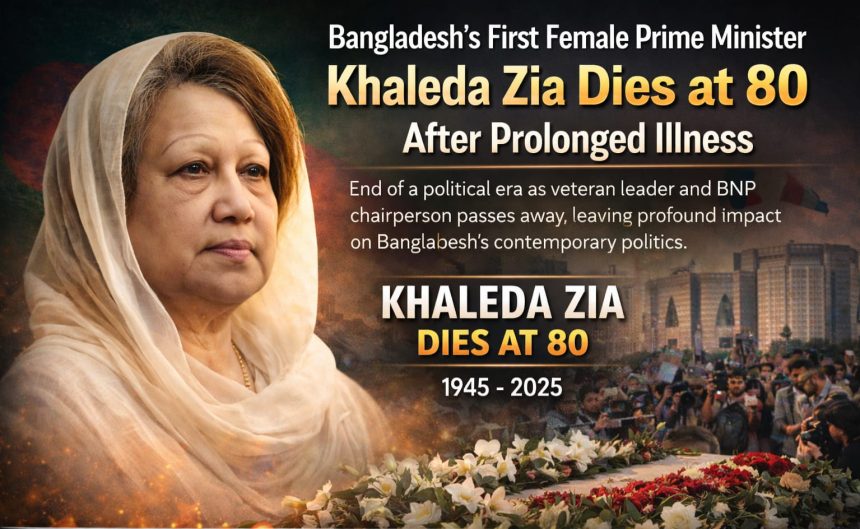
Mumbai: Bangladesh’s first female prime minister, Begum Khaleda Zia, has died at the age of 80 after a prolonged illness, her party Bangladesh Nationalist Party (BNP) announced on Tuesday morning. Zia passed away at Evercare Hospital in Dhaka at approximately 6:00am, shortly after the dawn (Fajr) prayer, marking the end of a long period of deteriorating health.
Health Struggles and Final Days
The former prime minister had been receiving treatment for a range of serious age-related conditions, including advanced cirrhosis of the liver, arthritis, diabetes, and complications affecting her heart and chest, according to her doctors. Zia had been hospitalised since late November and was placed on ventilator support as her condition worsened.
A special air ambulance was reportedly kept on standby to take her abroad for further treatment, but medical clearance for the transfer was not granted before her death.
Political Legacy and Impact
Khaleda Zia emerged as a defining figure in Bangladesh’s political landscape after the assassination of her husband, President Ziaur Rahman. She became the first woman to serve as prime minister in Bangladesh and one of the earliest female leaders of a democratically elected government in a Muslim-majority nation.
Her tenure was marked by repeated alternation in power with Sheikh Hasina, leader of the rival Awami League, in what came to be known as the “Battle of the Begums” — a rivalry that dominated Bangladeshi politics for decades.
Zia served multiple terms as prime minister during the 1990s and early 2000s, pursued social and educational reforms, and strengthened the parliamentary system. However, her later political life was fraught with corruption investigations, imprisonment, and political strife.
Reactions and National Mourning
Leaders across Bangladesh have expressed shock and sorrow at the news of her passing. Government advisors and political figures acknowledged her role in shaping Bangladesh’s political history.
Public reactions reflect the profound polarisation her leadership engendered, with supporters mourning the loss of a long-standing opposition voice and critics scrutinising her legacy.