


Maize Market Under Pressure Amid Rising Arrivals and Weak Demand
By | Gitanjali Thorat| PR Desk
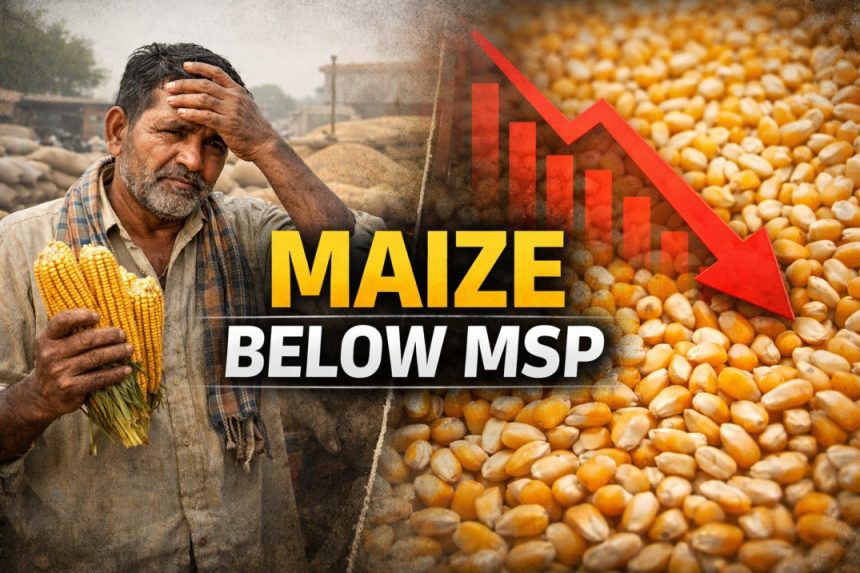
Mumbai : India’s maize market is currently witnessing clear signs of pressure as fresh crop arrivals increase while industrial and export demand remain subdued. According to Confederation of All India Traders Vice-President Sureshbhai Thakkar, inputs from major mandis and processing units across the country indicate that despite the Minimum Support Price (MSP) of ₹2400 per quintal, most open-market transactions are taking place well below this level, creating uncertainty among both farmers and traders.
Prices Across Key Markets Remain Below MSP
In Maharashtra’s Miraj processing hub, maize prices held steady near ₹1800 per quintal, while Sangli recorded rates close to ₹1975. In Indore, Madhya Pradesh, trades at starch units were reported around ₹1715, while Jodhpur in Rajasthan saw deals near ₹1900. Gujarat’s Rajkot market yard recorded transactions in the ₹1480–1850 range, showing mild firmness but still far below MSP.
Mixed Trends in Mandis Reflect Supply Pressure
Madhya Pradesh mandis showed varied price movements. Dhamnod recorded trades between ₹1051 and ₹1696 with a decline of about ₹55, while Ganjbasoda saw strengthening of nearly ₹132 within the ₹1300–1632 band. Ratlam mandi posted a mild rise with prices hovering between ₹1391 and ₹1600. In Chhindwara, jute-bag quality maize remained stable between ₹1550 and ₹1600 per quintal.
Export and Ethanol Demand Fails to Lift Market
Export-grade maize from Jagdishpur in Bihar traded between ₹1900 and ₹1980, subject to moisture and aflatoxin norms. However, weak demand from key buyers like Bangladesh and rising logistics costs have limited export momentum. Ethanol sector demand is also relatively soft, with several plants operating below capacity and imposing strict quality deductions and payment conditions, reducing competitiveness in the open market.
Fresh Crop Arrivals and Moisture Levels Add to Downward Pressure
In Khargone and other regions, fresh crop arrivals have begun, with high-moisture maize (around 35%) trading as low as ₹1150–1250 per quintal due to heavy quality deductions. Old stock continues to trade in the ₹1450–1620 range. Traders report that if arrivals accelerate further in the coming weeks, additional price pressure cannot be ruled out.
Trade Deal Speculation Influences Market Sentiment
Market psychology is also being influenced by discussions around a possible interim trade arrangement between India and the United States. Increased imports of agricultural commodities such as maize or soybean could add to domestic supply concerns at a time when production, stocks, and arrivals are already high.
MSP May Remain Only a Reference Price for Now
Analysts suggest the market is currently supply-driven, and unless exports revive, ethanol and starch industry demand strengthens, or government procurement becomes more active, MSP may continue to function merely as a reference benchmark rather than an effective support level. In the near term, price direction will depend largely on arrival pace, moisture levels, and policy signals. For now, the maize market reflects more caution than stability.