


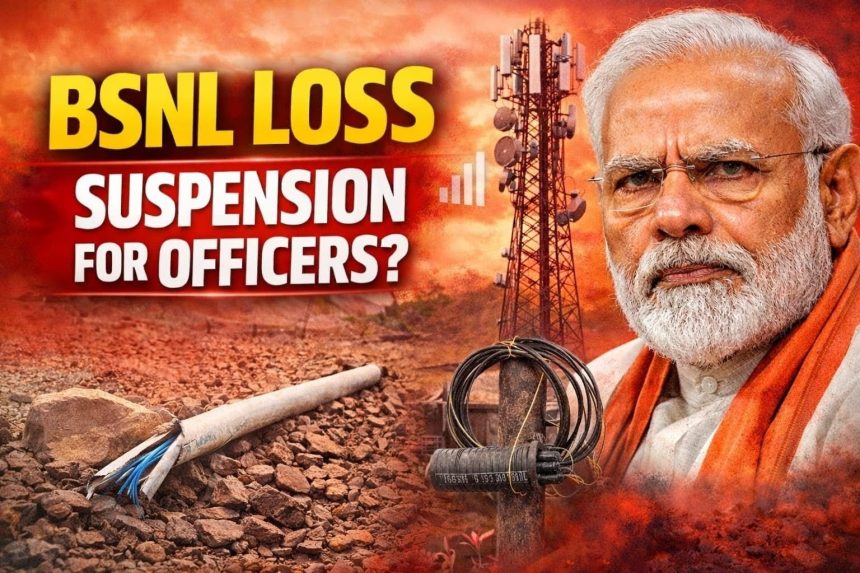
Allegations of negligence surface in Satara
By | Kalyani Mandle | PR Desk
India’s ambitious 4G Saturation Project, aimed at delivering high-speed mobile connectivity to remote and network-deprived villages, has come under scrutiny following allegations of negligence in Maharashtra’s Satara district. The project is being implemented primarily by Bharat Sanchar Nigam Limited (BSNL) with substantial financial support from the central government. However, reports from Patan taluka suggest that serious irregularities may have occurred during the execution of the project. Local residents claim that the alleged administrative lapses have not only led to a waste of public funds but have also disrupted the mobile and internet connectivity that the initiative was meant to strengthen.
Optical fibre worth crores found exposed and damaged
Nearly two years ago, optical fibre cables worth crores of rupees were installed underground across parts of Patan taluka as part of the 4G infrastructure expansion. The cables were meant to serve as the backbone for delivering reliable 4G network services to remote villages in the region. However, during the ongoing highway widening work, several stretches of the fibre network have reportedly been found damaged. In many places, cables have surfaced during excavation, while in some areas they are seen hanging from trees or lying scattered across agricultural fields and drainage channels. The sight of expensive infrastructure lying exposed has triggered strong reactions among local residents.
Contractor claims cable not buried at proper depth
Initially, public anger was directed toward the highway contractor responsible for the road expansion work. However, the contractor has reportedly stated that the fibre cables were not buried at the prescribed depth. According to the contractor’s explanation, the cables surfaced after excavation of barely three feet during construction activity. If this claim is accurate, it suggests that proper technical procedures may not have been followed while laying the network infrastructure.
Questions raised over technical compliance
Telecommunication infrastructure guidelines require optical fibre cables to be buried at a specific depth to prevent damage from construction work or environmental factors. If the cables had been installed according to these technical norms, the large-scale damage seen during the highway excavation might have been avoided. This has led to several questions among residents and telecom users in the region. Citizens are now asking whether the installation work followed technical standards, whether proper supervision was carried out during the project, and whether negligence or irregularities occurred during its execution. These concerns have intensified calls for a detailed investigation.
Background of the national 4G Saturation initiative
The Government of India announced the nationwide 4G Saturation Project on 27 July 2022 to eliminate mobile connectivity gaps in rural and remote areas. The initiative is financed through the Universal Service Obligation Fund (USOF) with an estimated allocation of around ₹26,300 crore. Under the project, the government aims to provide 4G connectivity to approximately 24,680 villages that previously lacked reliable mobile networks. In addition, around 6,279 existing 2G and 3G towers across the country are planned to be upgraded to 4G technology. The target for completing the project was set for October 2024, raising hopes among millions of citizens living in remote and mountainous regions.
Impact on the Digital India vision
The 4G expansion programme is considered a key component of the national **Digital India initiative led by Prime Minister Narendra Modi. The broader goal of this mission is to integrate rural communities into the digital ecosystem by providing reliable internet connectivity. Improved mobile networks in remote areas can play a crucial role in enabling online education for students, providing farmers with real-time weather and market information, promoting digital payment systems, and improving access to e-governance services. However, the situation emerging from Patan taluka has raised concerns about whether the project’s implementation on the ground is matching its ambitious national vision.
Consumer confidence in BSNL shaken
In recent years, renewed optimism had begun to build around Bharat Sanchar Nigam Limited after reports suggested interest from noted industrialist Ratan Tata in supporting the company’s technological advancement, including the rollout of 4G and potential future 5G networks. The news generated positive sentiment among telecom consumers, prompting many users to port their SIM cards from private telecom companies to BSNL in anticipation of improved service at affordable prices. However, continuing network issues in parts of Satara district appear to have undermined that confidence.
Customers reportedly switching back to private operators
According to local reports, thousands of telecom users in Patan taluka have become frustrated due to unsatisfactory network performance over the past two years. As a result, many customers have reportedly ported their SIM cards back to private telecom operators. This trend has not only affected consumer trust but has also caused financial setbacks for BSNL at the local level.
Demand for inquiry and accountability
Following the contractor’s response and the damage observed on the ground, citizens and consumers are demanding an official inquiry into the execution of the project in the region. Residents argue that if technical norms were violated or negligence occurred during the installation of the fibre network, strict action should be taken against those responsible. As the controversy grows, attention is now focused on how authorities will respond and whether accountability will be ensured in a project that forms a critical part of India’s national digital infrastructure and rural connectivity efforts.