

Massive blaze erupts on outskirts of Tehran
By | Arvind Jadhav
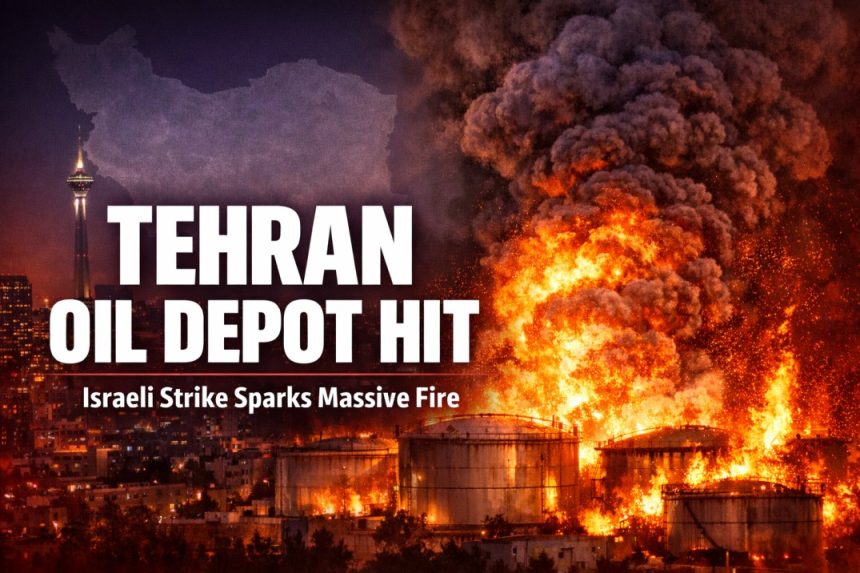
A massive fire broke out at a major oil storage facility on the outskirts of Tehran, the capital of Iran, late Saturday night following an alleged airstrike by Israel. Dramatic footage circulating on social media showed towering flames and thick plumes of black smoke rising high into the night sky from the Shahran Oil Depot in northern Tehran. The blaze illuminated large parts of the surrounding area and created panic among nearby residents, many of whom reported hearing loud explosions moments before the fire erupted. Emergency response teams and firefighters rushed to the site as authorities attempted to contain the flames and prevent the fire from spreading to additional fuel storage tanks.
Israeli military claims responsibility
Soon after the incident, the Israel Defense Forces stated that it had conducted targeted strikes on fuel storage facilities and related infrastructure in Tehran. Israeli officials claimed that the depots were allegedly connected to Iran’s military logistics network and were used to supply fuel for operations linked to the Islamic Revolutionary Guard Corps. According to Israeli military statements, the operation was carried out based on intelligence inputs and was aimed at disrupting strategic supply lines believed to support Iranian military activities across the region. The strike marks a significant escalation as it directly targeted energy infrastructure close to the Iranian capital.
Explosions reported across several districts
Residents across multiple neighbourhoods in northern Tehran reported hearing powerful blasts shortly before flames engulfed the oil depot. Eyewitness videos showed large fireballs erupting from fuel tanks, with thick smoke columns visible from several kilometres away. The intensity of the blaze suggested that multiple fuel storage units may have been damaged during the strike. As news of the attack spread, authorities moved quickly to seal off nearby roads and evacuate residents from areas closest to the depot to ensure public safety while firefighting operations continued through the night.
Iranian authorities mobilise emergency response
Iranian oil and emergency management authorities confirmed that firefighting teams were immediately deployed to control the blaze. Dozens of fire engines and rescue crews were sent to the scene to prevent the flames from spreading to adjacent fuel tanks and nearby infrastructure. Officials said that emergency protocols were activated to safeguard nearby residential zones and industrial facilities. While some fuel storage tanks sustained significant damage, authorities indicated that the broader fuel supply network and refinery operations in the region were not completely halted.
Strategic energy infrastructure becomes new target
The strike on the Tehran oil depot highlights the growing focus on strategic energy infrastructure as tensions between Israel and Iran intensify. Oil storage facilities and refineries are considered highly sensitive assets because they play a critical role in both economic stability and military logistics. Analysts warn that targeting such infrastructure could trigger retaliatory attacks and increase the risk of wider regional escalation. The incident has also raised concerns among global energy observers, as any prolonged disruption to oil facilities in the region could influence international fuel markets and energy security.
Rising tensions and threat of retaliation
Following the strike, Iranian officials strongly condemned the attack and signalled that retaliation could follow. Military sources suggested that Iran may respond through missile strikes or other strategic operations targeting Israeli interests. The confrontation has further heightened fears of a broader conflict in the Middle East, as both sides continue to exchange threats and military actions. With tensions already running high across the region, the attack on the Tehran oil depot represents another flashpoint in the increasingly volatile confrontation between the two countries.