


By | Arvind Jadhav
India has significantly stepped up its maritime security presence by deploying multiple naval warships in the Gulf region, particularly near the Strait of Hormuz and Gulf of Oman. This move comes amid rising tensions in West Asia linked to the Iran-related conflict, which has increased risks for commercial shipping routes. The Indian Navy is actively monitoring the situation and ensuring the safe passage of Indian vessels through sensitive maritime zones. This development highlights India’s strategic focus on protecting its maritime interests.
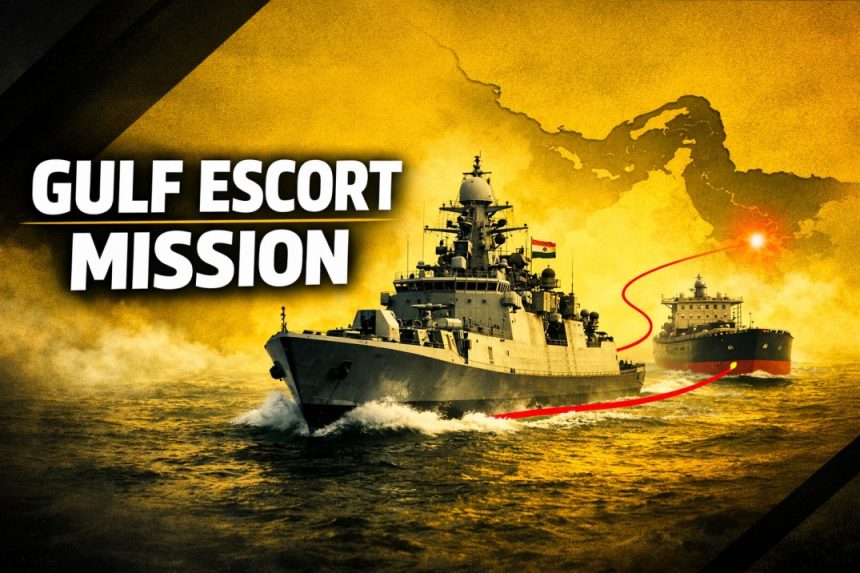
According to the latest updates, more than six Indian warships have been stationed across the Arabian Sea and nearby Gulf waters to escort Indian-flagged vessels. These include oil tankers, LPG carriers, and cargo ships that are vital for India’s energy supply chain. Officials have confirmed that dedicated naval task forces are escorting ships through high-risk areas. The move aims to prevent disruptions in energy imports and maintain supply stability amid global uncertainty.
On the ground, Indian Navy warships are physically escorting vessels from the Strait of Hormuz to safer waters, ensuring protection from possible threats. Several ships have already reached their destinations safely under naval escort, boosting confidence among shipping operators. The Navy remains on high alert due to risks such as drone attacks, missile threats, and maritime disruptions. Continuous surveillance and coordination are being maintained throughout the region.
The Strait of Hormuz remains one of the most critical global oil transit routes, handling a major share of the world’s energy shipments. Any disruption in this region directly impacts oil prices and supply chains, especially for countries like India that depend heavily on Middle East imports. Due to rising tensions, shipping risks and insurance costs have surged significantly. India’s proactive deployment is aimed at countering these challenges and securing its economic interests.
This mission is being carried out under India’s ongoing maritime security initiative, Operation Sankalp, which ensures a continuous naval presence in key sea lanes. Officials have clarified that India is acting independently and not as part of any military alliance in the region. The primary objective is to protect Indian vessels, crew members, and trade routes. The situation remains volatile, and the Indian Navy continues to maintain strong vigilance in the Gulf region.