

By | PR Desk
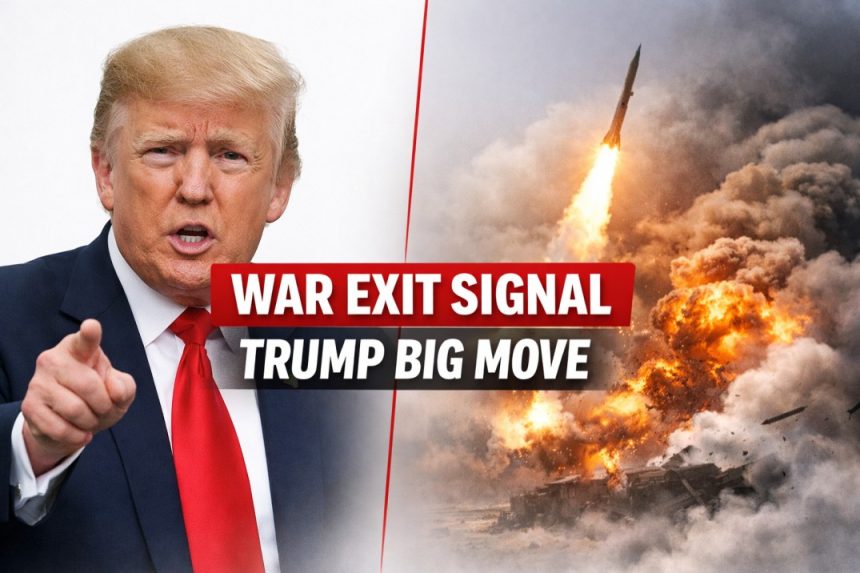
The ongoing Iran–Israel conflict appears to be entering a decisive phase, as U.S. President Donald Trump signaled that the United States may withdraw from the war “very soon,” regardless of whether a formal agreement is reached. His statement comes at a time when military tensions remain high across West Asia, with continued strikes and counter-strikes reported. At the same time, global diplomatic efforts are intensifying to prevent further escalation. This dual-track situation highlights both urgency and uncertainty in the region.
Speaking from Washington, Trump suggested that the conflict could wind down within the next two to three weeks if strategic objectives are met. He emphasized that the U.S. does not intend to engage in a prolonged war and is focused on weakening Iran’s military capabilities. According to him, once these goals are achieved, American forces could step back even without a negotiated settlement. This marks a significant shift in tone, signaling a possible early exit strategy. Observers say such a move could reshape the dynamics of the ongoing conflict.
Meanwhile, U.S. Defense Secretary Pete Hegseth stated that diplomatic efforts are making gradual progress behind the scenes. He revealed that backchannel talks involving multiple nations are currently underway, aiming to create a framework for de-escalation. Although details remain limited, officials suggest that there is cautious optimism about a potential breakthrough. However, Iran’s previous reluctance to engage in direct negotiations continues to pose a challenge. This keeps the overall outlook uncertain despite signs of progress.
In a parallel development, China and Pakistan have jointly introduced a five-point peace proposal to end the conflict. The plan calls for an immediate ceasefire, restoration of regional stability, and protection of key global oil supply routes. It also emphasizes the need to resume diplomatic dialogue and reduce external military involvement in the region. The proposal reflects growing international concern over the economic and geopolitical consequences of the war. Analysts believe such initiatives could increase pressure on all parties to move toward peace.
Despite these diplomatic moves, the ground situation remains highly volatile and unpredictable. The conflict has already stretched beyond a month, resulting in significant casualties and infrastructure damage. Strategic routes like the Strait of Hormuz continue to face threats, raising concerns about global energy security. Iran is still actively deploying missile and drone capabilities, indicating that military operations are far from over. Experts warn that ending active combat will be easier than achieving lasting peace.
The war has also exposed deep divisions within the international community, particularly among Western allies. Several European nations have chosen to stay away from direct involvement, citing concerns over escalation and legality. Differences in approach have created visible cracks in global alignment on the issue. At the same time, fluctuations in oil prices are adding economic pressure worldwide. Trump’s remarks suggest that the U.S. is increasingly inclined to limit its involvement and avoid a long-term regional conflict.
Overall, the Iran–Israel war is now shifting from a battlefield confrontation to a complex diplomatic and political challenge. Trump’s indication of a possible U.S. withdrawal signals a critical turning point in the conflict. However, the absence of a clear peace agreement raises concerns about what comes next. The coming weeks are likely to be decisive in determining whether the region moves toward stability or renewed tensions. For now, the world watches closely as both war and diplomacy unfold side by side.