


By| Arvind Jadhav
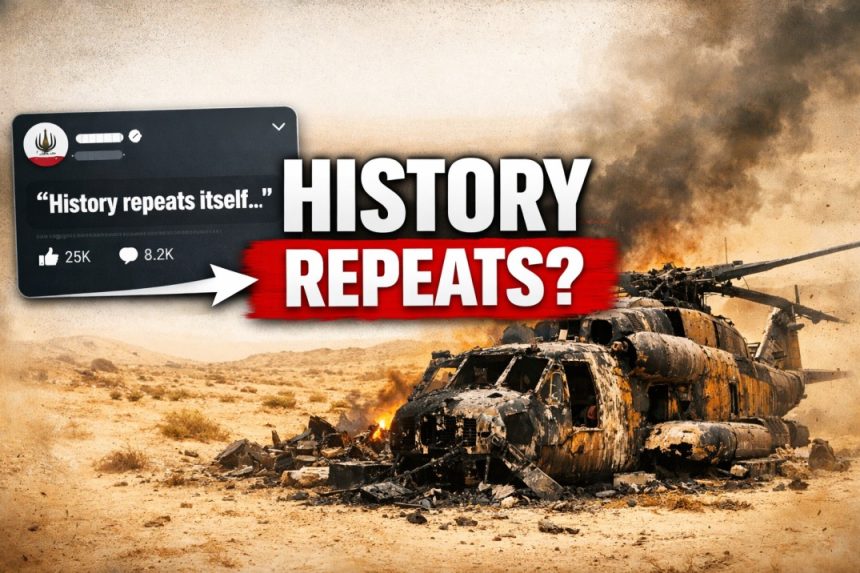
Iran has stepped up its narrative against the United States by invoking the failed 1980 mission known as Operation Eagle Claw in a recent post on X. Iranian state-linked accounts shared visuals and messages highlighting the historic U.S. setback, suggesting that past failures mirror current developments. The messaging appears aimed at challenging Washington’s version of recent military events.
This comes at a time when the United States carried out a complex rescue operation inside Iranian territory. American forces managed to extract crew members from a downed fighter jet after a multi-day mission involving advanced coordination and air support. U.S. officials have described the operation as a major success under difficult conditions.
However, the mission also faced setbacks. Some U.S. aircraft were reportedly damaged or abandoned during the operation, with certain assets destroyed by American forces themselves to prevent sensitive technology from being captured. Iran, meanwhile, claimed that it had targeted and brought down multiple U.S. aerial objects, though these claims remain disputed.
Despite acknowledging elements of the rescue, Iran has focused heavily on shaping public perception through symbolic messaging. By recalling Operation Eagle Claw, Tehran is drawing a direct comparison between the present situation and one of the most well-known failures in U.S. military history.
The 1980 mission, launched during a major diplomatic crisis, ended in disaster due to technical issues and an accident that resulted in the deaths of eight U.S. servicemen. The failure had a lasting impact on U.S. military planning and remains a sensitive chapter in American history.
Experts believe Iran’s latest messaging is part of a broader strategy to influence global opinion. By linking current events with past incidents, Tehran aims to counter U.S. claims of operational success and project a narrative of resistance.
With tensions continuing to rise, including ongoing military activity and strategic warnings in the region, both countries are not only engaging on the ground but also in a battle of narratives. The revival of historical events like Eagle Claw highlights the growing importance of information warfare in modern conflicts.