


🔴 By | Sonal Sharma
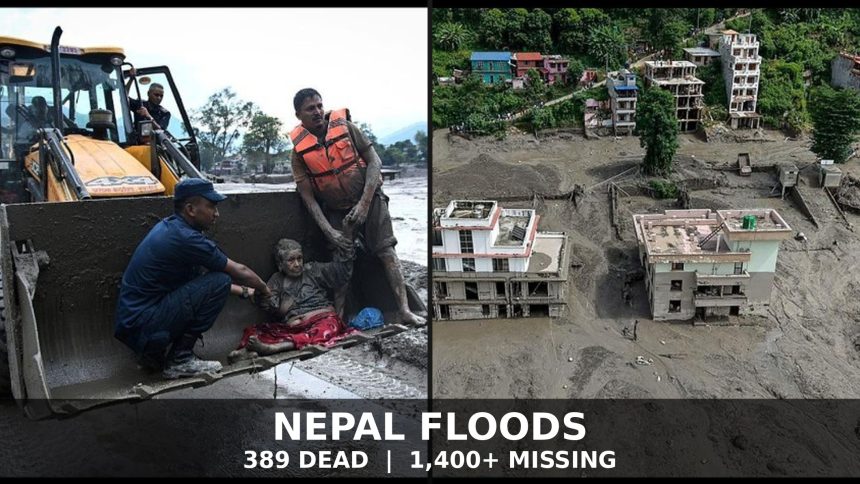
Nepal is facing a major humanitarian crisis after devastating flash floods in the Bhote Koshi–Rasuwa region, with the death toll reaching 389 in Nepal and more than 1,400 people reported missing.
🟡 288 Indians Among Those Missing
A major concern for India is the large number of Indian nationals caught in the disaster. As many as 288 Indians are reported missing, according to the latest available reports.
Authorities and rescue teams are continuing efforts to trace missing people and establish contact with affected families.
🟡 Rescue Operations Continue
Nepalese security forces and emergency teams are conducting search-and-rescue and evacuation operations in severely affected areas.
Destroyed roads and bridges have made access difficult, while several communities remain cut off. Rescue teams are using helicopters and other emergency resources to reach stranded people.
🟡 Fresh Flood Threat
The danger remains as authorities monitor rising water bodies and potential secondary flood threats in the Himalayan region.
A sudden release of water could create another dangerous surge downstream, prompting authorities to maintain close monitoring of rivers and vulnerable settlements.
🟡 Did China Fail to Give Nepal an Early Warning?
Questions are now being raised over whether Nepal received sufficient advance information from the Chinese side before the catastrophic flash flood swept into the Bhote Koshi valley.
Reports have questioned whether information about the developing situation in Tibet could have been communicated earlier to Nepalese authorities, potentially giving downstream communities more time to prepare.
However, China has rejected allegations that it failed to provide an early warning or that a Chinese-side dam collapse caused the disaster. Beijing has disputed the claims and said the focus should remain on rescue and relief operations.
Experts are continuing to examine the exact trigger of the disaster, including reports of a massive collapse involving glacier ice and underlying rock that generated a destructive debris flow.
🟡 Weather Warning Remains in Focus
Nepal’s Department of Hydrology and Meteorology continues to monitor rainfall and river levels and has warned people in vulnerable areas about the risks of heavy rain, flash floods and landslides.
Residents near rivers and in mountainous areas have been urged to remain alert and follow official evacuation and safety instructions.
🟡 Warning System Under Scrutiny
The disaster has also raised broader questions about cross-border disaster-warning systems in the Himalayas.
When a potentially dangerous event develops upstream across an international border, the speed at which reliable information reaches downstream communities can become a matter of life and death.
The tragedy is likely to intensify calls for stronger real-time information sharing between China and Nepal on floods, landslides, glacial hazards and other Himalayan emergencies.
🟡 Situation Still Critical
With more than 1,400 people missing, including 288 Indians, the scale of the disaster could become clearer as rescue teams reach isolated areas.
Authorities have urged people to rely on official casualty and missing-person information and avoid spreading unverified figures.