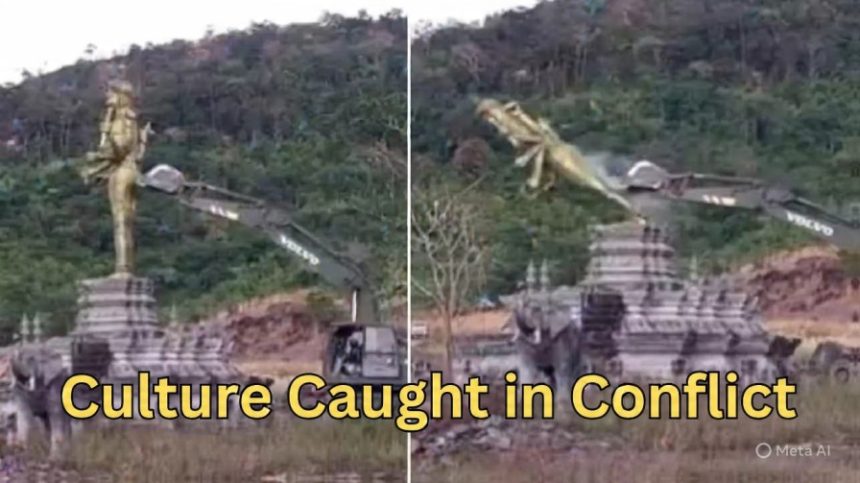
India Condemns Demolition of Lord Vishnu Statue at Thailand–Cambodia Border
By | Gitanjali Thorat | PR Desk
India Voices Strong Objection
Mumbai: India has strongly condemned the demolition of a Lord Vishnu statue at the disputed Thailand–Cambodia border, calling it a “disrespectful act” that hurts the religious sentiments of devotees worldwide. The Ministry of External Affairs (MEA) emphasized that such actions also damage the region’s shared cultural and civilizational heritage.
MEA Stresses Respect for Religious Symbols
MEA spokesperson Randhir Jaiswal highlighted that Hindu and Buddhist deities are deeply revered across South and Southeast Asia and must be protected, regardless of territorial disputes. “Such acts hurt the sentiments of followers around the world and should not take place,” he said, urging both Thailand and Cambodia to return to dialogue and diplomacy.
Statue Allegedly Demolished by Thai Military Engineers
The Lord Vishnu statue, reportedly built in 2014, was allegedly destroyed earlier this week amid heightened border tensions. A video of the demolition, showing Thai military engineers using a bulldozer, went viral on social media, sparking widespread outrage and international attention. Thai authorities have yet to comment on the incident.
Cambodia Claims Statue Was on Its Territory
Cambodia strongly condemned the demolition, asserting that the statue stood within its sovereign territory. Kim Chanpanha, a spokesperson from Preah Vihear province, told AFP that the statue was located in the An Ses area, which Cambodia claims as its own, calling the act a violation of territorial integrity and cultural respect.
Renewed Border Clashes Raise Regional Concerns
Tensions along the Thailand–Cambodia border first flared in July. Despite a ceasefire mediated internationally, clashes reportedly resumed this month. The destruction of the Vishnu statue adds a religious and cultural dimension to an already volatile territorial dispute, raising concerns about regional stability.
India Calls for Peace and Cultural Protection
India reiterated that cultural and religious symbols must not become casualties of geopolitical disputes. The MEA emphasized that respecting shared heritage is crucial for peace and stability in Southeast Asia, warning that unresolved border tensions can escalate beyond military confrontation and threaten cultural harmony and religious coexistence.