By| Arvind Jadhav
Ceasefire Announced at the Brink of Escalation
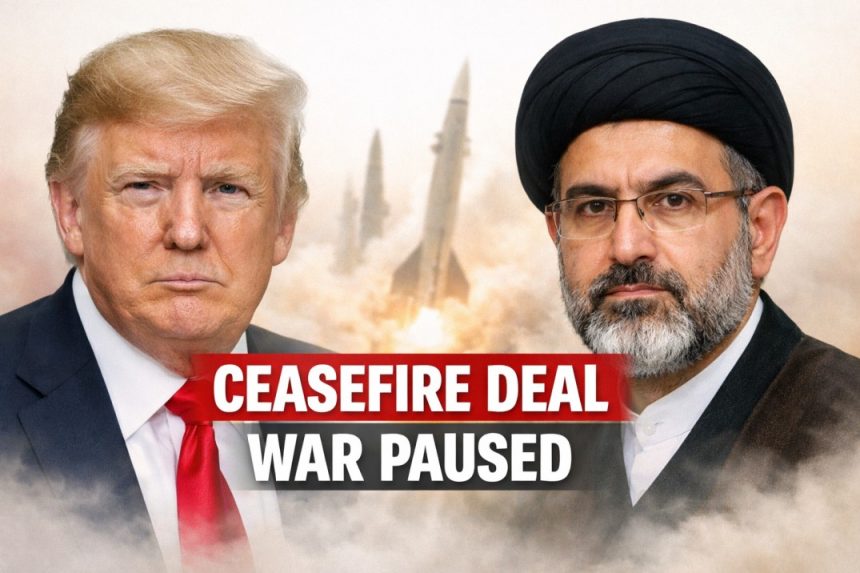
In a major geopolitical development, Iran and United States have agreed to a temporary ceasefire, stepping back from the brink of a wider military conflict. The decision comes after weeks of escalating tensions, including threats of large-scale strikes and heightened military activity across the region. The ceasefire is expected to last for a limited period, offering both sides a window for diplomatic engagement. Global observers see this as a critical moment to prevent a full-scale war in the Middle East.
Strait of Hormuz Reopens as Key Condition
One of the most crucial aspects of the ceasefire agreement is the reopening of the Strait of Hormuz, a vital global oil transit route. The disruption of this passage had raised serious concerns over energy security and global supply chains. With the ceasefire in place, safe passage for oil tankers and commercial vessels is expected to resume. This move is likely to stabilize international oil markets, which had been experiencing sharp volatility due to the conflict.
Diplomatic Mediation Gains Momentum
The ceasefire was made possible through intense diplomatic efforts involving regional and international players. Pakistan is believed to have played a key role in facilitating communication between the opposing sides. Backchannel talks and high-level negotiations helped in de-escalating immediate threats and bringing both nations to the table. Further rounds of discussions are expected, with hopes of transforming this temporary truce into a more lasting agreement.
Regional Involvement Expands Ceasefire Scope
The conflict had expanded beyond a bilateral standoff, drawing in other key players from the region, including Israel. As part of the ceasefire framework, military operations by allied forces are also expected to pause temporarily. This broader inclusion is seen as essential in reducing the risk of a multi-front conflict. The situation remains delicate, but the halt in hostilities offers a much-needed break for the region.
Intense Military Exchanges Before Truce
Before the ceasefire was announced, the region witnessed a series of intense military exchanges, including airstrikes and missile attacks targeting strategic locations. These developments had significantly raised fears of a prolonged and devastating conflict. Several areas reported damage to infrastructure and heightened security alerts. The ceasefire now brings a pause to these hostilities, allowing affected regions to assess the impact and begin recovery efforts.
Global Markets Show Positive Response
International markets reacted positively to the ceasefire announcement, reflecting renewed investor confidence. Oil prices, which had surged amid fears of supply disruptions, showed signs of stabilizing soon after the truce. Stock markets across major economies also responded with gains, indicating relief among global investors. The development highlights how closely geopolitical stability is linked to economic performance worldwide.
Temporary Relief, Long-Term Uncertainty Remains
Despite the ceasefire, the situation remains fragile, with no guarantee of a long-term resolution. Key issues such as sanctions, regional security concerns, and military capabilities are yet to be fully addressed. Both sides are expected to use this pause to push their strategic interests through negotiations. Experts warn that failure to reach a comprehensive agreement could result in renewed tensions.
Countdown to a Long-Term Deal
The coming days will be crucial in determining whether the ceasefire can evolve into a lasting peace framework. Diplomatic channels are expected to remain active as multiple stakeholders push for stability in the region. The temporary truce offers a narrow but important opportunity to avoid further conflict. However, the risk of escalation still lingers, keeping global attention firmly fixed on developments in the Middle East.