By | Arvind Jadhav
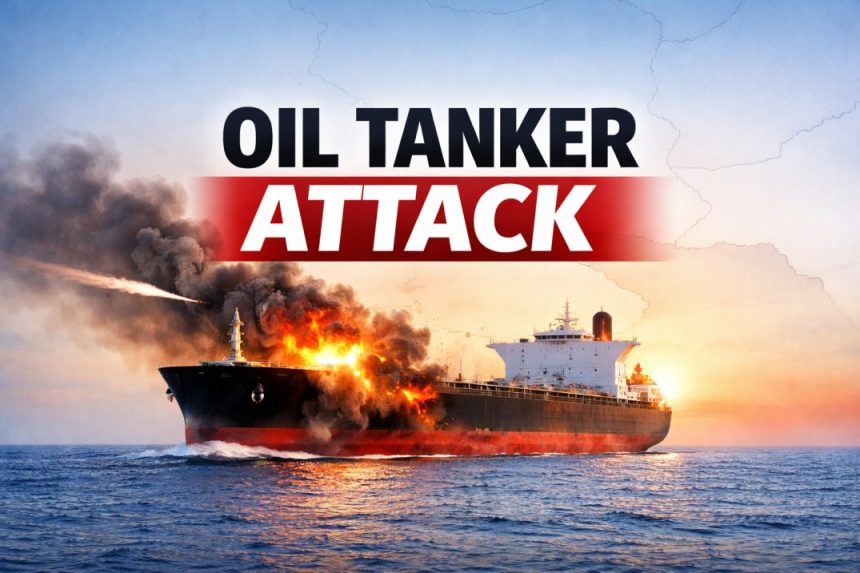
The Middle East witnessed a sharp escalation in hostilities after Iran allegedly struck a fully loaded Kuwaiti oil tanker, intensifying fears of a broader regional conflict. The incident comes just days after former U.S. President Donald Trump issued a strong warning regarding Iran’s critical oil export hub at Kharg Island, a move that appears to have further inflamed tensions.
According to initial reports, the targeted tanker was carrying a significant volume of crude oil from Kuwait, making the incident particularly alarming for global energy markets. The Persian Gulf, already considered one of the world’s most sensitive maritime corridors, now faces renewed threats to shipping security.
While Iranian authorities have not officially taken responsibility, regional intelligence sources suggest the strike may be linked to ongoing retaliatory dynamics between Iran and Israel. The attack has prompted immediate concern among oil-importing nations, as any disruption in Gulf supply chains could lead to sharp spikes in global crude prices.
Maritime security agencies are closely monitoring the situation, with some reports indicating increased naval presence in key shipping lanes to prevent further incidents.
In a major development, Iran confirmed the death of senior Revolutionary Guards naval commander Alireza Tangsiri, who reportedly succumbed to injuries sustained in a recent attack.
The confirmation came through Iranian state media, which cited an official statement from the Islamic Revolutionary Guard Corps (IRGC). Tangsiri was considered a key figure in Iran’s naval strategy, particularly in overseeing operations in the Persian Gulf.
Last week, Israel had announced that it carried out a “precise and lethal operation” targeting high-ranking Iranian military leadership. Israeli officials claimed that the strike was part of a broader campaign aimed at limiting Iran’s military reach and preventing potential threats to its national security.
The death of such a high-profile commander is being seen as a significant blow to Iran’s military structure, and could trigger further retaliatory actions in the coming days.
The situation had already been tense following remarks by Donald Trump, who warned Iran against any aggressive moves involving Kharg Island, the country’s primary oil export terminal.
Kharg Island plays a crucial role in Iran’s economy, handling a majority of its crude oil exports. Any threat to this facility is often interpreted as a direct challenge to Iran’s economic stability.
Analysts believe Trump’s warning may have been perceived as a provocation, potentially contributing to the latest escalation involving oil infrastructure in the region.
The combined impact of the tanker attack and the confirmed death of a top Iranian commander has sent shockwaves through international markets. Oil prices are expected to react sharply if the situation worsens, with traders already factoring in the risk of prolonged instability in the Gulf.
Experts warn that continued targeting of energy infrastructure could have long-term consequences for global supply chains, especially for countries heavily dependent on Middle Eastern oil.
Shipping companies may also face rising insurance costs and operational risks, potentially leading to reduced traffic through key routes like the Strait of Hormuz.
World leaders have begun calling for restraint, urging all sides to avoid further escalation. Diplomatic channels are reportedly active, with efforts underway to prevent the situation from spiraling into a full-scale conflict.
However, with tensions running high and retaliatory rhetoric intensifying, the chances of immediate de-escalation appear limited.
Security analysts caution that the region may be entering a more volatile and unpredictable phase, where isolated strikes could quickly trigger wider military confrontations.
The coming days will be crucial in determining whether the situation stabilizes or escalate further. Any additional attacks on oil infrastructure or military targets could significantly widen the conflict.
For now, the world watches closely as the Middle East stands on edge—caught between geopolitical rivalry, economic stakes, and the looming threat of a broader war.