Iran War Escalates: India Assures 25 Days of Fuel Security Amid Global Uncertainty
By | Arvind Jadhav
New Delhi: The ongoing military conflict involving Iran has intensified geopolitical tensions across the Middle East, creating serious concerns in global energy markets. As hostilities escalate and fears grow over the security of key oil transit routes, international crude prices have witnessed volatility. The Strait of Hormuz, a crucial maritime passage through which a significant portion of the world’s oil supply moves, has become the center of global attention. Any disruption in this corridor has immediate ripple effects across economies that depend heavily on imported crude oil, including India.
India’s Current Fuel Reserve Position
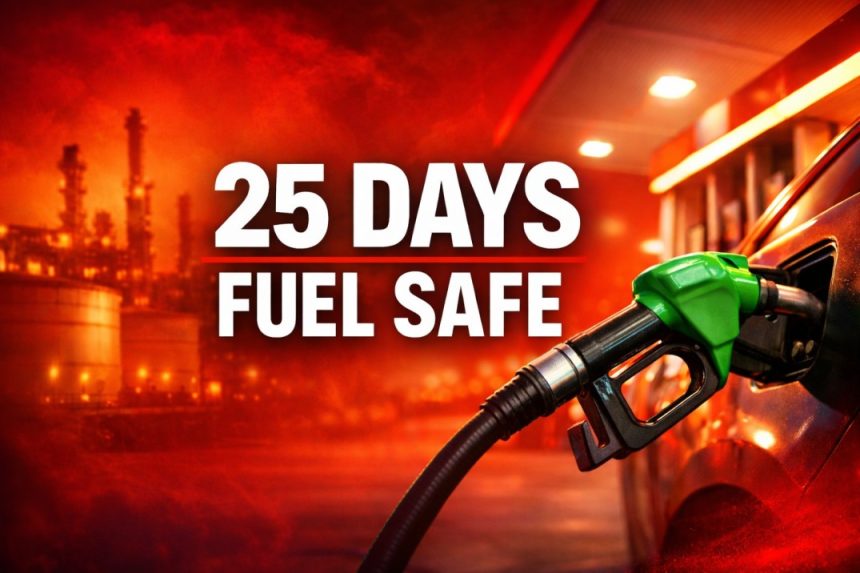
Amid rising uncertainty, the Government of India has reassured citizens and markets that the country’s energy position remains stable. According to official sources, India currently holds approximately 25 days of crude oil reserves along with an additional 25 days of petrol and diesel stocks. Taken together, these reserves provide nearly 50 days of overall fuel sufficiency. This stock includes both strategic petroleum reserves maintained by the government and commercial inventories managed by oil marketing companies and refineries across the country. Authorities have emphasized that there is no immediate shortage risk and fuel supplies remain uninterrupted nationwide.
Why the Strait of Hormuz Matters
The Strait of Hormuz plays a critical role in global oil transportation, acting as a gateway for a substantial share of crude exports from Gulf nations. Even the possibility of shipping disruptions in this narrow waterway can push global oil prices higher due to market speculation and supply fears. As tensions involving Iran raise questions about maritime safety in the region, energy-importing nations are closely monitoring developments. For India, which imports a majority of its crude oil requirements, prolonged instability in the Gulf could increase procurement costs and widen the trade deficit.
Impact on Oil Prices and Inflation
The conflict has already caused upward pressure on international crude benchmarks. Higher global oil prices directly affect India’s import bill and may eventually translate into domestic inflationary pressure. Increased fuel costs can influence transportation expenses, logistics operations, manufacturing costs, and overall consumer prices. While the government has not announced any immediate revision in retail fuel prices, analysts suggest that sustained high crude rates could pose economic challenges if the crisis extends over several weeks or months.
Government Monitoring and Preparedness
Officials have confirmed that round-the-clock monitoring mechanisms are in place to assess stock levels and supply chain movements. Coordination between refineries, ports, shipping agencies, and oil marketing companies is ongoing to ensure that distribution remains smooth across states. India’s strategy of diversifying crude imports from multiple regions in recent years has strengthened its resilience against regional conflicts. By reducing dependence on any single supplier, the country has created flexibility in managing global disruptions.
Economic Implications Beyond Energy
Beyond fuel markets, the broader economic impact of the Iran conflict is being closely studied. Global financial markets have shown signs of volatility, and currency fluctuations could affect emerging economies. Energy-intensive sectors such as aviation, road transport, chemicals, and heavy industries may face cost pressures if oil prices remain elevated. However, India’s existing reserve buffer provides policymakers with valuable time to respond strategically and stabilize domestic markets if required.
Global Uncertainty
While the escalating conflict involving Iran has heightened global energy uncertainty, India’s current reserve position offers short-term stability. With nearly 50 days of combined crude and refined fuel stocks, the country appears prepared to manage immediate supply shocks. Nevertheless, the evolving geopolitical situation will determine the long-term impact on energy markets and the Indian economy. Authorities continue to monitor developments closely, maintaining readiness to act if the crisis deepens or prolongs.