By | Gitanjali Thorat | PR Desk
Background of the Proposal
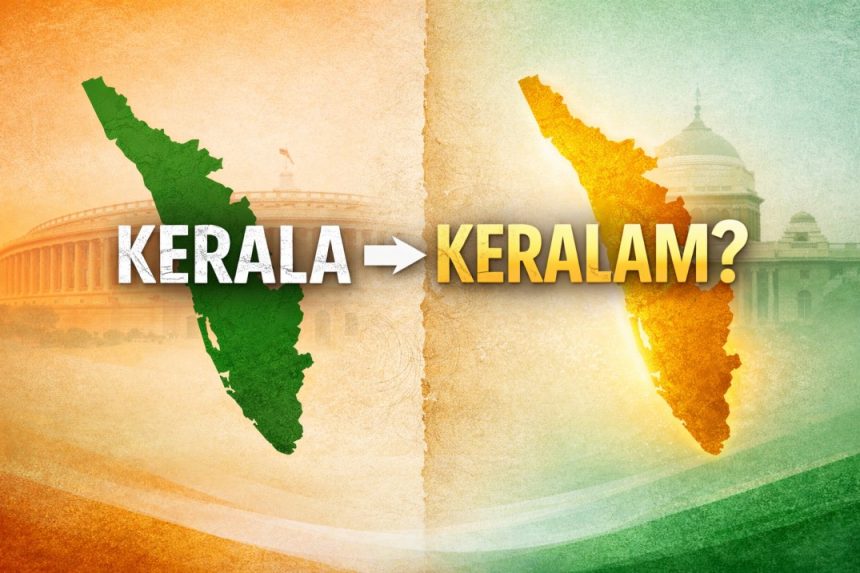
The move to officially rename Kerala as “Keralam” has gained fresh traction after procedural developments at the national level revived discussion around the long-pending demand. The proposal aims to align the state’s official English name with its Malayalam pronunciation, which has historically and culturally been “Keralam.” Supporters view the change as a step toward correcting colonial-era transliteration and restoring linguistic authenticity.
Resolution Passed by State Assembly
The proposal was formally endorsed when the Kerala Legislative Assembly passed a unanimous resolution urging the Union government to make the change in the Constitution and all official records. The rare political consensus within the state reflected a shared view across parties that the name correction represents cultural pride rather than political ideology.
Historical Roots of the Name
The term “Keralam” has deep historical foundations in Malayalam literature, ancient inscriptions, and early trade accounts referring to the region. Historians trace its usage back to references linked to the Chera dynasty and the coastal geography of the region. When linguistic reorganization of states took place in 1956, the English spelling “Kerala” was adopted for administrative clarity, even though “Keralam” remained dominant in local language usage, literature, and public identity.
Why the Issue Has Resurfaced
The demand has re-emerged strongly in recent years amid a broader national trend of restoring indigenous names and pronunciations. Advocates argue that just as several Indian cities and states corrected colonial spellings to reflect local identity, the shift from Kerala to Keralam would be a natural linguistic correction rather than a political move. Cultural organizations and language scholars have consistently supported the change, saying it reflects the state’s heritage more accurately.
Political Reactions and Statements
Chief Minister Pinarayi Vijayan has described the proposal as an expression of the people’s cultural self-respect and historical continuity. Leaders across political lines in the state have largely echoed this sentiment, stressing that the resolution was passed unanimously and represents collective public sentiment. Some critics outside the state, however, argue that symbolic changes should not overshadow economic challenges and governance priorities, though the issue has not triggered major political division within Kerala itself.
Role of the Union Government
For the renaming to become official, approval from the Government of India and Parliament will be required. The process involves examination by Union ministries, Cabinet consideration, and possible constitutional amendment procedures. Only after parliamentary approval would the change be reflected in central laws, official maps, educational material, and international references.
Administrative and Cultural Impact
Experts say the administrative implications of the change would include updating official documents, government notifications, school textbooks, and diplomatic references. However, culturally the shift would be minimal within the state, since “Keralam” is already widely used in Malayalam media, literature, and everyday conversation. Scholars emphasize that such changes often strengthen regional identity and help preserve linguistic heritage for future generations.
While largely symbolic in administrative terms, the proposal to rename Kerala as “Keralam” carries deeper cultural and historical meaning. It reflects ongoing conversations in India about identity, language, and the balance between federal procedure and regional pride. Whether Parliament ultimately approves the change remains uncertain, but the renewed push shows that linguistic identity continues to play an important role in shaping India’s political and cultural discourse.