BJP–Eknath Shinde Alliance Seat‑Sharing Deadlock and Urban Political Landscape
By | Arvind Jadhav
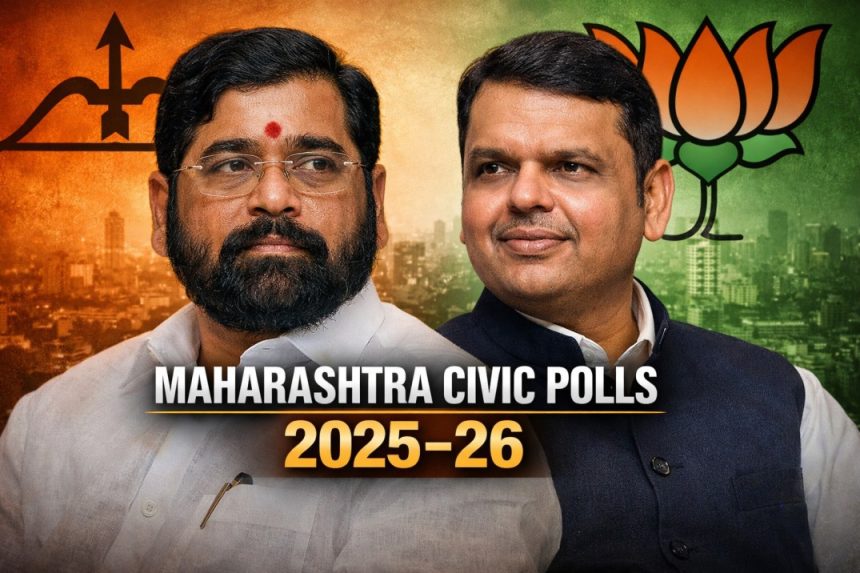
Mumbai : As Maharashtra gears up for the 2025–26 municipal elections, the political scenario is defined by the ongoing seat‑sharing negotiations between the Bharatiya Janata Party (BJP) and the Eknath Shinde‑led Shiv Sena faction. While both parties aim to contest under the Mahayuti alliance banner, disagreements over seat allocation—especially in key municipal corporations—have created uncertainty and strategic complexity. This deadlock reflects not only a battle for seats but also a broader tussle for local influence, leadership recognition, and voter confidence across the state.
Statewide Seat Sharing Deadlock
Across Maharashtra, including urban centers such as Thane, Kalyan–Dombivli, Panvel, Mira–Bhayandar, and Navi Mumbai, the BJP and Shinde faction have been negotiating seat allocations intensively. The BJP, leveraging its organizational strength and historical performance, is pushing for a larger share of seats, while the Shinde faction emphasizes the need for respectable representation and leadership positions in municipal bodies to maintain its political identity and assert influence. These negotiations have created tension at both leadership and grassroots levels, affecting campaign strategies and alliance coordination across multiple cities.
Thane Municipal Corporation: Center of Tension
The Thane Municipal Corporation elections illustrate the challenges of these negotiations. Local leaders from both parties are striving to balance electoral ambitions, local influence, and alliance cohesion. The BJP is pressing for a greater number of seats, citing its historical performance and voter base, while the Shinde faction demands sufficient representation to secure key leadership positions. This tug-of-war has generated uncertainty among party workers and confusion among voters, highlighting the sensitive political dynamics of this rapidly growing urban center. The outcome in Thane will likely set a precedent for other municipal corporations in Maharashtra.
Kalyan–Dombivli Municipal Corporation (KDMC): Strategic Gains
In KDMC, negotiations have resulted in a tentative agreement favoring the Shinde faction, positioning it as a “major partner” in local governance. Reports suggest the Shinde faction will contest a larger number of wards than the BJP, giving it significant leverage over key administrative and policy decisions at the municipal level. The BJP, initially demanding a higher number of seats and the mayoral position, has moderated its stance to preserve the alliance and maintain electoral stability. This arrangement underscores the delicate balance of power, where both parties must navigate local expectations, leadership ambitions, and alliance credibility simultaneously.
Panvel, Mira–Bhayandar, and Other Urban Corporations
In Panvel, Mira–Bhayandar, Navi Mumbai, and other municipalities, seat-sharing agreements remain partially unresolved, leaving open the possibility of independent contests or last-minute compromises. Local leaders continue to advocate strongly for favorable allocations, and grassroots workers are vocal about their constituencies. These dynamics make election planning challenging and underscore the importance of leadership coordination to maintain a unified Mahayuti front. The outcome in these municipalities could have a ripple effect, influencing alliance strategies and voter perception across the state.
Leadership Strategy and Alliance Management
At the state leadership level, continuous discussions are taking place to finalize allocations and mediate local disputes. Both the BJP and the Shinde faction face the complex task of balancing alliance loyalty with regional power ambitions. Internal pressures, including leadership demands, grassroots expectations, and smaller partner considerations, remain central to strategic decision-making. The negotiations also highlight the political acumen required to sustain urban alliances in Maharashtra, where voter dynamics, demographic considerations, and party identities converge in a high-stakes environment.
Implications for Maharashtra Politics
The ongoing seat-sharing deadlock highlights the broader implications for Maharashtra’s urban political landscape. Control of major municipal corporations like Thane, KDMC, and Panvel determines not only local governance but also strategic influence for future state and national elections. The way these negotiations conclude will impact alliance stability, voter confidence, and the political weight of each partner, shaping Mahayuti’s prospects well beyond the immediate civic polls. Analysts believe that the final settlement—or lack thereof—could redefine urban electoral strategy in Maharashtra for years to come.
Stakes, Strategy, and Electoral Dynamics
As the municipal elections approach, both the BJP and the Shinde faction face a critical test of strategic negotiation, alliance management, and voter engagement. The resolution of the seat-sharing deadlock will determine not only the outcome of key municipal bodies but also the future trajectory of the Mahayuti alliance, influencing party identity, leadership authority, and electoral prospects across Maharashtra. How this complex political chess game unfolds will be closely watched by parties, analysts, and voters alike, as it may define the balance of power in the state’s urban centers for the next several years.