By | Arvind Jadhav
Rising Demand for Jambha in Construction Sector
Satara : With the steady expansion of Maharashtra’s construction sector over the past few decades, the demand for laterite stone, locally known as jambha, has increased sharply. Since the 1990s, urban expansion, the development of national highways, and a growing population have accelerated construction activity across the state. In this context, jambha has emerged as a preferred construction material due to its affordability, availability, and durability, especially in rural and semi-urban regions.
Housing Schemes Boost Usage Across Maharashtra
The implementation of various Central and State government housing schemes has played a major role in increasing jambha consumption. These schemes aim to provide strong and affordable houses to economically weaker sections, and jambha is often used to reduce construction costs. As a result, large volumes of jambha are being supplied directly to village-level housing projects, beneficiary households, and government-supported construction works across districts.
Commercial Construction Adds to Transport Pressure
In addition to housing schemes, the rapid growth of commercial construction has further increased the demand for jambha. Hotels, farmhouses, roadside eateries, resorts, bungalows, and commercial buildings along highways are increasingly using jambha for walls and boundary structures. This combined demand from welfare housing and private commercial projects has significantly increased the number of trucks transporting jambha on a daily basis.
Overloading Becomes a Common Practice
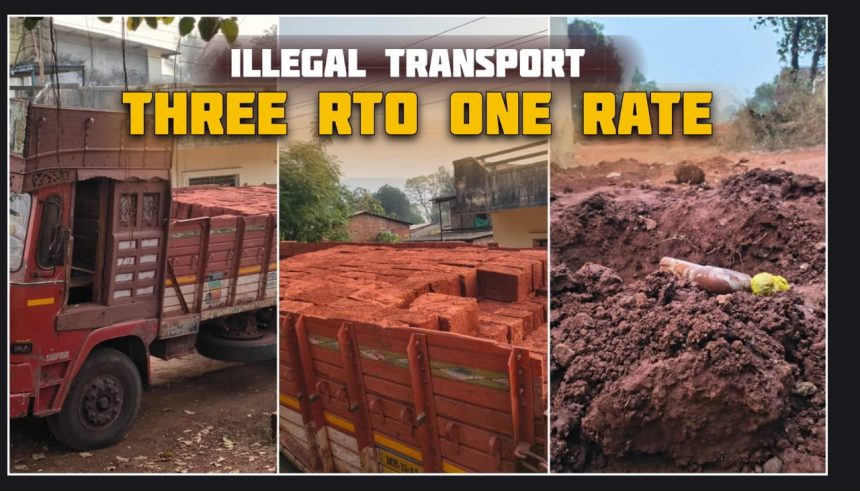
Under existing transport regulations, trucks used for carrying jambha are permitted a maximum load capacity of approximately 12 tonnes, which translates to 400–450 jambha stones per vehicle. However, this limit is routinely violated on the ground. In a widespread and well-established practice, trucks are being loaded 600 to 700 jambha stones per trip. With each stone weighing approximately 30–35 kilograms, the total load per truck rises sharply to nearly 18–22 tonnes, far exceeding the permissible capacity. This excessive overloading is not accidental but systematic, driven by the objective of maximising profits per trip while blatantly disregarding safety norms, vehicle stability, and legal provisions.
Overloaded Trucks Seen Across Multiple Districts
These overloaded trucks are frequently seen operating across a wide geographical area, including Konkan, Ratnagiri, Satara, Karad, and regions close to the Karnataka border. Local residents and road users report that such vehicles move freely on highways as well as interior rural roads, often during peak traffic hours, increasing the risk of accidents and infrastructure damage.
Questions Raised Over RTO Enforcement
The visible movement of overloaded trucks has raised serious concerns about the effectiveness of enforcement by the Regional Transport Office (RTO). Despite the existence of weighbridges, mobile inspection units, and penalty provisions under transport laws, enforcement on the ground appears limited. The absence of consistent action has led to public questioning of whether monitoring mechanisms are being effectively implemented.
Road Damage Accelerates in Rural Areas
One of the most visible impacts of overloaded jambha transport is the rapid deterioration of rural roads. Roads constructed by the Public Works Department at significant public expense are developing cracks, damaged surfaces, and collapsed shoulders within a short period. In several areas, newly built or recently repaired roads have shown signs of failure, affecting daily transportation and connectivity.
Underground Water Pipelines Affected
In many villages, underground drinking water pipelines run beneath roadside shoulders as part of government-funded water supply schemes. Excessive pressure from overloaded trucks has led to subsidence and roadside collapses, damaging these pipelines. In some cases, pipes have cracked or shifted, resulting in water leakages beneath the road surface.
Villages Face Repeated Water Shortages
Damage to underground pipelines often remains undetected for days or weeks, leading to continuous water loss. Reduced pressure and supply disruptions have forced several villages to face recurring water shortages. In some areas, residents are compelled to rely on temporary repairs, tanker water supply, or alternative sources, increasing hardship, especially during dry seasons.
Public Funds Spent on Repeated Repairs
Frequent damage to roads and water pipelines has placed an additional financial burden on government departments. Crores of rupees are spent on constructing and repairing rural infrastructure, but repeated repairs are required due to damage caused by overloaded vehicles. This results in inefficient use of public funds and delays in long-term infrastructure development.
Need for Coordinated Action by Departments
Local residents have stressed the need for coordinated action among the RTO, Public Works Department, and water supply authorities. Strict enforcement of load limits, regular monitoring through weighbridges, and timely inspections are required to prevent further damage. Without effective coordination and accountability, the problem is likely to persist, affecting rural infrastructure and essential services.