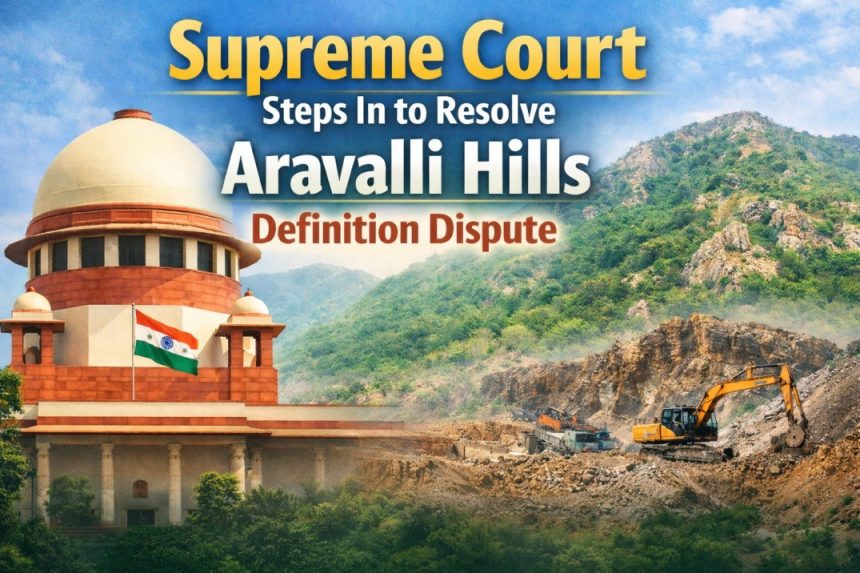
Ancient Aravallis and Their Ecological Significance
By | Gitanjali Thorat | PR Desk
New Delhi: The Aravalli mountain range is among the oldest fold mountains in the world, extending across Gujarat, Rajasthan, Haryana, and Delhi. For centuries, it has acted as a natural barrier against desertification, supported biodiversity, and helped regulate climate and groundwater levels in northern India.
Confusion Over Legal Status and Official Classification
Despite their importance, there is no single, legally binding definition of the Aravalli Hills. Various state departments rely on different records—revenue maps, forest data, or geological surveys—leading to conflicting interpretations and regulatory loopholes.
Exploitation Through Construction and Mining Activities
The lack of clarity has been widely exploited, resulting in unchecked real estate development, illegal mining, and deforestation. Environmentalists argue that many of these activities continue solely because disputed lands are excluded from protection under narrow interpretations.
Earlier Judicial and Regulatory Interventions
In the past, the Supreme Court and the National Green Tribunal have issued multiple orders to curb illegal mining and protect forest land in the Aravalli region. However, weak enforcement and definitional disputes have diluted the impact of these rulings.
Apex Court’s Suo Motu Intervention
Taking serious note of the ongoing damage, the Supreme Court has now taken suo motu cognisance of the issue. The court observed that the absence of a uniform definition has undermined environmental safeguards and has sought detailed responses from concerned authorities.
Implications for Delhi-NCR and Future Conservation
The court’s move could have major implications for Delhi-NCR, where the Aravallis play a key role in air quality and groundwater recharge. A clear definition may reshape land-use policies, halt environmentally harmful projects, and strengthen long-term conservation efforts.