By | Ramakant Tiwari | City Reporter
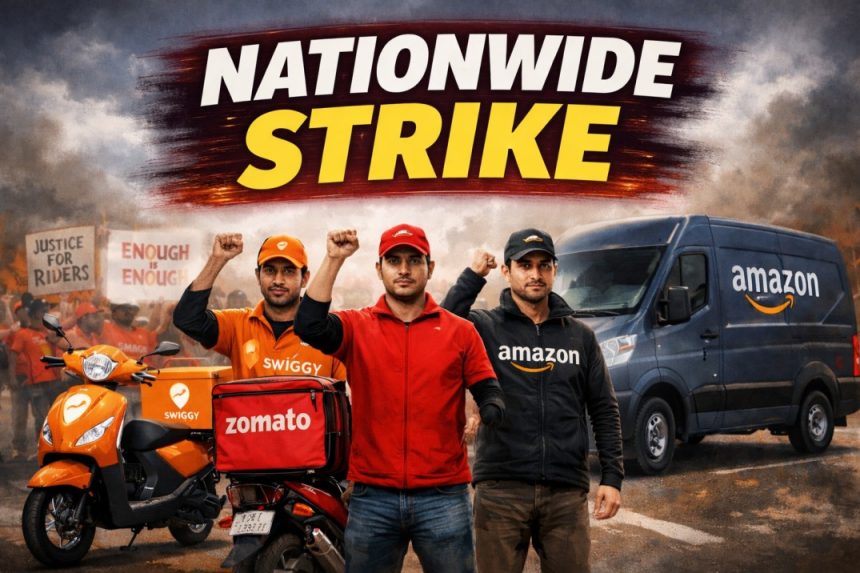
Mumbai : Delivery workers associated with Swiggy, Zomato, Zepto, and Amazon went on a nationwide strike on December 31, a day ahead of the New Year, raising concerns over pay structures, working conditions, and platform policies. The strike, organised under the banner of the Indian Federation of App-Based Transport Workers (IFAT), is expected to disrupt food and parcel deliveries across several cities.
Who Called the Strike?
The protest call was led by the Telangana Gig and Platform Workers Union (TGPWU). Its founder and president Shaik Salauddin said the strike was triggered by what workers describe as unfair and unilateral policy changes by platform companies.
According to the union, repeated representations to platforms have failed to yield results, forcing workers to escalate their demands through coordinated action.
What Are the Workers’ Key Demands?
The union has placed five major demands before platform companies:
1. Restoration of Earlier Payout Structure
Workers are demanding the return of the older, more predictable payout model, which they say offered fairer compensation, especially during high-demand periods.
Salauddin pointed out that during festivals such as Dussehra, Diwali, and Bakrid, workers were earlier paid better incentives—an arrangement that has since been diluted or withdrawn.
2. Minimum Pay Guarantee Per Delivery
Gig workers want a fixed minimum payment per order, arguing that current earnings fluctuate unpredictably due to algorithm-driven incentives and penalties.
They say rising fuel costs and inflation have made current per-order payouts economically unsustainable.
3. Transparency in Algorithm and Penalties
Workers allege that opaque algorithms determine order allocation, incentives, and penalties, often resulting in sudden income drops without explanation.
They are demanding clear disclosure of how payouts are calculated and why penalties are imposed.
4. Reduction in Work Pressure and Ratings-Based Punishment
Delivery partners say unrealistic delivery timelines, ratings-based deactivations, and constant performance monitoring have increased stress and job insecurity.
They want safeguards against arbitrary account suspensions and forced logouts.
5. Social Security and Welfare Benefits
The union is demanding insurance coverage, accident compensation, and basic social security, arguing that platform companies continue to classify workers as “partners” while avoiding employer responsibilities.
Impact on Services
The strike has led to delivery delays and service disruptions in several cities, with food delivery particularly affected in urban hubs. Platform companies have not yet issued a consolidated response.
Why This Strike Matters
This protest comes at a sensitive time—peak year-end demand—and reflects growing unrest among India’s gig workforce. Analysts note that the dispute highlights a broader issue: platform growth has outpaced worker protections, creating friction that sporadic incentives can no longer mask.
Unless platforms address structural concerns around pay predictability and worker security, such disruptions are likely to become more frequent.