By | Arvind Jadhav
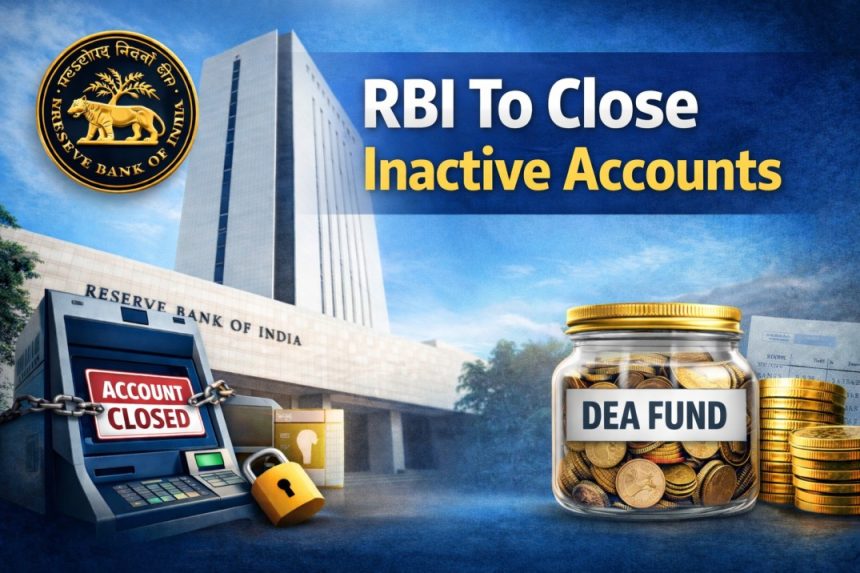
RBI Moves to Remove Silent Bank Accounts
India’s fast-growing banking system has brought crores of people into the formal economy. But with this expansion has come a quieter problem — millions of accounts that sit unused for years. The Reserve Bank of India (RBI) has flagged these silent accounts as vulnerable to fraud, hacking, and identity misuse. To reduce risks and strengthen banking safety, the RBI has announced new rules scheduled for January 10, 2026, calling for the closure of bank accounts that show no real activity. The change is meant to protect consumers and clean up banking records nationwide.
When Does an Account Become ‘Inactive’ or ‘Dormant’?
Under the revised policy, any bank account where the customer does not carry out a transaction for 12 months becomes classified as inactive. This includes cash deposits, digital payments, ATM cash withdrawals, cheque usage or even a simple transfer. After 24 months of no customer activity, the account is labeled dormant. Once dormant, banks may lock or restrict services such as card use, UPI transfers and online banking. Importantly, only transactions done by the account holder count — so interest credits or fee deductions do not stop dormancy.
Zero Balance and Abandoned Salary Accounts in Focus
A large share of dormant accounts are opened for short-term needs — college admissions, scholarship payouts, internships, or temporary jobs. Once the purpose ends, many customers simply forget them. The RBI has placed special attention on zero balance accounts, stating that those showing no activity and no government benefit linkage may be discontinued after notice. However, Jan Dhan accounts or accounts receiving subsidies like LPG, pensions or student grants will remain safe as long as they show periodic activity.
What Becomes of the Money in Closed Accounts?
The RBI has clarified that account closure does not wipe out customer funds. All unclaimed balances will move into the Depositor Education and Awareness Fund, a dedicated pool maintained and supervised by the RBI. Customers retain the right to withdraw their funds later, even after account closure, by submitting proof of identity. While this recovery is possible, bankers warn that the paperwork and time involved may be inconvenient, so customers have strong incentives to reactivate before closure.
Banks Preparing for a Nationwide Reactivation Drive
Before closures begin, banks are expected to launch large-scale communication campaigns, sending SMS alerts, emails and postal notices. Frontline staff may also be asked to help customers update their KYC details and make a basic transaction to safeguard their accounts. Senior citizens and individuals living in remote areas could require extra support, as many of them may be unaware that their accounts are at risk. From the bank’s point of view, removing deadweight accounts will help reduce operational load and cyber monitoring costs.
A Turn Toward Meaningful Banking Habits
For over a decade, the national goal was simple: open as many bank accounts as possible. Now, the focus has shifted from access to active participation. The RBI believes that a banking system filled with live users — not forgotten folios — makes financial services more secure, efficient, and responsive. With digital payments becoming the norm, every dormant account represents a potential security weak spot. As 2026 approaches, the message for customers is clear: use your bank account regularly — even a small transaction is enough to keep it alive.