PR | Network
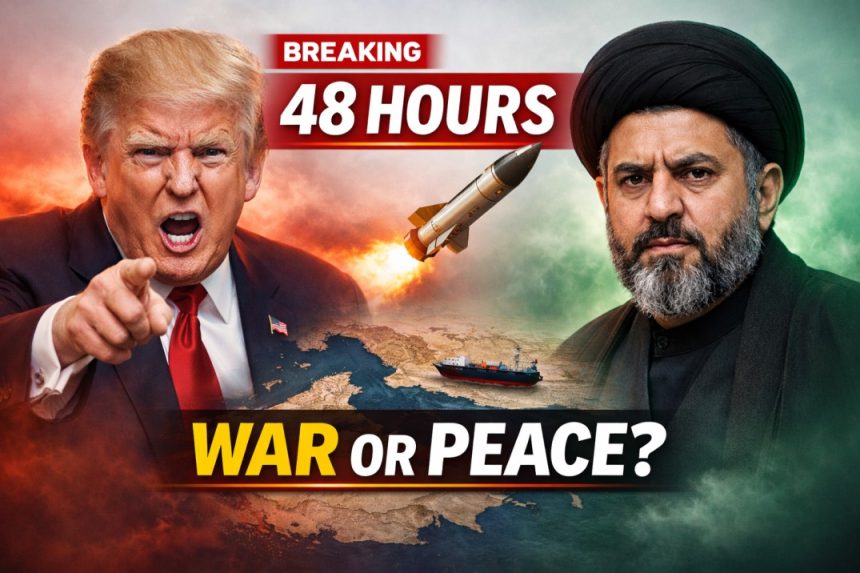
Tensions in the Middle East have escalated sharply after former U.S. President Donald Trump issued a strong 48-hour ultimatum to Iran, demanding immediate compliance with key conditions, including reopening critical maritime routes and engaging in a peace deal. The warning comes amid an already volatile conflict involving the United States, Iran, and regional allies, raising fears of a wider war.
Trump reportedly warned that if Iran fails to act within the given timeframe, “all hell will rain down,” signaling the possibility of large-scale military action. The ultimatum is largely centered around the strategic Strait of Hormuz, a crucial global oil transit route, whose disruption has already impacted international markets and energy security.
Iran, however, has firmly rejected the ultimatum, calling it aggressive and unjustified. Iranian military leadership responded with equally strong language, warning that any attack would trigger severe retaliation and further destabilize the region. Tehran has also indicated that it will not bow to pressure and is prepared for prolonged confrontation if necessary.
Meanwhile, the situation on the ground continues to worsen, with missile exchanges, airstrikes, and rising casualties reported across multiple locations. Regional tensions have spilled into neighboring countries, increasing concerns about global security, oil supply disruptions, and the possibility of a prolonged conflict involving multiple nations.
Diplomatic efforts to de-escalate the crisis are ongoing but have so far failed to produce any breakthrough. With the 48-hour deadline looming, the world is closely watching developments, as the next move by either side could significantly alter the course of the conflict and impact global stability.