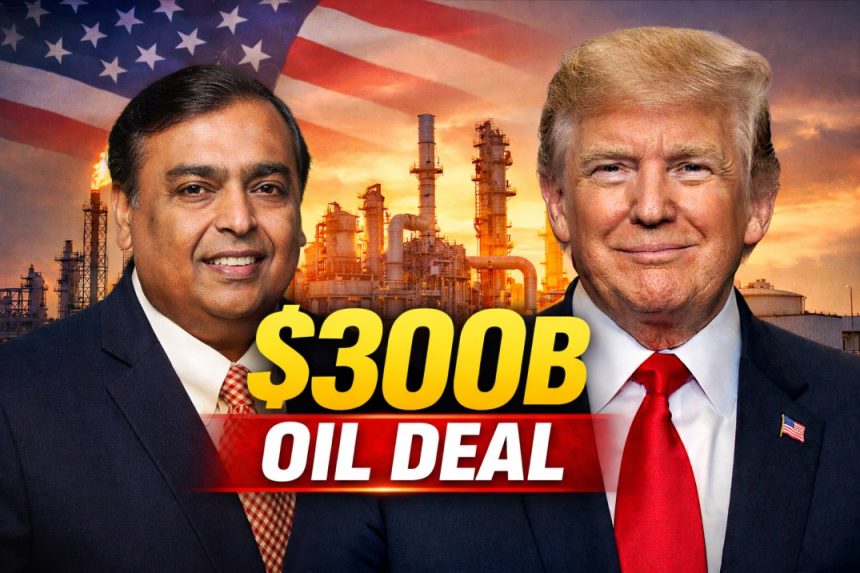
US Oil Refinery Deal: Reliance Backing for $300 Billion Texas Project, Trump Calls It Historic Investment
By | Arvind Jadhav
Mumbai: A big news from the global energy sector has emerged after U.S. President Donald Trump announced plans for a massive oil refinery project in Texas with backing linked to India’s energy giant Reliance Industries. The project, described by Trump as a “historic $300 billion investment,” is expected to strengthen America’s energy infrastructure and boost economic activity in the southern United States.
According to available details, the refinery is planned near the Port of Brownsville in Texas, a strategic location close to the U.S.–Mexico border and a major energy export hub. The facility is expected to be developed by the company America First Refining and could process around 160,000 barrels of crude oil per day, mainly using domestic shale oil resources.
Energy analysts say the project is significant because the United States has not built a large new oil refinery in nearly five decades. If the plan moves forward as announced, the Texas refinery could become the first major refinery constructed in the country since the 1970s, marking a major milestone in the American petroleum industry.
During the announcement, Donald Trump said the refinery would help increase domestic fuel production, reduce supply pressure in the energy market, and create thousands of jobs in Texas. He described the project as part of the
administration’s push to expand U.S. energy output and maintain global leadership in oil production.
The involvement of Reliance Industries has also drawn attention internationally. Led by industrialist Mukesh Ambani, Reliance operates the world-famous Jamnagar refining complex in India and has extensive experience in large-scale refinery operations. Industry observers believe such expertise could play an important role if the Texas refinery project moves ahead.
However, some experts note that the $300 billion figure likely represents the broader economic impact of the project over time, including crude supply, fuel production, and related infrastructure investments. The actual construction cost of the refinery itself is expected to be significantly lower, though the initiative still represents a major strategic investment in the global oil sector.