


By | Gitanjali Thorat | PR Desk
January 2025: Maha Kumbh Stampede Casts a Shadow on the New Year
Mumbai : The year 2025 began with tragedy as a massive crowd crush occurred during the Prayag Maha Kumbh Mela in Uttar Pradesh. Lakhs of devotees had gathered for an auspicious bathing ritual when barricades reportedly collapsed under immense pressure, triggering panic and chaos. Dozens of pilgrims, many of them elderly and women, lost their lives, while several others were injured. Rescue operations were hampered by overcrowding, and the incident sparked nationwide debate over crowd management, emergency preparedness, and accountability at large religious events.
February 2025: Festival Gatherings Turn Risky Across States
February witnessed a series of smaller yet disturbing incidents linked to religious and cultural festivals across different parts of the country. Sudden crowd surges, inadequate exits, and lack of on-ground coordination led to injuries and fatalities at multiple venues. Though each incident was localized, together they highlighted a recurring pattern of negligence and insufficient safety planning at public gatherings.
March 2025: Infrastructure Warnings and Near-Miss Disasters
Throughout March, concerns grew over India’s aging infrastructure as reports emerged of weakened bridges, damaged flyovers, and unsafe public structures. While major casualties were avoided in most cases, engineers and civic activists repeatedly warned that the lack of timely maintenance could lead to catastrophic failures, especially ahead of the monsoon season.
April 2025: Pahalgam Terror Attack Shakes the Nation
April marked one of the darkest moments of the year when terrorists targeted tourists at Baisaran meadow near Pahalgam in Jammu and Kashmir. The gun attack claimed the lives of over two dozen people, many of them visitors, and left the nation in shock. Tourism activities in the Valley came to a sudden halt, security was intensified, and the attack reignited concerns over civilian safety in conflict-sensitive regions. The incident also triggered diplomatic and security-level responses amid rising tensions.
May 2025: Heatwaves and Urban Fire Incidents Claim Lives
As temperatures soared, severe heatwaves across northern and central India resulted in multiple deaths, particularly among outdoor workers, elderly citizens, and the homeless. Simultaneously, major cities reported a spike in fire accidents, often caused by electrical overloads and poor safety compliance in residential and commercial buildings. The month underscored the growing human cost of climate stress and urban neglect.
June 2025: Bridge Collapse and Factory Explosion Shock the Country
June turned into one of the deadliest months of the year. In Maharashtra, the collapse of the Kundmala Bridge near Pune claimed several lives and injured dozens, as vehicles plunged into the river below. Days later, a powerful explosion at a chemical factory in Sangareddy, Telangana, killed more than 40 workers and caused widespread devastation. Both incidents exposed glaring lapses in infrastructure monitoring and industrial safety enforcement.
July 2025: Monsoon Fury Triggers Floods and Accidents
Heavy monsoon rains lashed large parts of the country in July, leading to flooding, landslides, and road accidents. Low-lying areas were submerged, houses collapsed, and several people lost their lives due to electrocution and drowning. Emergency services struggled to keep pace as rivers swelled and transport networks were disrupted.
August 2025: Cloudburst Disaster Devastates Kishtwar
August witnessed a devastating cloudburst in Kishtwar district of Jammu and Kashmir, triggering flash floods that swept away homes, vehicles, and pilgrims along a religious route. Dozens were killed, many went missing, and entire villages were left devastated. The disaster once again highlighted the vulnerability of Himalayan regions to extreme weather events and the urgent need for early warning systems.
September 2025: Stampedes Push Annual Toll Beyond 100
September saw a disturbing rise in stampede incidents at political rallies, religious sites, and public events across multiple states. With repeated crowd-control failures, the cumulative stampede-related death toll for the year crossed the 100 mark. Safety experts warned that without systemic reforms, such tragedies would continue to repeat.
October 2025: Jaisalmer Bus Fire Leaves Dozens Dead
A horrific bus fire in Rajasthan’s Jaisalmer district claimed the lives of more than two dozen passengers when a moving private bus caught fire. Many were trapped inside as flames spread rapidly. The tragedy raised serious concerns over vehicle fitness checks, emergency exits, and enforcement of passenger safety regulations.
November 2025: Delhi Car Explosion Raises Security Alarm
In November, a car explosion near a busy metro station in Delhi killed several people and injured many others. Authorities treated the incident as a suspected terror act, leading to heightened security across major cities. The blast reignited fears over urban safety and preparedness in densely populated areas.
December 2025: Cold Wave and Road Accidents Mark a Grim End
The year ended with cold wave-related deaths in northern India and a series of fatal road accidents during the holiday season. While the scale of incidents was comparatively lower, the cumulative impact of the year’s tragedies left deep scars across communities nationwide.
A Year That Demanded Accountability and Reform
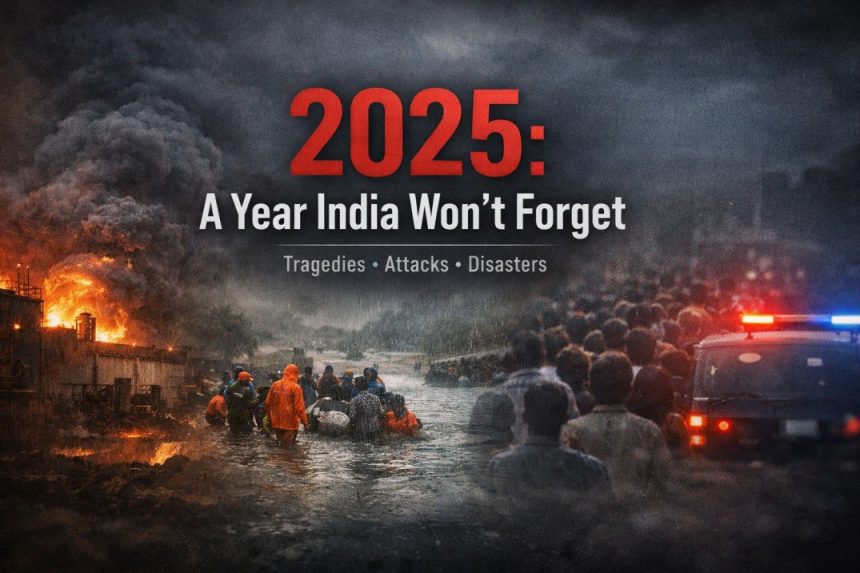
From terror attacks and stampedes to floods, fires, and industrial disasters, 2025 exposed serious weaknesses in India’s safety systems. The year served as a harsh reminder that preventive planning, strict enforcement, and timely response are critical to saving lives. As the nation moves forward, the lessons of 2025 must translate into action, not just reflection.