


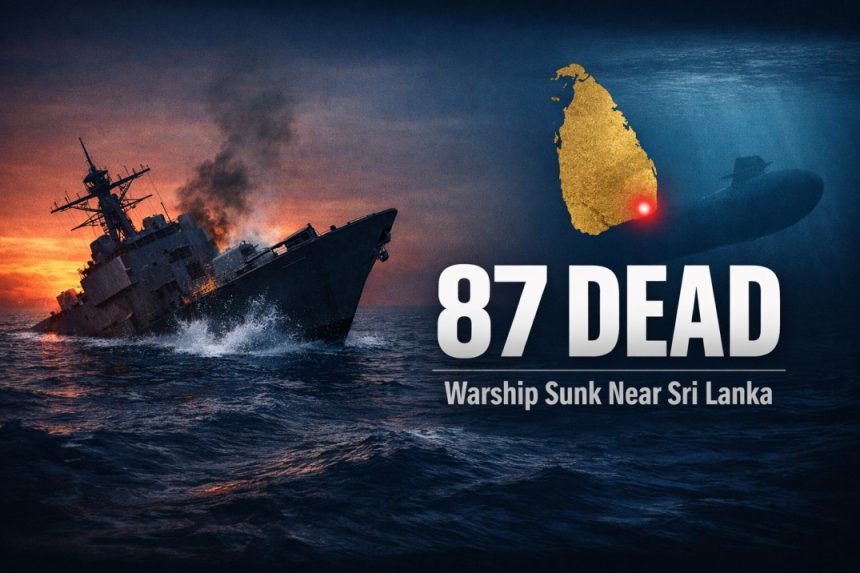
U.S. Submarine Sinks Iranian Warship Near Sri Lanka
By | Gitanjali Thorat | PR Desk
Mumbai : Southern Indian Ocean — In a dramatic escalation of the ongoing conflict involving Iran, the United States and allied forces, a United States Navy submarine torpedoed and sank the Iranian warship IRIS Dena approximately 40 nautical miles south of Galle, Sri Lanka on March 4, 2026. At least 87 Iranian sailors have died, according to Sri Lankan authorities, while dozens remain missing and about 32 crew members were rescued and hospitalized. The incident has widened the geographic scope of the conflict, moving it far beyond the Middle East into the Indian Ocean region.
Details of the Attack and Rescue Efforts
The Iranian frigate, IRIS Dena — a Moudge-class naval vessel — was struck by a torpedo fired from a U.S. fast-attack submarine, marking one of the first acknowledged instances since World War II of a modern submarine sinking an enemy surface warship with such weaponry. Sri Lanka’s navy and air force launched a search and rescue mission after receiving a distress call from the sinking vessel, recovering bodies from the water and saving survivors who were then taken to Karapitiya Teaching Hospital in Galle for treatment. The exact number of missing crew remains uncertain.
Setting: Returning From Naval Exercises in India
According to military and diplomatic sources, the IRIS Dena was returning to Iran after participating in the International Fleet Review and the multilateral MILAN 2026 naval exercise hosted by the Indian Navy at Visakhapatnam, India earlier in February. The frigate had been operating in international waters when it was hit. Sri Lankan officials emphasized that although the attack occurred outside Sri Lanka’s territorial waters, their forces responded to the distress signal under international maritime search-and-rescue obligation.
Global and Regional Implications
The sinking of the IRIS Dena marks a significant escalation in hostilities that have largely been contained within the Middle East until now. U.S. Defense Secretary Pete Hegseth confirmed the submarine strike at a Pentagon briefing, describing it as the first such torpedo sinking by a U.S. submarine since World War II and part of efforts to degrade Iranian military assets. The attack has raised concerns about wider regional instability, especially in South Asian waters and crucial shipping lanes of the Indian Ocean. Tehran has yet to issue a full official statement on the losses.