

Arvind Jadhav | PR Network
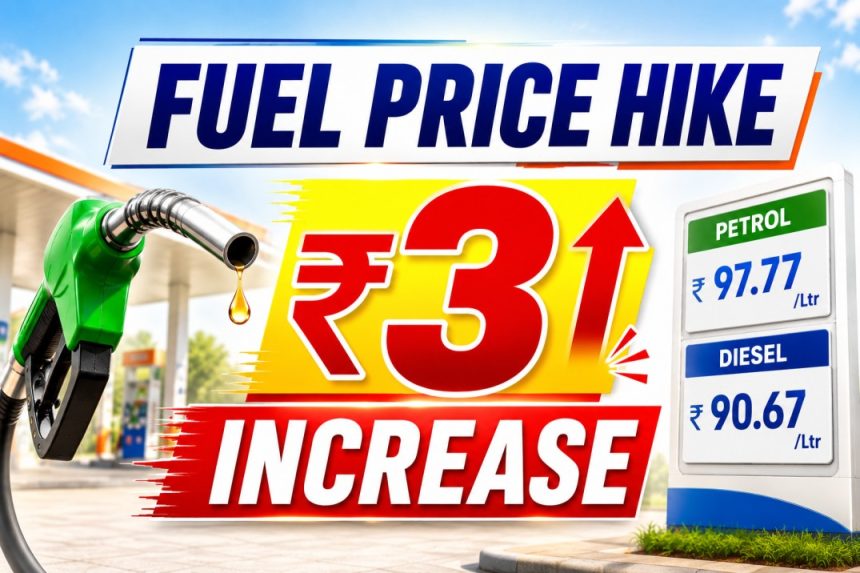
Mumbai : Petrol and diesel prices have been increased by ₹3 per litre across India affecting millions of citizens The revised rates have come into effect immediately, marking the first major fuel price hike in nearly four years and raising fresh concerns over rising living costs.
The decision to increase fuel prices has been taken by oil marketing companies in response to the continuous rise in global crude oil prices. Over the past few weeks, international oil markets have witnessed a sharp upward trend, largely influenced by geopolitical tensions and supply uncertainties in key oil-producing regions.
This increase comes at a time when fuel prices had remained largely stable for a prolonged period despite fluctuations in global markets. Industry experts suggest that oil companies were under increasing financial pressure due to rising input costs, making the current price correction necessary.
The ₹3 hike is expected to have a widespread impact on the economy. Fuel is a critical component of transportation, and any increase directly affects logistics and supply chains. As a result, prices of essential commodities such as vegetables, fruits, milk, and other daily necessities are likely to rise in the coming days.
For the common man, this price hike translates into higher daily expenses. Middle-class households, daily commuters, small business owners, and transport operators are expected to bear the brunt of this increase, as fuel costs constitute a significant portion of their monthly budget.
Economic experts have also warned of a possible rise in inflation following this development. With transportation costs increasing, the overall cost of goods and services may go up, putting additional pressure on household finances and slowing down consumption patterns.
Meanwhile, political reactions have started pouring in. Opposition parties have criticized the move, calling it an added burden on citizens already dealing with inflation. They have urged the government to take immediate steps to provide relief and control rising fuel prices.
On the other hand, government sources indicate that the hike is largely driven by global factors beyond domestic control. Officials have suggested that only a partial adjustment has been made and further decisions will depend on international crude oil trends.
Looking ahead, the situation remains uncertain. If global oil prices continue to rise or geopolitical tensions persist, further increases in fuel prices cannot be ruled out. For now, consumers across the country will have to adjust to higher fuel costs and its cascading effects on everyday life.