

🔴 By | Gitanjali Thorat
🟡 Ceasefire Collapses, Conflict Reignites
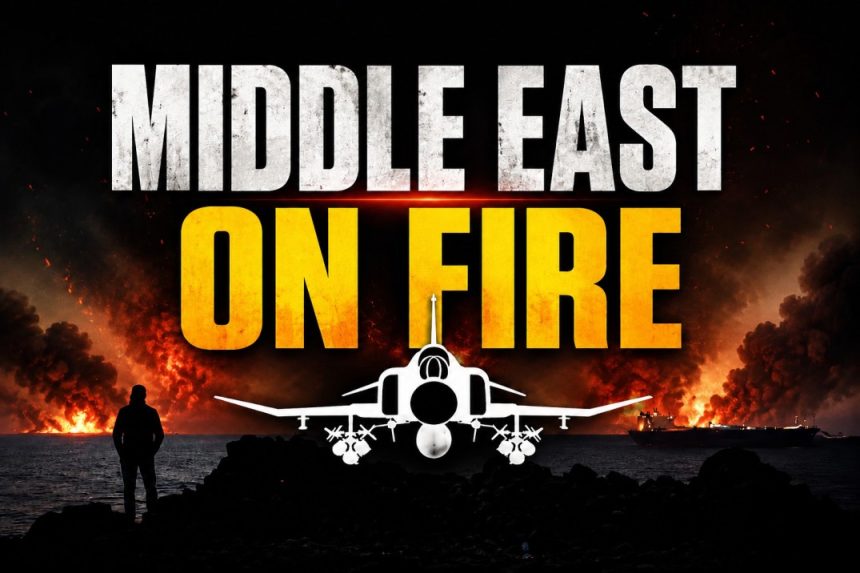
The fragile ceasefire between the United States and Iran has effectively collapsed, triggering a fresh wave of hostilities across the Middle East. What was earlier seen as a controlled standoff has now turned into an active conflict, with both sides abandoning restraint and escalating military operations.
🟡 Large-Scale US Airstrikes Across Iran
In a significant show of force, the United States carried out extensive airstrikes targeting multiple locations across Iran. Key military installations, including missile systems, naval infrastructure, and defense bases, were hit. US officials stated that the strikes were aimed at protecting strategic interests and ensuring the safety of global shipping routes.
🟡 Iran Responds with Missile and Drone Attacks
Iran swiftly retaliated by launching a series of missile and drone attacks targeting US military positions and allied bases in the Gulf region. Reports indicate strikes in countries such as Qatar, Bahrain, and Kuwait, signaling a broader geographical spread of the conflict and raising concerns about regional stability.
🟡 Strait of Hormuz Emerges as Flashpoint
The Strait of Hormuz has once again become the center of global attention, with attacks on commercial vessels intensifying tensions. As one of the world’s most critical oil transit routes, any disruption in this region has immediate global consequences. The US has increased naval deployments to escort ships and secure maritime traffic.
🟡 Rising Risk of Wider Regional War
The ongoing conflict is no longer confined to direct US–Iran engagement. With multiple regional players indirectly involved, the risk of a wider Middle East war is increasing. Strategic alliances and proxy involvements are further complicating the situation, making de-escalation more difficult.
🟡 Global Markets and Oil Supply Under Pressure
The escalation has begun to impact global markets, particularly oil prices, which are showing volatility due to fears of supply disruption. International trade routes are under pressure, and economic uncertainty is rising as the situation continues to evolve.
🟡 Diplomatic Channels Still Open but Fragile
Despite the intensifying conflict, diplomatic efforts have not completely ceased. Backchannel communications and international mediation attempts are ongoing, but the chances of immediate de-escalation remain uncertain given the current level of military engagement.
The US–Iran conflict has entered a dangerous phase, with direct military exchanges replacing indirect confrontation. While a full-scale war has not yet been officially declared, the current developments suggest that the situation is highly volatile and could escalate further at any moment.