


🔴 By | Sonal Sharma
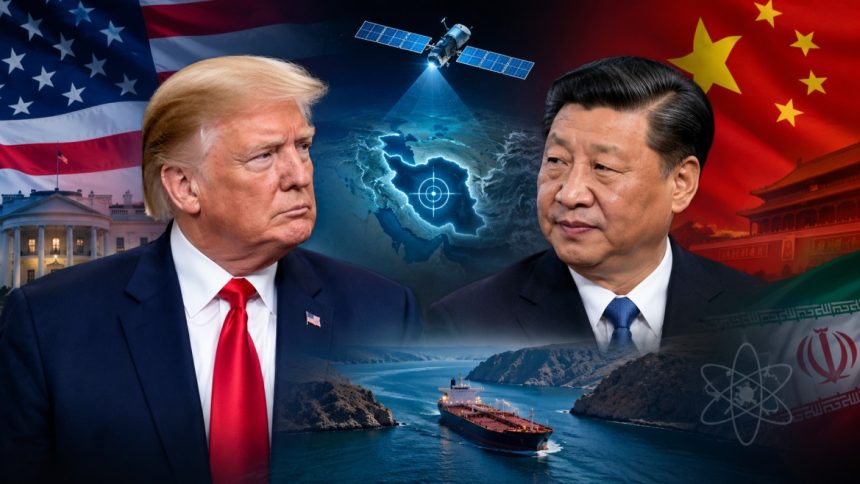
Washington: Fresh questions have emerged over China’s possible role in Iran’s military targeting capabilities after U.S. intelligence assessments reportedly pointed to satellite and geospatial information supplied by Chinese entities. According to reports, such information may have helped Iran track U.S. military positions and movements with greater precision. However, there is no publicly established evidence that the Chinese government directly provided military intelligence to Iran.
🟡 Trump-Xi Meeting Brings Iran Back Into Focus
The issue gained additional diplomatic significance during the meeting between U.S. President Donald Trump and Chinese President Xi Jinping. According to U.S. officials, Trump raised concerns about any potential Chinese assistance to Iran and urged Beijing not to provide support that could strengthen Tehran’s military capabilities.
Xi, meanwhile, has backed renewed dialogue and negotiations between Washington and Tehran. China has argued that diplomacy remains the appropriate route for addressing the Iran crisis and the wider regional conflict.
🟡 Xi Jinping Honoured at White House State Dinner
Following the high-level talks, President Trump hosted Xi Jinping and his wife Peng Liyuan at a White House State Dinner. The event brought together senior political figures, technology leaders and prominent business personalities, highlighting the broader diplomatic and economic significance of the Trump-Xi engagement.
The State Dinner was separate from the intelligence allegations surrounding Iran, but its timing added another important dimension to the high-profile U.S.-China summit.
🟡 The Four Key Issues Linked to the Islamabad MoU
The discussion over Iran also brings the earlier Islamabad Memorandum of Understanding back into focus. The framework included several major areas aimed at reducing the U.S.-Iran confrontation.
First — Ending military hostilities: The framework sought an end to military operations and a reduction in direct confrontation between Washington and Tehran.
Second — Strait of Hormuz: The agreement framework addressed the movement of commercial shipping through the strategically vital Strait of Hormuz and the removal of military restrictions affecting maritime traffic.
Third — Sanctions and economic issues: The proposed framework included discussions on sanctions relief and measures connected with Iran’s economic recovery.
Fourth — Iran’s nuclear programme: The framework also addressed Iran’s nuclear activities, international monitoring and efforts to prevent the development of nuclear weapons.
🟡 From Satellite Intelligence to the Diplomatic Table
The developments present two important tracks in the Iran crisis. On one side, U.S. intelligence assessments have raised concerns about satellite and geospatial information reportedly reaching Iranian entities. On the other, China is publicly supporting renewed diplomatic engagement between Washington and Tehran.
This makes the Trump-Xi meeting particularly significant. The immediate question is whether Beijing will play a larger diplomatic role in efforts to resolve the Iran crisis and whether Washington will accept China’s involvement while continuing to scrutinise any assistance that could strengthen Iran’s military capabilities.
🟡 Why the Strait of Hormuz Matters
The Strait of Hormuz remains strategically important because a major share of global energy shipments passes through the waterway. Any prolonged disruption can affect international oil markets, shipping costs and energy-importing countries, including India.
The combination of military intelligence, satellite surveillance, Iran’s nuclear programme and the security of the Strait of Hormuz therefore makes the U.S.-China-Iran triangle one of the closely watched geopolitical issues in the region.