

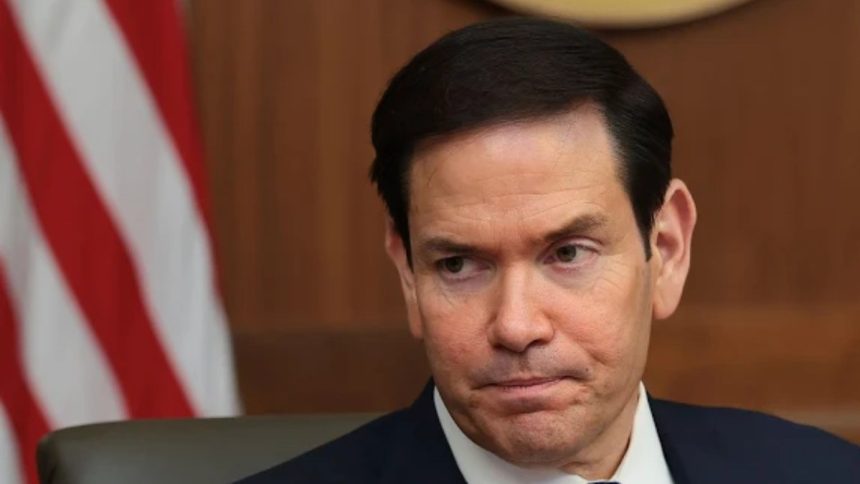
US Secretary of State’s Mumbai talks and planned Jamnagar refinery visit highlight the economic and geopolitical priorities shaping India–US relations.
🔴 By | Arvind Jadhav
Mumbai : US Secretary of State Marco Rubio’s India visit has brought trade negotiations, energy security and strategic cooperation into sharp focus. His meeting with External Affairs Minister S. Jaishankar in Mumbai on October 20 comes at a critical stage in bilateral relations, as New Delhi and Washington seek to resolve trade differences while strengthening cooperation in defence, technology and energy.
🟡 India–US Trade Deal: Progress, but No Final Agreement Yet
One of the central issues during Rubio’s visit is the proposed bilateral trade agreement. Rubio has indicated that negotiations are very close to completion, with only a limited number of issues remaining. However, the agreement has not yet been formally signed, and its final terms remain important for both countries.
For India, improved access to the American market could create opportunities for exporters, manufacturers and technology businesses. For the United States, the agreement could support greater access to India’s large consumer market. The ultimate impact will depend on tariff arrangements, market-access commitments and the balance of concessions agreed upon by both sides.
🟡 Russian Oil: The Energy Security Challenge
India’s purchases of Russian crude oil have been a significant source of friction with Washington. The United States has sought to influence India’s energy choices through trade pressure and potential tariff measures, while New Delhi has emphasised the importance of securing affordable and reliable energy supplies.
Recent developments, including a temporary US waiver concerning potential penalties linked to Russian oil purchases, have provided some room for negotiations. Nevertheless, uncertainty over future American policy remains.
From India’s perspective, the issue is not simply about choosing between Washington and Moscow. It concerns the cost of imported energy, domestic inflation, industrial competitiveness and the ability to diversify supplies. Any long-term arrangement will need to account for these economic considerations.
🟡 Why the Jamnagar Refinery Matters
Rubio’s planned visit to Reliance Industries’ refinery complex in Jamnagar, Gujarat, adds a major commercial dimension to the diplomatic engagement. The facility is particularly relevant because it can process different grades of crude oil, including heavier varieties associated with Venezuela.
Washington is encouraging greater cooperation involving Venezuelan crude, while Reliance’s refining capabilities and international energy investments make the company an important participant in the broader discussion.
The potential benefits are significant, but the outcome will depend on commercial viability, international restrictions, oil prices and the terms under which supplies are obtained. A refinery visit should therefore be viewed as an indication of energy-sector priorities, rather than proof that a new agreement has already been concluded.
🟡 Defence and Technology: The Wider Strategic Picture
Trade and energy are only part of the relationship. India and the United States also cooperate in defence, emerging technologies and regional security. These areas have acquired greater significance amid changing geopolitical dynamics in the Indo-Pacific and the strategic competition involving China.
Washington has an interest in deeper engagement with India, while New Delhi seeks access to advanced technologies and stronger defence capabilities without compromising its strategic autonomy. Both countries must manage differences over tariffs, immigration policies and their respective relationships with other nations.
The challenge is to convert diplomatic understanding into practical outcomes, including technology cooperation, investment, defence partnerships and predictable economic arrangements.
🟡 The Mumbai Visit: Does the Location Matter?
Rubio’s decision to hold talks in Mumbai rather than New Delhi has attracted political attention. Mumbai is India’s financial centre, and the inclusion of business engagement and the planned Jamnagar refinery visit gives the trip a clear commercial and energy focus.
However, the location alone does not establish the status of bilateral relations. The more meaningful indicators will be the agreements reached, the progress made on outstanding disputes and the follow-up actions taken by both governments.
🟡 Challenges and Future Prospects
The immediate test will be whether India and the United States can complete their trade negotiations and establish clearer terms for economic cooperation. Energy diversification, defence collaboration and critical technologies will remain important areas to watch.
For India, the objective is to expand cooperation with the United States while protecting domestic economic interests, maintaining energy security and preserving an independent foreign policy. For Washington, the challenge is to deepen its partnership with New Delhi while addressing its own trade and geopolitical priorities.
Analysis: Marco Rubio’s visit is significant not because it resolves every disagreement, but because it highlights how trade, energy and strategic interests are increasingly interconnected. The real measure of its success will be the concrete outcomes that emerge from the discussions in the weeks ahead.