

🔴 By | Arvind Jadhav
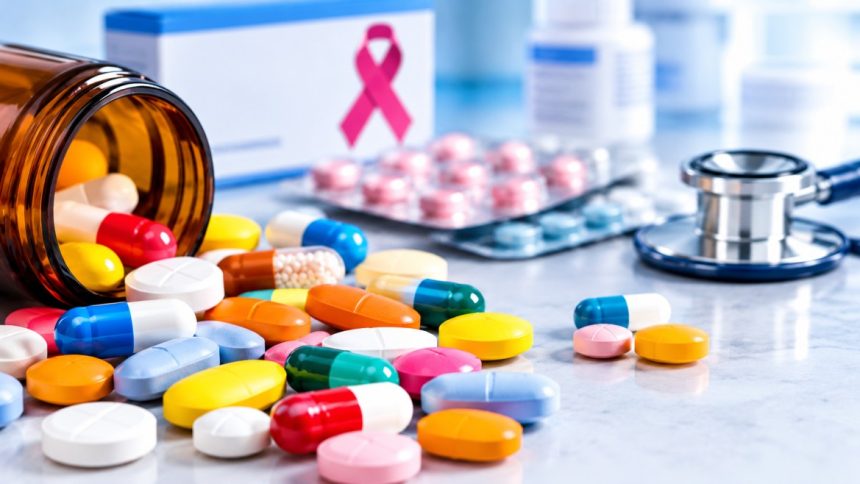
New Delhi: In a major relief for cancer patients and their families, the Government of India has announced a new price-control measure covering 137 anti-cancer medicines, with maximum retail prices (MRPs) expected to fall by up to 70%. The revised prices will come into effect from November 9, 2026, under a move aimed at making life-saving cancer treatment more affordable and reducing the financial burden on patients.
The decision has been implemented by the National Pharmaceutical Pricing Authority (NPPA), under the Department of Pharmaceuticals, Ministry of Chemicals and Fertilizers. According to the government, the measure is expected to generate annual savings of approximately ₹2,500 crore for patients. However, the actual reduction will vary from medicine to medicine, depending on existing prices and trade margins.
🟡 Trade Margins Restricted to Curb Excessive Pricing
The new policy introduces trade margin rationalisation for 137 identified non-scheduled anti-cancer medicines. Under the revised framework, trade margins will be capped at 30%, helping curb excessive mark-ups across the medicine distribution and retail chain.
Non-scheduled medicines are those that do not fall under the existing scheduled price-control list. While many essential cancer medicines already have government-regulated ceiling prices, the latest intervention extends additional price protection to selected medicines outside that list.
The government said the measure is intended to address unusually high trade margins while maintaining the financial viability of manufacturers and ensuring the continued availability of essential cancer medicines. The revised prices are expected to benefit patients who depend on costly medicines as part of long-term cancer treatment.
🟡 Advanced Cancer Treatments Also in Focus
The list includes selected high-value medicines used in the treatment of different cancers. These include medicines such as pembrolizumab, ribociclib and abemaciclib, which are used in specific treatment settings, including certain forms of breast cancer and other malignancies.
Cancer treatment often involves a combination of medicines, diagnostic tests, hospitalisation, surgery, chemotherapy, radiation and follow-up care. For patients requiring expensive medicines over several months, even a partial reduction in drug costs can make a meaningful difference to household finances.
However, the 70% figure represents the maximum expected reduction, not a uniform discount on every cancer medicine. Patients should check the revised MRP of their specific medicine before purchasing it.
🟡 Government Estimates ₹2,500 Crore in Annual Savings
The government expects the price-control initiative to save patients around ₹2,500 crore annually. The move follows an earlier intervention in 2019, when trade margins on 42 selected non-scheduled anti-cancer medicines were regulated.
According to official government information, that earlier exercise led to price reductions of up to 90% across 526 brands. The latest initiative expands the effort to address excessive margins and improve access to cancer medicines.
Under the new notification, manufacturers must submit revised prices to the NPPA and communicate the updated MRPs. Retailers, hospitals and other medical institutions are expected to charge the applicable revised prices once the measure takes effect.
🟡 Patients Advised to Check Revised Medicine Prices
Patients and caregivers can verify applicable medicine prices through the NPPA website and the government’s Pharma Sahi Daam platform. State drug-control authorities will also be involved in monitoring compliance with the revised pricing requirements.
The measure is an important step towards reducing the cost of cancer medicines, but the overall expense of treatment remains a challenge for many Indian families. Hospital charges, diagnostic procedures, surgery and other medical expenses may continue to account for a substantial share of the total cost.
For patients battling cancer, the real impact of the decision will depend on how effectively the revised prices are implemented and whether the savings reach consumers. From November 9, the focus will be on ensuring that eligible medicines are sold at their applicable revised MRPs and that patients receive the financial relief envisaged by the government.