

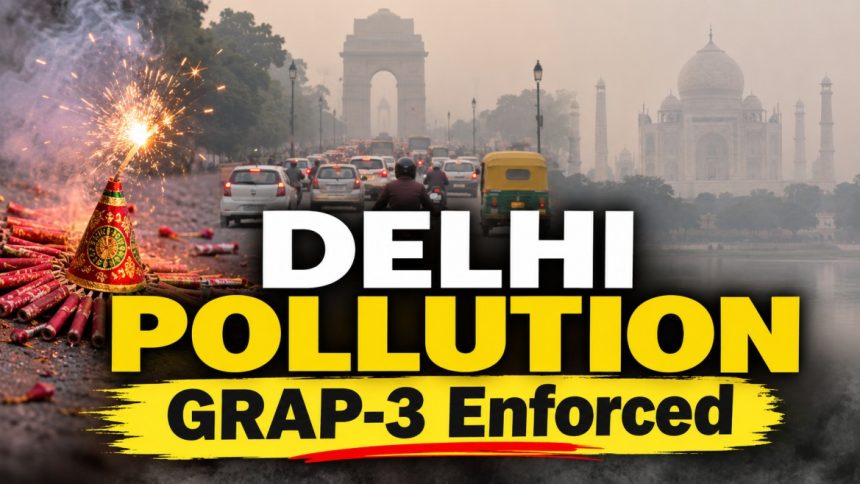
Delhi Chokes After Diwali as AQI Crosses 400; GRAP-3 Restrictions Enforced
🔴 By | Arvind Jadhav
New Delhi : Delhi is once again struggling with deteriorating air quality following Diwali celebrations, with pollution levels reaching alarming levels across several parts of the national capital. The Air Quality Index (AQI) touched the ‘Severe’ category at multiple monitoring stations, raising fresh concerns over public health and the effectiveness of pollution-control measures.
According to reports, Delhi’s overall AQI was around 373, placing it in the ‘Very Poor’ category, while some monitoring stations recorded readings above 400. The ITO area reportedly recorded an AQI of 406, highlighting the severity of pollution in parts of the city.
🟡 GRAP-3 Restrictions Come Into Force
In response to worsening air quality, authorities have implemented Stage III of the Graded Response Action Plan (GRAP) across Delhi-NCR. The restrictions include curbs on certain construction and demolition activities, intensified action against dust pollution, and stricter monitoring of polluting vehicles.
Authorities have also been directed to strengthen road cleaning, water sprinkling and other dust-control measures. Schools may adopt hybrid learning arrangements for eligible classes in accordance with the applicable directions.
🟡 Multiple Factors Behind Rising Pollution
The post-Diwali deterioration in air quality has once again brought attention to the multiple sources of pollution affecting Delhi. Firecracker emissions, vehicular exhaust, construction dust, industrial emissions and stubble burning in neighbouring states such as Punjab and Haryana contribute to the region’s pollution burden.
Unfavourable weather conditions, including low wind speeds and poor atmospheric dispersion, can further trap pollutants close to the ground, worsening the situation.
🟡 Health Concerns Grow as Air Quality Deteriorates
The worsening air quality poses significant health risks, particularly for children, senior citizens and people suffering from asthma or other respiratory and cardiovascular conditions. Exposure to very poor and severe air pollution can cause breathing difficulties, throat irritation, coughing and aggravation of existing illnesses.
Residents have been advised to limit prolonged outdoor exposure, particularly during periods of high pollution, and follow official health advisories.
🟡 Can Delhi Prevent Another Pollution Emergency?
Despite recurring restrictions and pollution-control campaigns, Delhi continues to face a serious air-quality challenge every winter. The latest deterioration has once again raised questions about long-term pollution management, coordination between neighbouring states and the enforcement of environmental regulations.
With GRAP-3 measures now in force, the key question is whether emergency restrictions will bring meaningful relief or whether Delhi will continue to struggle with hazardous air throughout the winter season.