


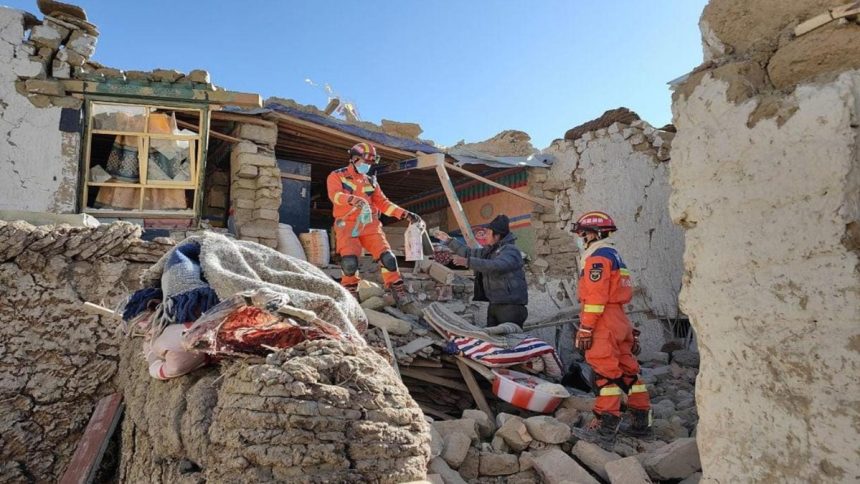
Rescue teams deployed across northern Tibet as aftershocks, damaged roads and approaching snowfall complicate emergency operations.
🔴 By | PR Network
Tibet : A powerful magnitude 7.0 earthquake struck China’s Tibet Autonomous Region late Thursday night, October 22, killing at least 16 people and injuring 46 others, according to reports published on Friday. The powerful tremor caused widespread structural damage in the northern Nagqu region, leaving rescue teams racing against time to reach affected communities.
The earthquake struck at approximately 10:33 p.m. local time, with its epicentre reported near Baqen County, around 191 kilometres east-northeast of Nagqu city. According to initial assessments, the disaster caused at least 339 homes and 20 livestock sheds to collapse. Eleven of the injured were reported to be in serious condition, highlighting the severity of the incident.
🟡 Rescue Operations Intensify Across Affected Areas
Authorities have mobilised more than 1,600 personnel to support search-and-rescue operations, provide medical assistance and help residents displaced by the earthquake. Emergency supplies, including tents, beds, prefabricated housing units, flashlights and warm clothing, have been dispatched to the affected region.
Rescue workers are facing considerable challenges in reaching remote settlements. Communication disruptions and power outages have been reported in some areas, while earthquake-triggered rockfalls have forced the partial closure of National Highway 317. Access has been restricted to emergency and rescue vehicles in the affected stretch.
🟡 Aftershocks and Snowfall Raise Fresh Concerns
The main earthquake was followed by several aftershocks across the wider Tibet region. Earthquake monitoring records published by India’s National Center for Seismology also showed multiple tremors in Tibet and neighbouring areas during the night.
Authorities are also concerned about the impact of adverse weather on rescue and relief efforts. Forecasts of intermittent snowfall over the next three days could make travel more difficult, particularly in high-altitude areas where temperatures can fall sharply.
The combination of damaged infrastructure, continuing tremors and harsh weather increases the urgency of reaching vulnerable residents and providing temporary shelter.
🟡 Why Northern Tibet Is Vulnerable to Earthquakes
Tibet lies within the broader Himalayan and Tibetan Plateau region, where the Indian tectonic plate continues to collide with the Eurasian plate. This ongoing geological movement places the region at significant risk of earthquakes.
The effects of a major earthquake can be particularly severe in remote, high-altitude settlements, where buildings, transport links and emergency services may be limited. Even when population density is relatively low, damaged roads and difficult terrain can delay medical assistance and relief supplies.
🟡 Relief Efforts and Damage Assessment Continue
The immediate priorities remain locating people who may be trapped, treating the injured, providing shelter and assessing the safety of damaged buildings. The full extent of the destruction may become clearer as emergency teams reach more isolated communities.
The latest reported toll stands at 16 deaths and 46 injuries, but figures may change as rescue operations continue. Authorities have not yet completed a comprehensive assessment of the earthquake’s overall impact.
The disaster underlines the importance of rapid emergency response in remote mountain regions. The coming days will be critical in determining whether rescue teams can reach isolated communities before deteriorating weather creates additional obstacles.