


🔴 By | Sonal Sharma
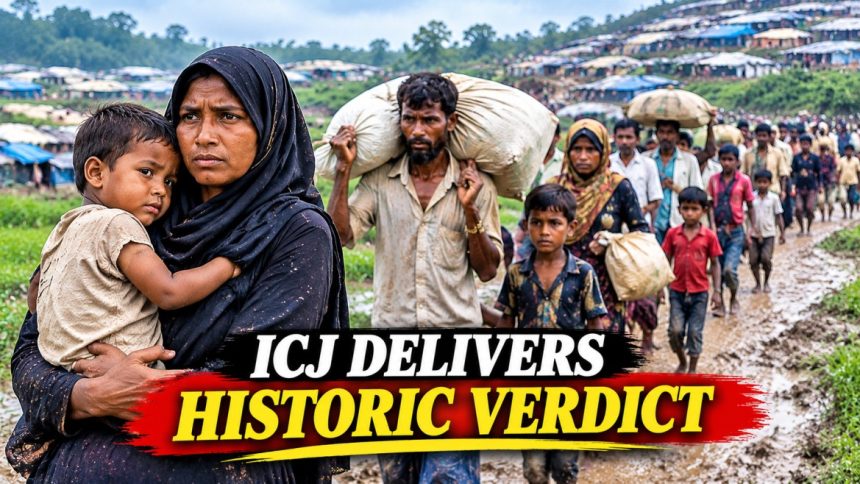
The International Court of Justice (ICJ) has delivered a landmark judgment holding Myanmar responsible for genocide against the Rohingya Muslim minority, marking a significant moment in international justice. The ruling relates to the Myanmar military’s 2017 operations, which forced hundreds of thousands of Rohingya people to flee to neighbouring Bangladesh.
The Court found that Myanmar violated its obligations under the 1948 Genocide Convention, including its responsibility to prevent genocide and punish those responsible. The judgment represents a major development in the long-running legal battle over atrocities committed against the Rohingya community.
The ruling also calls for accountability through investigations and appropriate legal action against individuals suspected of involvement in the atrocities. It reinforces the international community’s responsibility to ensure that allegations of genocide are addressed through legal mechanisms rather than ignored.
Another major concern is the future of displaced Rohingya families. Their safe, voluntary and dignified return to Myanmar, along with the protection of their fundamental rights, remains a crucial issue. The question of compensation for victims and affected communities is also central to the wider pursuit of justice.
The case was brought by The Gambia in November 2019 under the Genocide Convention, drawing international attention to the plight of the Rohingya. The ICJ’s judgment is a significant reminder that states can be held accountable under international law for serious violations. However, ensuring that its findings translate into meaningful protection and justice for the Rohingya remains the biggest challenge.