



🔴 Special Report By | Arvind Jadhav
🟡 Manghar Village – India’s First “Honey Village”
Satara – Manghar, a small village located in the Mahabaleshwar taluka of Satara district, has earned national recognition as India’s first “Honey Village.” What was once a typical rural settlement has now transformed into a model of economic and agricultural innovation through large-scale beekeeping activities. Today, a significant number of families in the village are directly engaged in honey production, making it a primary source of livelihood.
The village has also emerged as a unique agro-tourism destination. Every year, thousands of visitors and tourists come to Manghar to witness the process of beekeeping and honey extraction firsthand. This growing tourist interest has created additional employment opportunities for local residents, boosting the village economy beyond agriculture.
A key driving force behind this transformation is Raghunath Narayanakar, Director of the Honey Directorate, Mahabaleshwar. Under his leadership and initiative, scientific beekeeping practices were introduced and promoted in the village. His efforts in training and guiding farmers and youth played a crucial role in establishing Manghar as a successful model.
Today, Manghar stands not only as a hub of honey production but also as an inspiring example of rural development. The village demonstrates how innovation, proper guidance, and community participation can bring sustainable economic growth.
🟡 Opportunities and Benefits of Beekeeping for Youth
In today’s changing economic landscape, where traditional job opportunities are becoming limited, beekeeping has emerged as a promising alternative for young people. It is a low-investment business that can generate income in a relatively short period, making it especially attractive for rural youth seeking self-employment.
Beekeeping offers multiple streams of income through products such as honey, beeswax, pollen, and royal jelly. These products have consistent demand in both domestic and international markets, ensuring business stability and profitability. Additionally, with the rise of e-commerce, selling these products has become easier than ever.
Training programs and technical support provided by government agencies and institutions make it easier for beginners to learn and adopt this business. Even individuals with no prior experience can quickly acquire the necessary skills and start their own ventures successfully.
As a result, beekeeping is not just a business opportunity but a pathway toward self-reliance for the youth. It empowers them to become entrepreneurs and contribute to the rural economy.
🟡 Benefits of Beekeeping for Farmers
Beekeeping provides direct and indirect benefits to farmers, making it an ideal complementary activity to agriculture. One of the most significant advantages is improved crop yield due to pollination. Bees play a vital role in transferring pollen, which enhances the growth and productivity of crops.
This is especially beneficial for fruit orchards, vegetables, and flowering crops, where pollination directly impacts the quality and quantity of produce. As a result, farmers experience higher yields and better-quality produce, leading to increased income.
In addition to agricultural benefits, farmers also earn extra income through the sale of honey and other bee products. This dual source of income strengthens their financial stability and reduces dependency on a single crop.
Moreover, beekeeping does not require large land areas or heavy investment, making it accessible for small and marginal farmers. It integrates smoothly with existing farming practices, making agriculture more profitable and sustainable.
🟡 Strengthening the Concept of Self-Employment
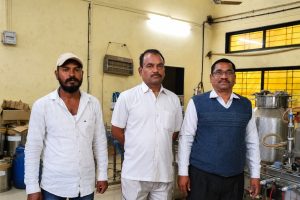 Beekeeping has significantly strengthened the concept of self-employment in rural areas. With limited job opportunities in villages, many young people and women are turning toward this activity to generate income independently.
Groups and cooperatives have been formed at the local level, where members work together to produce and market honey. This collective approach not only increases production but also ensures better market reach and fair pricing.
As a result, local employment opportunities have increased, reducing migration to cities in search of jobs. People are now able to earn a stable income while staying in their native villages, improving their overall quality of life.
Manghar village serves as a strong example of how small-scale industries like beekeeping can transform rural economies. It highlights the importance of self-reliance and community-driven development.
🟡 Government Training and Financial Support
To promote beekeeping, both state and central governments have launched several supportive schemes and initiatives. Organizations such as the Khadi and Village Industries Commission (KVIC) and the National Beekeeping and Honey Mission (NBHM) play a crucial role in providing training and technical assistance.
These training programs cover scientific beekeeping methods, hive management, and honey processing techniques. They equip individuals with the knowledge and skills required to start and sustain a successful beekeeping business.
In addition, financial support is provided in the form of subsidies on bee boxes, protective equipment, and processing units. This significantly reduces the initial investment required to start the business, making it more accessible to rural populations.
Bank loans, self-employment schemes, and continuous technical guidance further strengthen this sector. With such comprehensive support, beekeeping is rapidly gaining popularity and contributing to large-scale rural employment generation.
🟡 Importance of Bees for the Environment
Bees play a crucial role in maintaining ecological balance. Through pollination, they support the growth and reproduction of plants, which is essential for preserving biodiversity. Without bees, many plant species would struggle to survive.
Pollination also strengthens the food chain by ensuring the production of fruits, vegetables, and seeds. This has a direct impact on global food security and agricultural sustainability.
By promoting beekeeping, both environmental conservation and economic development can be achieved simultaneously. It is an eco-friendly activity that supports nature while generating income.
Therefore, beekeeping is not just a business but a vital tool for environmental protection. Encouraging this practice can lead to a healthier ecosystem and a more sustainable future.