


🔴 Arvind Jadhav| PR Network
🟡 First Attack Since April Truce Shocks Region
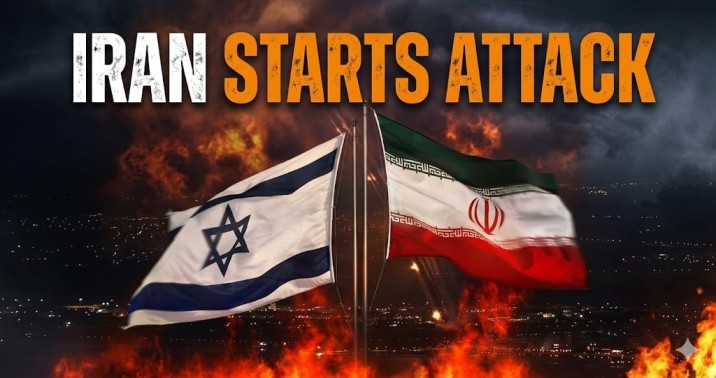
In a major and alarming escalation, Iran has launched a series of missile strikes on Israel, marking the first direct attack since the April ceasefire agreement. The development has sent shockwaves across the Middle East, as the fragile truce that had brought temporary calm now appears to be collapsing. According to early reports, several missiles were fired toward northern parts of Israel, triggering sirens and emergency alerts in multiple cities. This sudden escalation has not only heightened tensions between the two nations but has also raised fears of a broader regional conflict that could draw in multiple countries.
🟡 Israeli Air Defence Responds Swiftly
Israel’s advanced air defence systems, including its multi-layered missile interception network, were immediately activated following the attack. Officials have reported that the majority, if not all, of the incoming missiles were successfully intercepted before causing significant damage. While there have been no confirmed reports of major casualties, authorities have maintained a high state of alert, urging residents in affected regions to remain cautious and follow safety protocols. Emergency response teams were deployed swiftly, and airspace monitoring has been intensified to guard against any further incoming threats.
🟡 Retaliation for Beirut Airstrikes
Iran has openly declared that the missile strikes were carried out in retaliation for recent Israeli air raids in Beirut, Lebanon. Those strikes reportedly targeted areas associated with Hezbollah, a group backed by Iran. Tehran has described Israel’s actions in Beirut as a serious violation and a crossing of a “red line,” which, according to Iranian officials, warranted a direct response. This statement highlights the deepening connection between regional conflicts, where actions in one country are increasingly triggering military responses in another, further complicating the geopolitical landscape.
🟡 Ceasefire Now on the Brink
The April ceasefire, which had temporarily halted direct hostilities between Iran and Israel, now stands on the verge of collapse. The agreement was already considered fragile, with underlying tensions continuing to simmer despite the pause in direct attacks. This latest missile strike has significantly weakened any remaining trust between the two sides. Analysts believe that the situation could quickly spiral into a cycle of retaliation, where each side responds with increasing force, making it extremely difficult to restore stability in the region.
🟡 Israel Warns of Strong Response
In response to the attack, Israeli officials have issued strong warnings, describing Iran’s actions as a “grave mistake” that will not go unanswered. Military sources have indicated that Israel is preparing for a potential counter-strike, with defence forces placed on heightened readiness. The possibility of retaliatory action has further intensified concerns, as any large-scale response from Israel could trigger an even stronger reaction from Iran, pushing the region closer to a full-scale conflict.
🟡 Global Tensions Rise Again
The escalation has drawn serious concern from the international community, as global powers closely monitor the rapidly developing situation. The Middle East, already facing instability due to ongoing conflicts involving Hezbollah and other armed groups, now risks entering a more dangerous phase. Experts warn that continued escalation could have far-reaching consequences, including disruptions to global oil supply, increased military involvement from other nations, and a setback to ongoing diplomatic efforts aimed at reducing tensions in the region.
🟡 What Happens Next?
The coming days are expected to be extremely critical as both Iran and Israel assess their next moves. Diplomatic channels are likely to be activated urgently in an attempt to prevent further escalation, but the situation remains highly volatile. With both sides signaling readiness for stronger action, the risk of additional missile strikes or military operations cannot be ruled out. The world now watches closely, as any miscalculation could potentially lead to a wider conflict with serious global implications.