

🔴 By | Gitanjali Thorat
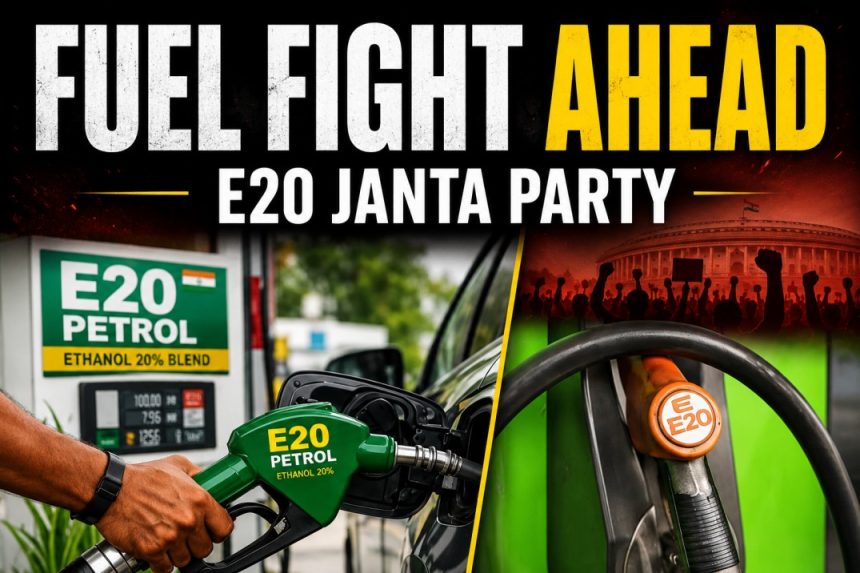
The controversy surrounding India’s E20 petrol policy is rapidly intensifying, as a social media-driven movement known as the E20 Janta Party prepares to take its protest to the streets. The development poses a fresh and serious challenge for the central government.
E20 fuel, which contains 20% ethanol blended with petrol, has triggered widespread concern among citizens, vehicle owners, and stakeholders in the transport sector. Critics have raised issues related to reduced mileage, potential engine damage, and increased maintenance costs. The core demand of the movement remains clear: “Provide an option for 100% pure petrol.”
In several parts of the country, including Delhi, taxi operators, transport unions, farmers, and youth groups have begun organizing protests. A march toward Parliament is being discussed, and there are clear signs that the agitation could escalate in the coming days. Notably, this is not a traditional political movement but a decentralized, leaderless campaign driven largely through social media.
The government now faces multiple challenges — rebuilding public trust, addressing technical concerns about vehicle compatibility, and responding to the growing demand for consumer choice. A key issue is that a large number of vehicles in India are still not fully compatible with E20 fuel, raising concerns about the timing and implementation of the policy.
Globally, countries such as the United States and Brazil have implemented ethanol blending successfully. However, in those countries, consumers are still given the option to choose pure petrol. The absence of such a choice in India appears to be fueling public dissatisfaction.
Meanwhile, no official founder of the E20 Janta Party has been identified. The movement is entirely citizen-driven, with active participation from drivers, transporters, farmers’ groups, and youth organizations.
Adding to the momentum, comparisons are now being drawn with the earlier Cockroach Janta Party movement, which successfully mobilized students and created significant pressure on the government, leading to tangible outcomes. Observers believe that the E20 Janta Party could adopt a similar large-scale and well-coordinated strategy, further escalating pressure on the authorities.
At the same time, political reactions are beginning to surface. Sections of the opposition, particularly groups linked to the Congress, are reportedly showing signs of support for the protest. There is also growing speculation that calls for the resignation of Union Minister Nitin Gadkari could intensify if the agitation gains momentum. Congress leader Jairam Ramesh commented on the issue, stating, “If policies are implemented without addressing public concerns, such protests are inevitable.”
Overall, the E20 Janta Party movement is no longer limited to opposition against a fuel policy — it is increasingly being seen as a broader campaign for consumer rights and freedom of choice. As the situation develops, all eyes are now on how the government responds to this growing wave of public dissent.