

🔴 By | Arvind Jadhav
Kathmandu: The United Nations and humanitarian partners have launched a $49.6 million emergency appeal to provide life-saving assistance to more than 84,000 people affected by the catastrophic floods and glacial disaster in Nepal.
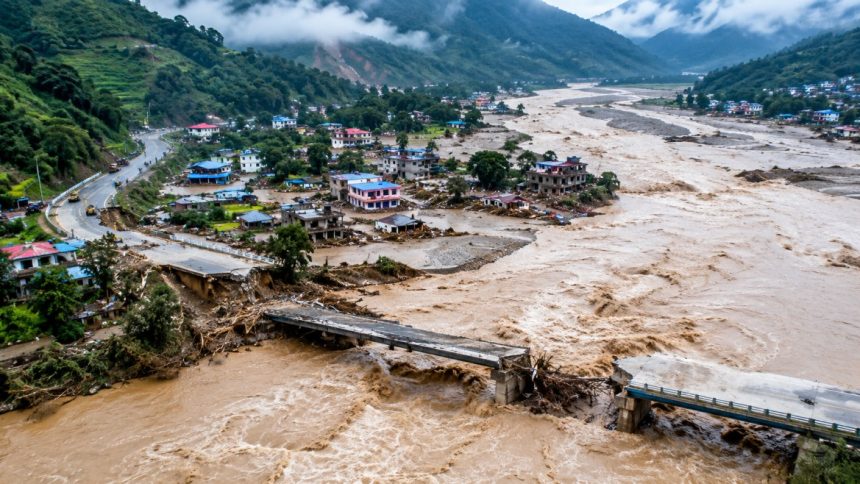
The appeal comes as Nepal continues to struggle with one of its most devastating natural disasters in recent years. A massive surge of ice, rock, mud and water triggered by a glacier collapse on August 26 tore through the Trishuli River valley, destroying homes, roads, bridges and critical infrastructure across the Himalayan nation.
🟡 UN Appeal Targets Immediate Humanitarian Needs
The $49.6 million Flash Appeal is aimed at providing urgent humanitarian assistance to people who have lost homes, livelihoods and access to essential services.
The emergency response is expected to focus on temporary shelter, clean drinking water, sanitation, healthcare, protection and other essential relief supplies for communities hit by the disaster.
The UN-backed appeal highlights the scale of the humanitarian emergency, with tens of thousands of people requiring immediate assistance while rescue teams continue to search devastated areas.
🟡 Death Toll Crosses 1,300 as Thousands Remain Missing
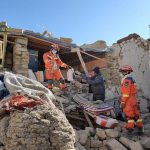
The disaster has taken an enormous human toll. Latest reports indicate that more than 1,300 people have died, while thousands remain missing across the affected areas. Search and rescue operations are continuing in extremely difficult terrain, with several workers believed to have been trapped inside hydropower tunnels.
The situation has also produced extraordinary rescue stories. On September 5, a Chinese national, Lu Haitao, was rescued alive from a 225-metre tunnel at the Upper Trishuli-1 Hydropower Project—10 days after the disaster. He was the third person rescued alive from the network of tunnels in the affected region.
Two Nepali workers were also rescued from another hydropower tunnel the previous day, raising hopes that more survivors could still be found.
🟡 Nepal Faces Billions of Dollars in Damage
The humanitarian appeal comes against the backdrop of enormous economic losses.
Nepal’s disaster authority estimates that the floods have caused approximately $2.56 billion in damage to property, housing and infrastructure. At least 7,500 homes were destroyed, while around 20,000 houses may need to be rebuilt.
The immediate recovery requirement is also substantial. Authorities estimate that around $52.6 million could be needed during the first four months for early recovery measures, including rebuilding roads, providing temporary shelters, restoring drinking-water supplies and bringing damaged power infrastructure back into operation.
🟡 Hydropower Sector Among the Worst Hit
Nepal’s important hydropower infrastructure has suffered severe damage. Several projects along the Trishuli River corridor were hit by the enormous flow of water, rocks and debris.
According to Reuters, 11 hydropower projects in the affected region have reported significant damage or are undergoing assessment. Access roads and above-ground infrastructure at several projects were washed away, complicating rescue and recovery operations.
The damage to the energy sector could create additional economic pressure on Nepal as the country begins the long process of rebuilding.
🟡 International Rescue Effort Expands
The scale of the disaster has prompted international assistance. Rescue operations have involved Nepalese security forces alongside teams and specialists from countries including India, China and the United States.
The difficult geography, destroyed roads and blocked tunnels have made conventional rescue operations extremely challenging. Heavy machinery, controlled blasting, oxygen supplies and other specialized equipment are being used in attempts to reach people who may still be trapped.
🟡 From Rescue to Reconstruction
The UN’s $49.6 million appeal represents an immediate humanitarian response, but Nepal’s recovery challenge is much larger.
With billions of dollars in damage, thousands of missing people, destroyed homes and damaged infrastructure, the country is facing a long road toward reconstruction.
For families still waiting for news of missing relatives, however, the immediate priority remains clear—find survivors, rescue those still trapped and provide basic necessities to communities devastated by the floods.
The rescue of people alive after more than a week has demonstrated that hope has not disappeared, even as Nepal begins confronting the enormous task of rebuilding after one of the country’s worst disasters.