


By|PR Network
🟡 El Niño Returns with Strong Signals in 2026
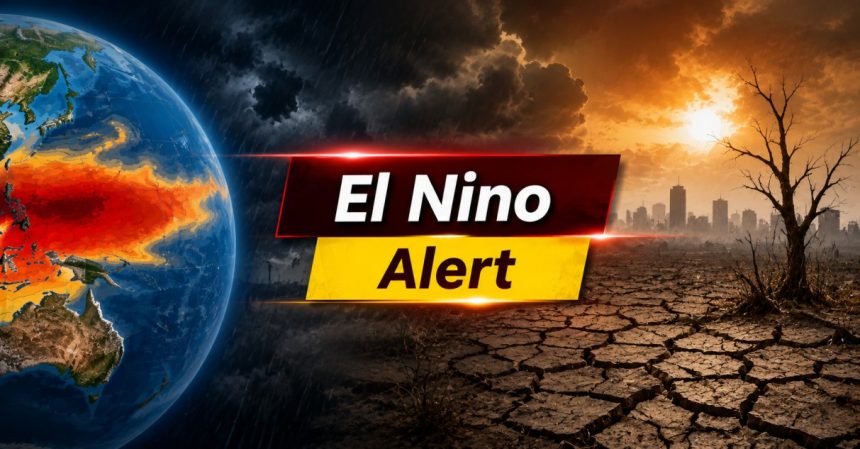
A major climate development is unfolding across the Pacific Ocean as El Niño conditions re-emerge in 2026, raising global concern. This natural weather phenomenon, driven by the warming of sea surface temperatures in the central and eastern Pacific, has the power to disrupt climate patterns across continents. Scientists are closely monitoring the current build-up, warning that this cycle could strengthen significantly in the coming months and influence weather systems on a global scale.
🟡 How El Niño Alters Global Weather Patterns
El Niño affects the balance between ocean temperatures and atmospheric circulation. As warm waters spread eastward, trade winds weaken and disturb normal rainfall patterns. This shift creates a chain reaction—bringing drought conditions in some regions while causing heavy rainfall and flooding in others. The phenomenon is known for triggering extreme weather events and has historically led to major environmental and economic disruptions worldwide.
🟡 India’s Monsoon Under Threat This Year
India’s southwest monsoon, a critical lifeline for agriculture and water resources, is highly sensitive to El Niño conditions. In 2026, early indicators suggest that rainfall could fall below normal levels, raising concerns about uneven distribution and delayed showers. A weaker monsoon not only impacts rural livelihoods but also affects water reservoirs and overall seasonal balance, making it a key area of concern for policymakers.
🟡 Agriculture and Rural Economy Face Pressure
The agricultural sector is expected to bear the brunt of a weak monsoon. Crops such as rice, pulses, oilseeds, and cotton depend heavily on timely rainfall, and any disruption could reduce yields. Lower production may lead to rising food prices and increased pressure on household budgets. Since a large portion of India’s population relies on agriculture for income, the ripple effects could extend to the broader rural economy and market stability.
🟡 Heatwaves and Water Crisis Intensify Risks
Along with reduced rainfall, El Niño often brings higher temperatures and prolonged heatwaves. Several parts of India may experience extreme heat conditions, increasing demand for electricity and putting pressure on water resources. Reservoir levels may drop, leading to water shortages in both urban and rural areas. These combined effects make El Niño not just a climate issue, but a serious public and environmental challenge.
🟡 Global Impact and Climate Uncertainty Ahead
The impact of El Niño extends far beyond India, influencing weather patterns across the globe. While some regions may face drought, others could experience excessive rainfall and flooding. The 2026 event is expected to push global temperatures higher and add to ongoing climate change concerns. As weather systems become more unpredictable, governments worldwide are focusing on preparedness and resilience strategies to reduce potential damage.
🟡 Preparedness Becomes the Key Focus
With warning signs already visible, authorities in India are taking precautionary steps to manage the potential impact. Efforts are being directed toward water conservation, crop planning, and disaster readiness. Experts emphasize that while El Niño is a natural cycle, its intensity in recent years highlights the need for better climate planning and adaptive strategies to safeguard both livelihoods and the economy.