


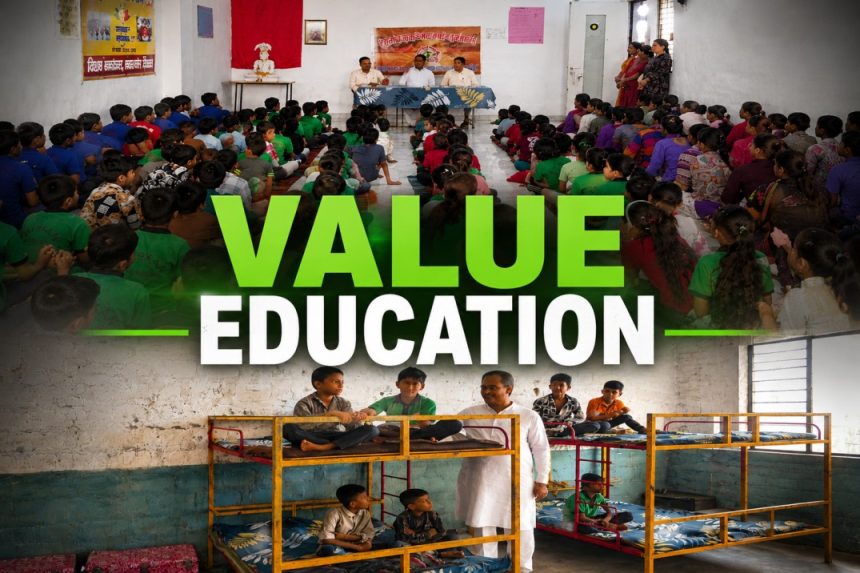
Gurukul Established Under Unique Education Campaign
Arvind Jadhav | PR Network
Mumbai – In a commendable social initiative, Flora Foundation and Muskan Organization have jointly established the Flora Foundation Gurukul in Dungarpur, Rajasthan. The initiative is part of the campaign titled “Where There is a Temple, There Should be a School,” aimed at promoting education alongside spiritual and cultural values. The Gurukul seeks to provide holistic development to children by combining academics with moral and ethical teachings.
Guidance of Jain Muni and Leadership Support
The initiative is being carried out under the spiritual guidance of Jain Muni Shri JinRatna Vijay Ji (M. Sa.). It is led by Flora Foundation Trustee and former Deputy Mayor of Mumbai, Shri Babubhai Bhavanji, along with Muskan Organization Chairman Shri Bharat Nagda Jain. Their combined efforts reflect a strong commitment toward value-based education and social upliftment.
Focus on Values, Culture and Self-Reliance
Speaking about the Gurukul, Babubhai Bhavanji stated that the institution will focus not only on formal education but also on imparting teachings related to scriptures, moral values, patriotism, humanity, and Indian culture. Additionally, students will be trained in self-employment skills, self-defense, ethical conduct, and self-reliance, ensuring well-rounded personality development.
Concern Over Decline of Moral Education
Bhavanji highlighted that while India has made significant progress in education across various streams since independence, moral education has not received adequate emphasis. He expressed concern that this gap has led to increasing materialism and a decline in values among the younger generation.
Ancient Gurukul System vs Modern Education
Referring to India’s ancient education system, Bhavanji noted that Gurukuls once prioritized character building and moral development. However, due to centuries of foreign rule, education gradually shifted toward livelihood-oriented learning, resulting in the decline of ethical teachings. He pointed out that the absence of qualities like honesty, dedication, generosity, and social responsibility stems from this shift.
Renewed Focus on Value-Based Curriculum
He further added that modern Indian thinkers have recognized these shortcomings and have advocated for the inclusion of moral education in school curricula. Today, efforts are being made to integrate ethical teachings, inspirational stories, and lessons from great personalities into primary and secondary education systems.
Importance of Moral Education in Nation Building
Emphasizing its broader impact, Bhavanji stated that moral education plays a crucial role in shaping responsible citizens. Students equipped with strong values contribute positively to society and the nation. The establishment of high ideals, traditions, and ethical standards in society is only possible through such education.
A Step Towards a Better Society
He concluded that moral education is essential for personality development, social harmony, and national progress. It helps eliminate social evils such as corruption, greed, and intolerance while fostering humanity and compassion. Initiatives like the Flora Foundation Gurukul are vital steps toward building a value-driven and progressive society.