

🔴 By| Gitanjali Thorat
🟡 100-Week Anti-Drug Campaign Launched by PM Modi
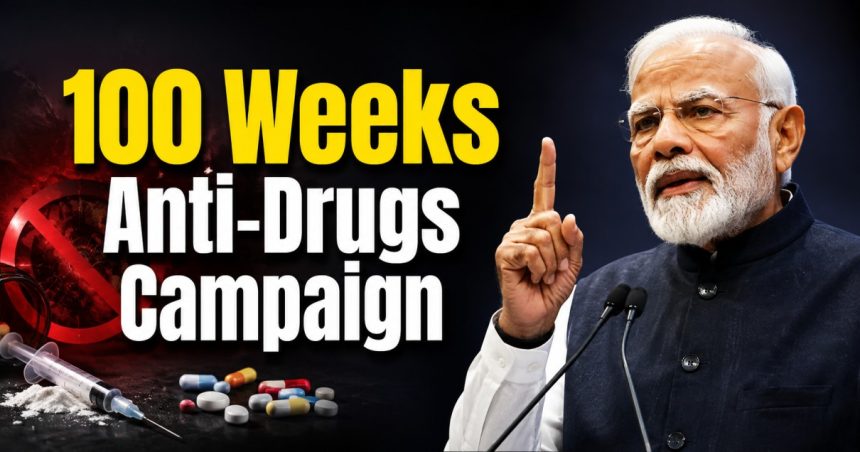
Prime Minister Narendra Modi on August 2, 2026, launched a nationwide 100-week anti-drug campaign titled “Nasha Mukt Yuva for Viksit Bharat Sankalp Abhiyan.” This long-term initiative, spanning nearly two years, aims to eliminate drug abuse among the youth and strengthen India’s path toward becoming a developed nation. The campaign highlights the importance of a healthy and responsible young population in nation-building. It is not just a health initiative but a broader social movement aligned with India’s development goals. The government envisions this campaign as a mass movement involving every section of society. By focusing on awareness and prevention, the initiative seeks to create a drug-free and empowered youth base. Public participation is being strongly encouraged to ensure the campaign’s success.
🟡 Weekly Nationwide Activities to Drive Awareness
Under this 100-week campaign, various awareness and engagement activities will be conducted across the country every week. Special focus has been placed on organizing events on Sundays, including sports competitions, walkathons, cycle rallies, street plays, and cultural programs. These activities are designed to educate young people about the harmful effects of drug abuse through interactive and community-driven approaches. Schools, colleges, and local organizations have been given a key role in executing these programs. This ensures that the campaign reaches both urban and rural populations effectively. In addition, yoga, meditation, and fitness-related initiatives are being promoted to encourage a healthier lifestyle. Such continuous engagement is expected to build strong awareness and positive behavioral change among youth.
🟡 PM Modi’s Strong Message Against Drug Abuse
During the launch, Prime Minister Modi delivered a strong message highlighting the dangers of drug addiction. He stated that drugs may provide temporary pleasure but ultimately lead to long-term destruction of health, career, and family life. He emphasized that drug abuse not only affects individuals but also weakens society as a whole. The Prime Minister urged young people to stay away from drugs and actively spread awareness in their communities. He encouraged them to take on the role of “anti-drug ambassadors” and help others avoid addiction. Modi also pointed out that drug trafficking has links to national security concerns, making it a serious issue beyond public health. This perspective underlines the need for a united national response.
🟡 Massive Youth Participation Across the Country
The campaign has already witnessed a strong response from across India. At the launch stage itself, over 1 crore (10 million) youth reportedly took a pledge to support a drug-free India. Simultaneous events were organized in multiple states, reflecting the widespread reach of the initiative. The growing participation of young people is being seen as the biggest strength of the campaign. Social organizations, NGOs, and local administrations have also actively joined hands to support the movement. This collective effort is helping transform the campaign into a nationwide people’s movement. The enthusiasm among youth indicates a positive shift toward awareness and responsibility.
🟡 A Long-Term Vision for a Drug-Free India
Overall, the 100-week anti-drug campaign is designed with a long-term vision to bring lasting change in society. It aims to keep youth away from addiction while encouraging them to contribute actively to nation-building. The initiative focuses on creating sustained awareness rather than short-term impact. Collaboration between government bodies, communities, and individuals is expected to play a crucial role in its success. Over the next two years, the campaign aims to reach every corner of the country. By building a culture of awareness and prevention, the government hopes to achieve a truly drug-free India. This campaign stands as a significant step toward securing a healthier and stronger future for the nation.