

By | PR Network
🟡 US Strikes Iran’s Qeshm Island After Gulf Attacks
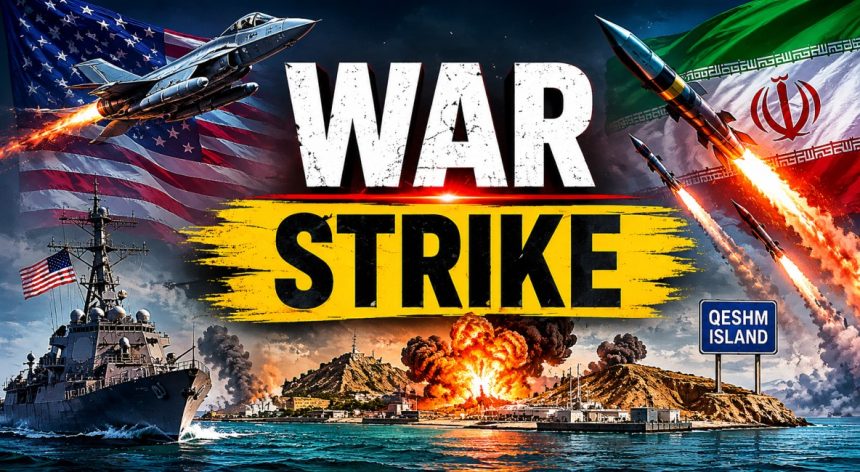
The escalation in the ongoing US-Iran conflict, the United States military launched targeted strikes on Iran’s strategically important Qeshm Island. The operation was carried out after Iran fired missiles and deployed drones toward Gulf nations including Kuwait and Bahrain. According to US Central Command (CENTCOM), the strikes were conducted in self-defence to neutralize immediate threats and prevent further escalation in the region.
🟡 Iran Fires Missiles At Kuwait & Bahrain
Iran reportedly launched multiple missiles toward Kuwait and Bahrain, raising alarm across the Gulf region. While two missiles aimed at Kuwait failed mid-flight, several directed toward Bahrain were successfully intercepted by US and allied air defence systems. In addition to missiles, Iran also deployed armed drones toward key maritime routes, including civilian shipping lanes in the Gulf.
US officials confirmed that three attack drones targeting civilian vessels were shot down before causing any damage. The incident highlights growing concerns over the safety of commercial shipping in one of the world’s busiest oil transit routes.
🟡 US Military Response On Qeshm Island
In response, US forces carried out precision strikes on military installations located on Qeshm Island, a key Iranian outpost near the Strait of Hormuz. The targets reportedly included facilities linked to missile coordination and drone operations. The Pentagon described the strike as a “defensive and proportionate response” aimed at deterring further attacks and ensuring the safety of both military and civilian assets in the region.
🟡 Gulf Nations On High Alert
Following the attacks, Bahrain activated emergency sirens and urged residents to seek shelter as a precautionary measure. Kuwait also heightened its defence readiness amid fears of further escalation. Regional governments remain on high alert as tensions continue to rise rapidly.
The Strait of Hormuz, located near Qeshm Island, is a critical global oil corridor through which a significant portion of the world’s crude supply passes. Any disruption in this region could have immediate effects on international energy markets.
🟡 Ceasefire Talks Under Threat
The latest exchange of strikes comes at a time when diplomatic efforts to establish a ceasefire between the US and Iran were already facing challenges. Analysts warn that continued military action from both sides could derail negotiations entirely and push the region toward a broader conflict.
🟡 What This Means Globally
This escalation signals a dangerous turning point in Middle East geopolitics. With both the United States and Iran demonstrating clear military readiness, the risk of a wider regional war is steadily increasing. Experts believe that if the situation continues to intensify, it could significantly disrupt global oil supply chains, especially through the strategically vital Strait of Hormuz. Such disruptions may lead to a sharp rise in fuel prices across international markets, directly impacting economies worldwide. Additionally, prolonged conflict could trigger broader instability across Gulf nations, affecting trade, security, and diplomatic relations in the region.