


🔴 By | PR Network
🟡 Deal Signed: A Major Diplomatic Development
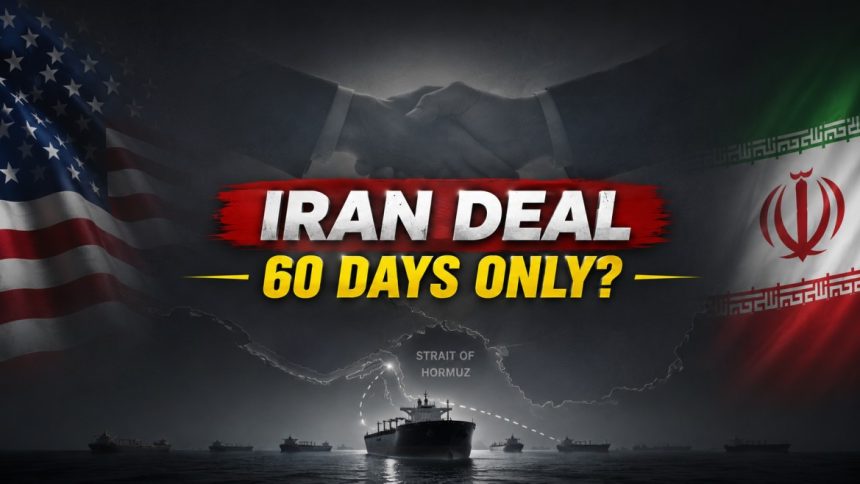
U.S. President Donald Trump has signed a new agreement with Iran, marking a crucial step toward easing tensions in West Asia after months of escalating conflict. The agreement, described by officials as an interim framework, is aimed at stabilizing the region and preventing further disruption to global trade and energy supplies. While the signing of the deal signals a willingness from both sides to move toward diplomacy, it is not yet a permanent resolution, but rather a temporary arrangement designed to create space for deeper negotiations.
The agreement reportedly establishes a 60-day window during which both nations are expected to engage in intensive discussions to finalize a broader and more binding deal. This period is being seen as critical, as it will determine whether the current breakthrough can evolve into a lasting peace framework or remain a short-lived pause in tensions.
🟡 Strait of Hormuz: Temporary Relief for Global Trade
One of the most important aspects of the agreement is the reopening of the Strait of Hormuz, a strategically vital maritime route through which a significant portion of the world’s oil supply passes. Under the current draft, ships are allowed to pass through the strait without paying any tolls, but this provision is limited strictly to the 60-day duration of the agreement. This move is expected to provide immediate relief to global oil markets, which had been under pressure due to disruptions and uncertainty in the region.
However, officials have made it clear that the agreement does not include any long-term guarantee regarding toll-free access. This means that while the current arrangement eases immediate concerns, Iran retains the ability to impose shipping fees or restrictions in the future, depending on how negotiations progress. As a result, while the reopening is being welcomed globally, it is also being viewed as a temporary measure rather than a permanent solution.
🟡 Core Elements of the Agreement
The agreement includes several provisions aimed at reducing tensions and restoring a degree of normalcy in the region. It outlines a ceasefire understanding, ensuring that active hostilities are paused, while also facilitating the reopening of critical maritime routes. Additionally, the framework allows for limited economic relief measures, including partial easing of restrictions that could enable Iran to resume certain levels of oil exports.
Another important component of the agreement is the inclusion of international monitoring mechanisms, particularly concerning nuclear activities. These provisions are intended to build trust between the parties and ensure compliance during the negotiation phase. Overall, the agreement is structured as a confidence-building measure, rather than a final settlement, with the primary objective of preventing further escalation while discussions continue.
🟡 Rising Concerns Over Long-Term Stability
Despite the positive developments, several concerns have emerged regarding the limited scope and temporary nature of the agreement. Analysts and critics have pointed out that the lack of clarity on future terms, especially regarding the Strait of Hormuz, could lead to renewed uncertainty once the 60-day period ends. The absence of firm commitments on long-term toll policies raises questions about whether global trade routes could once again face disruption.
There are also concerns about enforcement and compliance, as previous agreements between the two nations have faced challenges in implementation. The current deal, while promising, relies heavily on mutual trust and continued diplomatic engagement, both of which remain fragile given the history of tensions between the U.S. and Iran.
🟡 Global Impact: Oil Markets and Strategic Balance
The immediate reopening of the Strait of Hormuz is expected to stabilize oil prices and restore confidence in global energy markets, particularly for countries heavily dependent on imports. The strait is one of the most critical chokepoints in global trade, and any disruption in this route has far-reaching economic consequences. By ensuring temporary free passage, the agreement provides short-term reassurance to international markets and reduces the risk of supply shocks.
However, the temporary nature of the arrangement means that global stakeholders are likely to remain cautious. Energy markets, in particular, will be closely monitoring developments over the next two months, as the outcome of negotiations will play a decisive role in determining long-term stability in the region.
🟡 Final Verdict: Breakthrough or Just a Strategic Pause?
The next 60 days will be a defining period for both the United States and Iran, as well as for the broader West Asian region. During this time, both sides are expected to negotiate a comprehensive agreement that addresses key issues, including maritime security, economic sanctions, and nuclear commitments. The success or failure of these negotiations will have a lasting impact on regional stability and global economic conditions.
If a permanent deal is reached, it could mark the beginning of a new phase of cooperation and reduced tensions. However, if talks fail, there is a significant risk that the situation could deteriorate once again, potentially leading to renewed conflict and disruption of vital trade routes.
The signing of the Trump-Iran agreement represents a crucial but cautious step toward de-escalation in one of the world’s most volatile regions. While the reopening of the Strait of Hormuz offers immediate relief and signals a positive shift, the temporary framework of the deal leaves several critical questions unanswered. As the world watches closely, the coming weeks will determine whether this agreement becomes a foundation for lasting peace or remains a brief pause in an ongoing geopolitical struggle.