

🔴 By| Arvind Jadhav
🟡 Legal Principle Ignored: Rehabilitation Before Displacement
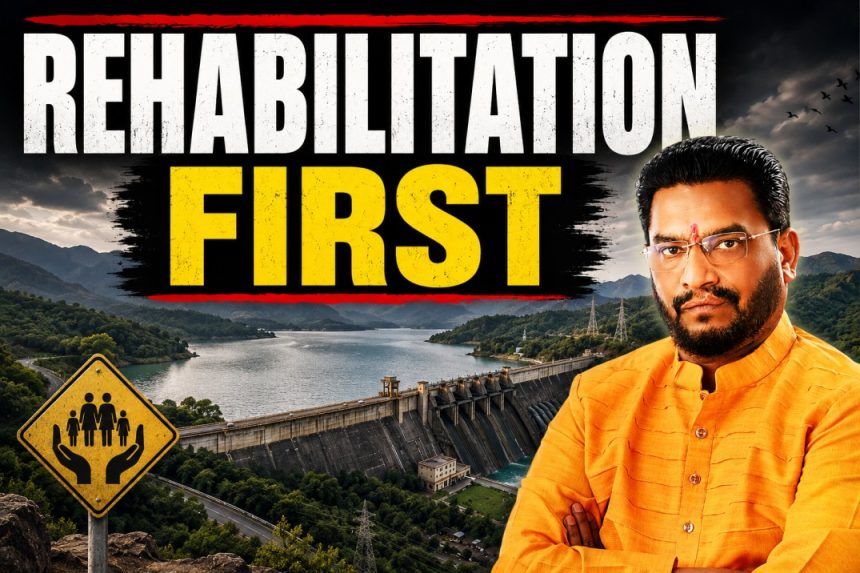
The principle of “Rehabilitation First, Then the Dam” is not merely a policy guideline of the Government of Maharashtra but a legally enforceable obligation under multiple statutory frameworks. It mandates that no displacement should occur unless all rehabilitation and resettlement (R&R) measures are fully implemented. However, repeated instances across dam projects indicate a systemic failure to comply with this binding requirement. When the State itself disregards statutory provisions, project-affected persons are left without effective remedies, raising serious concerns about rule of law, administrative accountability, and constitutional protections under Articles 14 and 21.
🟡 Pattern of Non-Compliance Across Dam Projects
Across Thane and Palghar districts, several major dam projects—including Dhamani, Kavadas, Wandri (Ganje-Dhekale), Khadkhad-Domahira, Bhatsa, Tansa, Modak Sagar, and Middle Vaitarna—demonstrate a consistent pattern of delayed or incomplete rehabilitation. In many cases, project construction was completed years ago, yet affected families continue to await lawful entitlements. This reflects not isolated lapses but a structural disregard for rehabilitation obligations, undermining both statutory mandates and public trust in development processes.
🟡 Case Study: Middle Vaitarna and Continuing Injustice
The Middle Vaitarna Dam, completed in 2014, remains a significant example of post-project injustice. Despite its critical role in supplying water to Mumbai, numerous displaced families have not received full rehabilitation benefits as mandated under law. The failure to ensure complete resettlement prior to project commissioning highlights a clear violation of legal provisions and administrative commitments.
🟡 Gargai and Deharje: Repetition of Legal Violations
The ongoing Gargai Dam project raises serious legal concerns, as preliminary work has commenced without finalizing rehabilitation plans or ensuring compliance with statutory requirements. Similarly, the Deharje Dam project in Vikramgad Taluka, which began construction in 2022 and is nearing 70 percent completion, continues without resolution of rehabilitation and compensation issues. These actions directly contradict the legal mandate that R&R must precede displacement, not follow it.
🟡 Statutory Framework: Binding Legal Obligations
The Maharashtra Project Affected Persons Rehabilitation Act, 1999 (effective from April 1, 2002), along with the National Rehabilitation and Resettlement Policy, 2003, clearly establishes that rehabilitation is a precondition to project execution. Further, the Right to Fair Compensation and Transparency in Land Acquisition, Rehabilitation and Resettlement Act, 2013 (RFCTLARR Act) strengthens this framework by mandating:
Social Impact Assessment (SIA) prior to land acquisition
Public disclosure and participatory decision-making
Fair and enhanced compensation mechanisms
Time-bound and legally enforceable rehabilitation measures
Non-compliance with these provisions renders project implementation legally questionable and vulnerable to judicial scrutiny.
🟡 Entitlements Under Law: More Than Compensation
The legal framework goes beyond monetary compensation and includes comprehensive rehabilitation measures such as:
Land-for-land allocation where feasible
Housing and infrastructure at resettlement sites
Subsistence allowance and shifting assistance
Livelihood support and employment opportunities
Compensation for trees, wells, and other immovable assets
Provision of basic civic amenities including roads, water supply, electricity, schools, and healthcare
Proceeding with dam construction without fulfilling these statutory entitlements constitutes a violation of both the letter and spirit of the law.
🟡 Special Protections for Tribal Communities
The Gargai Dam affects predominantly tribal regions in Wada Taluka (Palghar) and parts of Mokhada Taluka. Sections 41 and 42 of the RFCTLARR Act, 2013 provide enhanced safeguards for Scheduled Tribes, including:
Restriction on acquisition of tribal lands
Mandatory consent of Gram Sabha
Protection of cultural identity and community resources
Priority for land-based rehabilitation
Safeguarding of forest rights and traditional livelihoods
Ignoring these statutory protections not only violates legal provisions but also raises serious constitutional concerns regarding the rights of indigenous communities.
🟡 Uncertainty in Rehabilitation Planning
Approximately 2,500 individuals (619 families) are expected to be displaced by the Gargai Dam. However, the rehabilitation plan remains unclear and unfinalized. The proposed site near Devali village lacks formal transfer from the Forest Department and consists largely of dense forest land, making it unsuitable for immediate resettlement. Alternative locations, such as Mangarul village, are still under consideration, indicating a lack of administrative preparedness.
This raises a fundamental legal question: how can land acquisition and project execution proceed when rehabilitation sites are neither finalized nor legally secured?
🟡 Institutional Ambiguity and Administrative Gaps
There is also a lack of clarity regarding the authority responsible for rehabilitation. While the Brihanmumbai Municipal Corporation (BMC) is the primary beneficiary of the project, discussions at the highest administrative levels have suggested possible involvement of the Wildlife Department. Such ambiguity reflects the absence of a defined institutional mechanism, which is a prerequisite under rehabilitation laws.
🟡 Violation of Due Process and Legal Accountability
Initiating construction activities without completing mandatory processes such as SIA, Gram Sabha consent, land acquisition transparency, and rehabilitation planning constitutes a violation of due process. It exposes the project to potential legal challenges and undermines the legitimacy of development initiatives.
🟡 Justice Before Development
The repeated failure to implement “Rehabilitation First, Then the Dam” reduces a legally binding principle to a mere slogan. If past experiences from projects like Middle Vaitarna, Bhatsa, and Deharje are repeated, the Gargai Dam risks becoming another example of institutional injustice.
For development to be lawful, equitable, and sustainable, rehabilitation must not only precede construction but must be completed in full compliance with statutory provisions. Any deviation from this principle is not just administrative failure—it is a denial of justice, dignity, and fundamental rights to project-affected communities.
Only by ensuring strict adherence to legal mandates can the State restore trust and uphold the constitutional promise of justice