


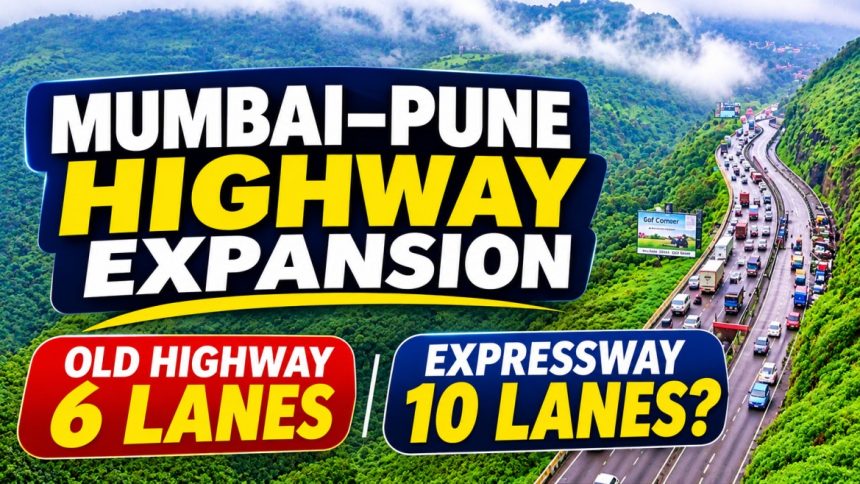
MSRDC initiates DPR process for widening the 110.8-km Nigdi–Shilphata stretch; estimated cost of ₹5,000–6,000 crore, while the existing expressway may be expanded to 10 lanes.
🔴 By | Sachin Dhumal
Mumbai and Pune, Maharashtra’s two major economic and industrial centres, could see a significant transformation in road connectivity. With rising vehicle numbers, expanding industrial corridors and increasing pressure on existing road infrastructure, the Maharashtra State Road Development Corporation (MSRDC) has initiated the process for widening the old Mumbai–Pune highway from four lanes to six lanes. The proposed project covers approximately 110.8 kilometres between Nigdi and Shilphata, bringing a fresh focus on the future of one of Maharashtra’s busiest transport corridors.
🟡 Old Mumbai–Pune Highway: ₹5,000–6,000 Crore Expansion Plan
The proposed widening concerns the old Mumbai–Pune highway, identified as National Highway 48 (NH-48), which connects important locations across Pune, Raigad and Thane districts. The route serves commuters, industrial establishments and commercial transport operators, with significant traffic movement around Lonavala, Khandala and Khopoli.
The estimated project cost is reportedly between ₹5,000 crore and ₹6,000 crore. However, this is a preliminary estimate and the final financial requirement will be established after the Detailed Project Report (DPR) is completed. MSRDC has initiated the process of appointing consultants to undertake the necessary studies, technical assessments and project planning. Different funding and implementation models, including public-private partnership arrangements, may also be examined.
🟡 Mumbai–Pune Expressway May Expand to 10 Lanes
Alongside the old highway widening proposal, a separate expansion plan is being considered for the Yashwantrao Chavan Mumbai–Pune Expressway. The existing six-lane expressway is proposed to be expanded to 10 lanes by adding four additional lanes, along with new tunnels and supporting infrastructure.
Another major development is the 13.3-kilometre Missing Link project, which was opened to traffic on May 1, 2026. The new route is expected to reduce travel time by approximately 25–30 minutes and ease congestion through the Lonavala–Khandala ghat section.
Together, these projects indicate a broader effort to improve road connectivity between Mumbai and Pune. However, the old highway widening and expressway expansion are separate projects and should not be confused.
🟡 Industrial Growth and Urban Expansion Add to Traffic Pressure
The Mumbai Metropolitan Region and Pune Metropolitan Region are experiencing continuous industrial, commercial and residential expansion. Industrial areas around Taloja, Patalganga and Khopoli, along with developing residential locations in the wider corridor, are contributing to increasing road traffic.
Improved road infrastructure could benefit logistics operations, industrial transportation and daily commuters. However, widening roads alone may not provide a lasting solution unless supporting infrastructure is developed simultaneously.
Service roads, safer junctions, pedestrian facilities, parking arrangements, accident management and better public transport connectivity will be equally important. Without integrated planning, even expanded highways could face congestion again within a few years.
🟡 Environmental Concerns in the Sahyadri Region
The proposed infrastructure expansion also raises important environmental questions, particularly in the ecologically sensitive Sahyadri mountain region.
Road widening around Lonavala and Khandala may require additional land, hill cutting and changes to existing drainage systems. These activities could affect forests, natural water channels and wildlife habitats if not carefully planned.
Environmental assessments, controlled construction practices, effective rainwater drainage and wildlife protection measures will therefore be essential. The challenge will be to improve connectivity without causing avoidable damage to the region’s natural environment.
🟡 Will Motorists Have to Pay Toll for Longer?
The financial model of the proposed highway expansion is another issue that deserves attention. Reports indicate that toll collection rights on the old highway currently extend until 2035. An extension of approximately 10–15 years has reportedly emerged as one of the options being examined to recover the proposed infrastructure investment.
However, no final decision on extending the toll collection period should be assumed at this stage. The final arrangement will depend on the project report, financial model and government approval. Any extension could have a direct impact on motorists who regularly use the Mumbai–Pune corridor.
🟡 A New Era for Mumbai–Pune Connectivity?
The proposed six-laning of the old highway and the possible 10-laning of the existing expressway represent two significant infrastructure developments for Maharashtra.
The projects could improve travel efficiency, strengthen industrial connectivity and support economic growth. But several questions remain unanswered: When will construction actually begin? What will be the final project cost? Will toll collection continue for an extended period? And how will the environmental impact be managed?
Ultimately, the future of Mumbai–Pune connectivity will depend not merely on the number of lanes added, but on the quality of planning, execution, safety measures and environmental safeguards.