


🔴 By | Arvind Jadhav
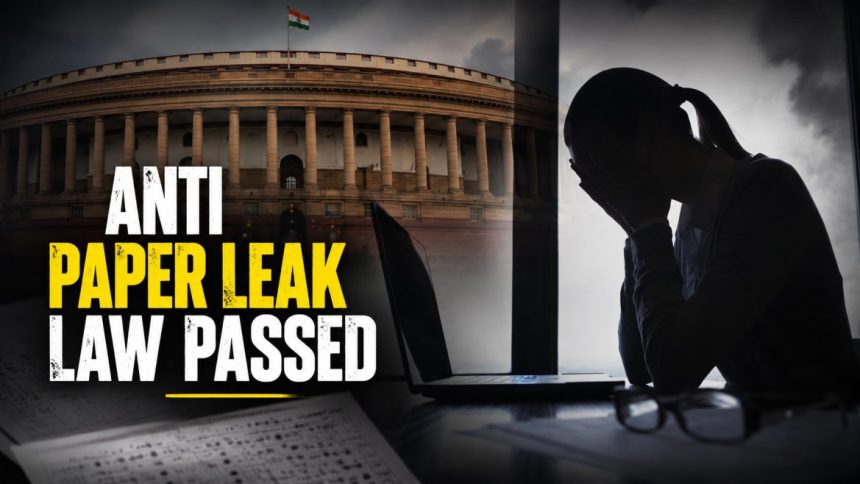
New Delhi – In a decisive move aimed at restoring credibility in India’s examination system, the Lok Sabha passed the Public Examinations (Prevention of Unfair Means) Amendment Bill, 2026, following an intense and politically charged debate during the Monsoon Session. The bill was cleared through a voice vote, signaling the government’s urgency to tackle the growing menace of paper leaks and organized exam fraud.
🟡 Government’s Stand: “Protecting Honest Students”
Presenting the bill, Union Education Minister Dharmendra Pradhan described it as a strong and necessary step to safeguard the future of millions of students. He emphasized that paper leak networks have evolved into organized criminal operations, often spanning multiple states, and require strict legal action. According to the government, the bill will act as a deterrent by imposing stringent penalties and ensuring accountability of institutions involved in malpractice.
Treasury bench members supported the legislation, calling it a historic reform that will bring transparency, fairness, and trust back into the examination system. They argued that strict punishment is essential to dismantle the exam mafia and protect deserving candidates.
🟡 Key Provisions of the Amendment
The amendment introduces tougher penalties and broader coverage to address modern challenges in examination fraud. It includes provisions for imprisonment of up to 10 years and fines extending up to 50 Lakh for those involved in unfair practices. Institutions and agencies found guilty can face a ban of up to eight years, effectively tightening the earlier rules.
Importantly, the bill also expands its scope to include digital and technological fraud such as hacking, electronic leaks, and organized cheating networks. It applies to major national-level examinations including UPSC, SSC, Railway Recruitment, NEET, JEE, and banking exams, ensuring comprehensive coverage.
🟡 Opposition Criticism: “Delayed and Incomplete”
Opposition parties strongly criticized the government, labeling the bill as a delayed response to mounting public pressure. Several leaders pointed out that students had been protesting across the country for months over repeated exam leaks, and the government acted only after the situation escalated.
Critics argued that while the bill focuses heavily on punishment, it does not adequately address systemic flaws within examination bodies. Concerns were also raised about the lack of clear accountability mechanisms for officials and agencies responsible for conducting exams. Some members warned that without structural reforms, such laws may have limited long-term impact.
🟡 NEET Row and Student Protests Dominate Debate
The recent controversies surrounding NEET and other recruitment exams were repeatedly highlighted during the debate. Members across party lines referred to paper leaks, exam cancellations, and the uncertainty faced by millions of aspirants.
Opposition MPs demanded a time-bound investigation into past irregularities and called for stricter oversight of examination agencies. The issue of student trust emerged as a central theme, with lawmakers acknowledging the emotional and financial burden faced by candidates due to repeated disruptions.
🟡 Mixed Reactions from Political Spectrum
While some regional parties supported the intent of the bill, they stressed the need for better coordination between central and state authorities. A few leaders also cautioned against the potential misuse of stringent provisions, urging safeguards to prevent wrongful targeting.
Student groups and youth organizations largely welcomed the move but maintained that effective implementation would determine its success. They highlighted the need for transparent processes and technological upgrades alongside legal measures.
🟡 Expert Opinion: Beyond Legal Action
Education experts believe that although stricter laws are necessary, they are not sufficient on their own. They suggest that the government must invest in robust exam infrastructure, enhance cybersecurity measures, and improve administrative transparency.
Experts also recommend regular audits, real-time monitoring systems, and accountability frameworks to ensure that such incidents do not recur. According to them, rebuilding trust will require consistent reforms beyond legislative action.
🟡 The Bigger Picture
The passage of the amendment marks a significant political response to a nationwide issue that has affected millions of students. However, key questions remain about its real-world impact. Will stricter punishments deter organized fraud? Can authorities effectively dismantle exam mafias? And most importantly, will students regain confidence in the system?
The Anti-Paper Leak Amendment Bill 2026 reflects the government’s intent to address a serious crisis in the education sector. While it sends a strong message against malpractice, its success will depend on enforcement, institutional accountability, and systemic reforms. The coming months will be crucial in determining whether this law can truly transform India’s examination landscape