


🔴 By| PR Network
Gadi Eisenkot receives backing from major opposition leaders; coalition negotiations begin as Arab parties’ 19 seats become crucial to forming a new government.
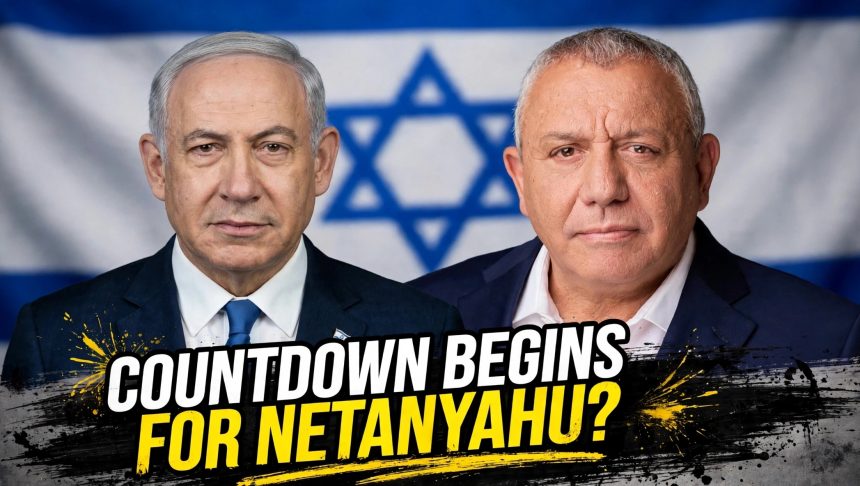
Israel’s political battle has entered a new phase following the October 27 parliamentary elections, with opposition parties moving towards forming an alternative government to replace Prime Minister Benjamin Netanyahu. Former military chief Gadi Eisenkot has emerged as the opposition’s preferred candidate for prime minister, receiving the backing of several major political leaders.
In a significant development on November 3, opposition leaders met in Herzliya and agreed to immediately begin coalition negotiations. The meeting brought together Gadi Eisenkot, Naftali Bennett, Yair Golan, Avigdor Lieberman and former prime minister Yair Lapid. The leaders agreed to coordinate their parliamentary strategy and prepare coalition agreements ahead of the new Knesset session.
🟡 Eisenkot emerges as opposition’s prime ministerial candidate
The opposition parties have agreed to recommend Eisenkot to President Isaac Herzog as the candidate who should receive the first opportunity to form the next government. Their proposed administration has been described as a National Emergency Government, with an emphasis on national security, military service reforms and political changes.
Naftali Bennett has pledged his party’s support for Eisenkot’s efforts. Yair Golan and Avigdor Lieberman have also joined the initiative, although differences remain over the composition and political direction of the proposed government.
🟡 61 seats needed to form the government
The Israeli parliament, known as the Knesset, has 120 seats, and a minimum of 61 is required to secure a parliamentary majority. According to the reported election results, Netanyahu’s bloc has 53 seats, while the main Jewish opposition parties hold 48 seats. The remaining 19 seats belong to the two Arab-led political groups, the Joint List and Ra’am.
If the opposition secures the support of both groups, its combined strength could reach 67 seats, potentially providing the numbers needed to form a government. However, parliamentary support and an actual coalition agreement are two different things.
🟡 Arab parties hold the key to coalition talks
Opposition leader Yair Golan has held discussions with Joint List representatives Yousef Jabareen and Ahmad Tibi about parliamentary coordination and the possibility of replacing Netanyahu’s government.
Arab political representatives have indicated their willingness to cooperate in efforts to establish an alternative administration. However, the opposition itself remains divided over whether Arab parties should participate in the coalition or provide support from outside.
Avigdor Lieberman has opposed depending on Arab parties for a minority government and has argued that a stable administration should be possible without their support. This disagreement remains one of the major challenges in the coalition negotiations.
🟡 Netanyahu’s Likud opposes the proposed arrangement
Meanwhile, Netanyahu’s Likud party has criticised the opposition’s proposed government, particularly the possibility of relying on Arab-party support. Netanyahu’s political camp has also challenged the prospect of an administration formed with the backing of Arab-led parties.
The opposition, meanwhile, has rejected the prospect of joining a unity government under Netanyahu and is continuing discussions on an alternative political arrangement.
🟡 Presidential consultations to decide the next step
President Isaac Herzog is expected to hold consultations with political parties following certification of the election results. These consultations will help determine which lawmaker should receive the mandate to form the next government.
The new Knesset is scheduled to convene on November 10. If Eisenkot receives the mandate, he will initially have 28 days to assemble a coalition, with a possible 14-day extension.
Israel now faces a crucial period of coalition negotiations. Although opposition leaders have agreed on a common candidate and begun coordinating their strategy, securing the required 61 parliamentary votes remains unresolved.
The coming days will determine whether the opposition can overcome its internal differences, reach an understanding with Arab political representatives or find another coalition arrangement to establish a new government without Benjamin Netanyahu.