

Child safety versus digital freedom — Australia’s landmark social media restrictions spark a fresh debate over young people’s rights, online privacy and freedom of expression.
🔴 By | PR Network
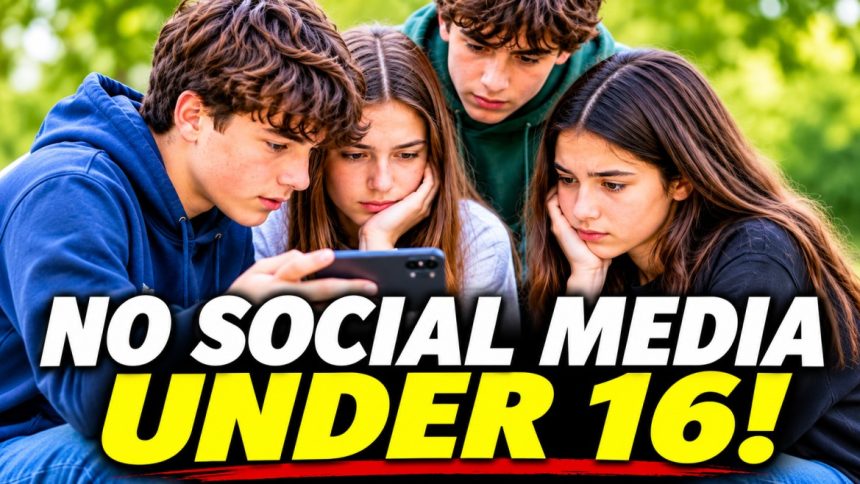
Sydney : Australia’s landmark decision to restrict social media access for children under the age of 16 is now facing a major legal challenge. The policy, which has attracted worldwide attention, is at the centre of a growing debate over whether governments should have the power to restrict young people’s access to digital platforms in the name of online safety.
On November 3, 2026, reports emerged that Reddit and organisations associated with the Digital Freedom Project had challenged the legislation in Australia’s High Court. The legal battle has brought two competing concerns into focus: protecting children from the potential harms of social media and safeguarding their freedom to access information and participate in public discussions.
🟡 Australia’s Under-16 Social Media Ban
The restrictions came into effect on December 10, 2025, making Australia one of the first countries to introduce a nationwide minimum-age restriction of this scale.
Under the law, children below 16 are prohibited from holding accounts on several major social media platforms, including Facebook, Instagram, TikTok, Snapchat, YouTube, X, Reddit, Threads, Twitch and Kick.
The responsibility for enforcing the restrictions rests primarily with social media companies. They are required to take reasonable steps to prevent underage users from opening or maintaining accounts.
Importantly, children and their parents are not directly penalised for violating the age restrictions. Instead, companies that fail to comply can face substantial financial penalties.
The Australian government says the restrictions have already resulted in action against millions of underage accounts, presenting the policy as a significant step towards improving online safety.
🟡 Why Is Reddit Challenging the Law?
The legal challenge raises fundamental questions about freedom of expression, access to information and the rights of young people.
The challengers argue that restricting social media access could prevent teenagers from participating in political discussions, accessing important information and engaging with public debates.
Social media is no longer simply a platform for entertainment. It has become an important space for political communication, educational discussions, community engagement and public awareness.
Critics believe that a blanket age restriction could unintentionally limit the ability of young people to understand political developments and express their views on issues affecting society.
The case therefore goes beyond the interests of technology companies. It raises a broader constitutional question about the balance between government regulation and individual freedoms.
🟡 Government Defends Restrictions in the Name of Child Safety
The Australian government maintains that the law is necessary to protect children from online risks. Concerns include cyberbullying, harmful content, excessive screen time, addictive platform designs and the potential impact of social media on children’s mental health.
Features such as endless scrolling, algorithm-driven recommendations, notifications and engagement-based systems are among the issues that have prompted calls for stronger regulation.
The government’s position is that technology companies should take greater responsibility for the impact their platforms have on younger users.
🟡 Technology Companies Face Heavy Financial Penalties
The law places significant compliance responsibilities on social media platforms. Companies must introduce appropriate age-assurance measures and take action to prevent children under 16 from maintaining restricted accounts.
Businesses that fail to meet their legal obligations can face civil penalties of up to A$49.5 million under the original legislation, subject to applicable statutory provisions and subsequent amendments.
The policy represents a major shift in how governments regulate the responsibilities of global technology companies.
🟡 Could Other Countries Follow Australia?
Australia’s experiment is being closely watched by governments around the world.
Several countries are examining whether age-based restrictions, stronger parental controls and stricter platform accountability could help address growing concerns about children’s digital safety.
However, implementing such restrictions is not straightforward. Questions remain over how accurately a user’s age can be verified, how personal information will be protected and whether young people’s access to educational and public-interest information could be affected.
The Australian court proceedings could therefore have implications far beyond the country’s borders.
🟡 Child Protection or a Restriction on Digital Freedom?
The debate surrounding Australia’s social media ban highlights a difficult question facing modern democracies: how can children be protected online without unnecessarily restricting their rights?
There is little disagreement that children need protection from cyberbullying, harmful content and potentially addictive digital environments. However, restricting access to entire platforms also raises concerns about freedom of expression, information access and participation in public life.
If Australia’s High Court upholds the legislation, it could strengthen the case for similar age-based restrictions in other countries. If the challenge succeeds, governments may be forced to reconsider how they regulate social media access for minors.
One thing is clear: Australia’s legal battle is no longer just about social media. It is about who should control the digital world of the next generation — governments, technology companies, parents or young users themselves.