

🟡 India’s Strategic Position in Global Politics
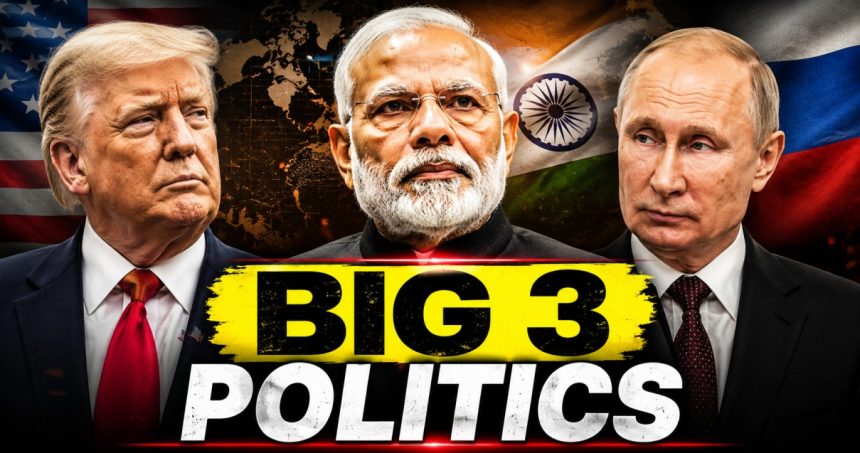
India’s foreign policy in 2026 is witnessing a crucial phase as Prime Minister Narendra Modi navigates complex global dynamics involving former US President Donald Trump and Russian President Vladimir Putin. At a time when geopolitical tensions remain high due to ongoing conflicts and economic shifts, India has positioned itself as a key balancing power, carefully managing its relationships with both Washington and Moscow. This approach reflects India’s long-standing strategy of maintaining strategic autonomy while maximizing economic and security benefits from both sides, ensuring that national interests remain at the center of every diplomatic decision.
🟡 Modi–Trump Trade Relations and Hidden Pressures
The evolving relationship between Modi and Trump is currently centered around a significant trade deal that is nearing finalisation. The United States is keen on expanding its economic footprint in India, and negotiations have included reducing tariffs, increasing market access, and boosting exports of American goods into the Indian market. Trump has repeatedly highlighted his personal rapport with Modi, describing him as a trusted partner, which has helped maintain a positive tone in negotiations and strengthened political communication between the two countries. However, this growing economic cooperation comes with underlying pressure from the United States, particularly regarding India’s continued purchase of Russian oil, as Washington has been consistently urging New Delhi to reduce its dependence on Moscow for energy imports, making this one of the most sensitive aspects of the ongoing discussions.
🟡 Modi–Putin Defence and Energy Partnership
Despite these pressures, Modi’s engagement with Putin continues to remain strong and strategically significant, reflecting decades of close cooperation between India and Russia. The two nations have reinforced their partnership through major defence agreements, including logistics-sharing arrangements that allow both countries to access each other’s military bases for operational and strategic support. This level of cooperation significantly boosts India’s defence preparedness and ensures uninterrupted access to critical military equipment, an area where Russia has historically played a dominant role. Alongside defence, both countries are also working to expand their economic relationship, setting ambitious trade targets that underline their commitment to long-term collaboration, while Putin has openly supported India’s independent foreign policy stance and dismissed external pressure as ineffective.
🟡 Trump–Putin Dynamics and Global Impact
At the same time, the relationship between Trump and Putin adds another layer of complexity to the global geopolitical landscape, as both leaders continue to engage in discussions despite ongoing tensions between the United States and Russia. Their interactions have largely focused on key global issues such as energy markets and conflict resolution, particularly in relation to the Ukraine situation, which remains a major point of concern internationally. Trump’s approach has often leaned towards negotiation and deal-making, suggesting a willingness to engage with Putin in order to find workable solutions, even as broader strategic rivalry continues. These developments indirectly affect India, as any change in US-Russia relations has the potential to influence New Delhi’s diplomatic positioning and economic strategies.
🟡 India’s Balancing Strategy Explained
What clearly emerges from this triangular relationship is India’s carefully calibrated balancing strategy, where Prime Minister Modi is not aligning exclusively with either the United States or Russia but is instead leveraging both partnerships to serve India’s national interests. On one side, India is looking to benefit from economic growth, technological advancement, and increased trade opportunities with the United States, while on the other side, it continues to rely heavily on Russia for defence supplies and energy security. This dual engagement reflects a pragmatic and flexible foreign policy approach, where decisions are guided by strategic needs rather than ideological alignment, allowing India to maintain independence in an increasingly polarized world.
🟡 A New Global Power Equation
In conclusion, the evolving interactions between Modi, Trump, and Putin highlight a shifting global order where traditional alliances are becoming less rigid and more dynamic. India’s ability to maintain strong and productive relationships with both the United States and Russia demonstrates its rising importance on the global stage and its capability to navigate complex international challenges. As global negotiations, pressures, and partnerships continue to evolve, India’s balanced and strategic approach may not only safeguard its own interests but also position it as a key player in shaping the future of international relations in a rapidly changing world