


Arvind Jadhav | PR Network
🟡 Big Decision After Nationwide Controversy
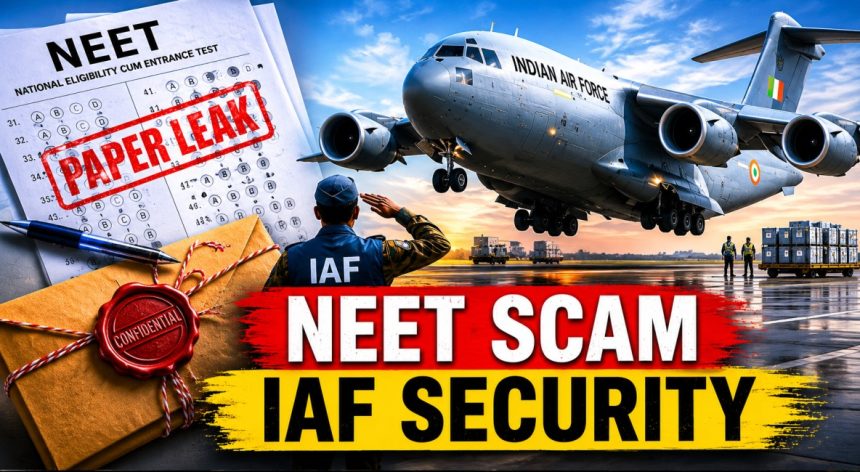
The nationwide controversy surrounding the NEET UG paper leak has triggered a major response from the central government, with authorities now considering the deployment of the Indian Air Force for the secure transportation of question papers. This decision comes after serious concerns were raised about the integrity of the examination process, which affects over 20 lakh medical aspirants across India every year. By shifting from conventional ground transport to air-based movement of sensitive materials, officials aim to eliminate any possibility of tampering or leaks during transit. The move reflects the seriousness of the situation and the government’s intent to restore credibility in one of India’s most crucial entrance examinations. Officials believe that involving a high-security force like the IAF will significantly strengthen logistical control and monitoring. This could also set a new precedent for handling other national-level examinations in the future. The focus remains firmly on ensuring a fair and transparent system for all candidates.
🟡 Investigation Reveals Organised Network
The investigation into the paper leak has uncovered a deeply rooted network operating across multiple states, involving individuals linked to educational institutions and coaching ecosystems. According to probe agencies, the leak was not an isolated incident but part of an organised racket where exam-related content was circulated before the test. Several arrests have already been made, including teachers and intermediaries, while digital evidence such as messaging app chats and financial transaction trails are being closely examined. The Maharashtra connection, particularly links emerging from Pune and Latur, has added another critical dimension to the case. Authorities are working to identify the full extent of the network and whether more individuals were involved in facilitating access to the leaked material. The findings have raised serious questions about existing security mechanisms and internal vulnerabilities. Investigators are also examining how the content was reconstructed or accessed before the exam. The scale of the operation has made this one of the most significant exam fraud cases in recent years.
🟡 Re-Exam Under Tight Security Measures
Following the revelations, the National Testing Agency was compelled to cancel the examination and is now preparing for a re-exam under enhanced security protocols. Every stage of the process, from question paper setting and printing to final delivery at examination centres, is being reviewed and strengthened. Officials are considering multiple layers of security, including encrypted handling systems, real-time tracking, and restricted access zones. The proposal to involve the Indian Air Force is part of this broader strategy aimed at completely sealing logistical gaps. If implemented, question papers will be transported through controlled air routes under strict supervision, minimizing human interference. Authorities are also coordinating with central and state law enforcement agencies to ensure seamless execution. The goal is to rebuild trust among students and parents who have been affected by the uncertainty. This re-exam is expected to be conducted with zero tolerance for any irregularities.
🟡 Student Reaction and Political Impact
The controversy has led to widespread reactions from students, parents, and political stakeholders, turning the issue into a national debate on examination integrity. Many students have expressed frustration and anxiety over the delay in admissions and the uncertainty surrounding their academic future. Protests have been reported in several parts of the country, with demands for accountability and systemic reform. Parents have also called for stricter oversight and transparency in the conduct of competitive exams. Meanwhile, opposition parties have criticised the government, alleging lapses in administration and security. In response, the government has assured strict action against all those found guilty and has emphasised its commitment to safeguarding students’ interests. The situation has highlighted the emotional and psychological toll such incidents can have on aspirants. It has also intensified calls for long-term reforms in the examination system.
🟡 Future Reforms and System Changes
Experts and education policy analysts suggest that this incident should serve as a turning point for India’s examination framework, encouraging a shift towards more secure and technology-driven systems. One of the key recommendations is the gradual adoption of computer-based testing formats, which can reduce the risk of physical paper leaks. Additionally, the integration of advanced encryption, AI-based monitoring, and centralized question delivery systems is being discussed. Strengthening accountability at every level, from paper setters to distribution authorities, is also seen as essential. The NEET paper leak case has exposed critical loopholes that must be addressed urgently to prevent recurrence. As reforms are debated and implemented, the priority remains to ensure fairness, transparency, and equal opportunity for all candidates. The coming months will be crucial in determining how effectively these changes are executed. Ultimately, restoring public trust will be the biggest challenge for authorities moving forward.