


🔴 By| Gitanjali Thorat
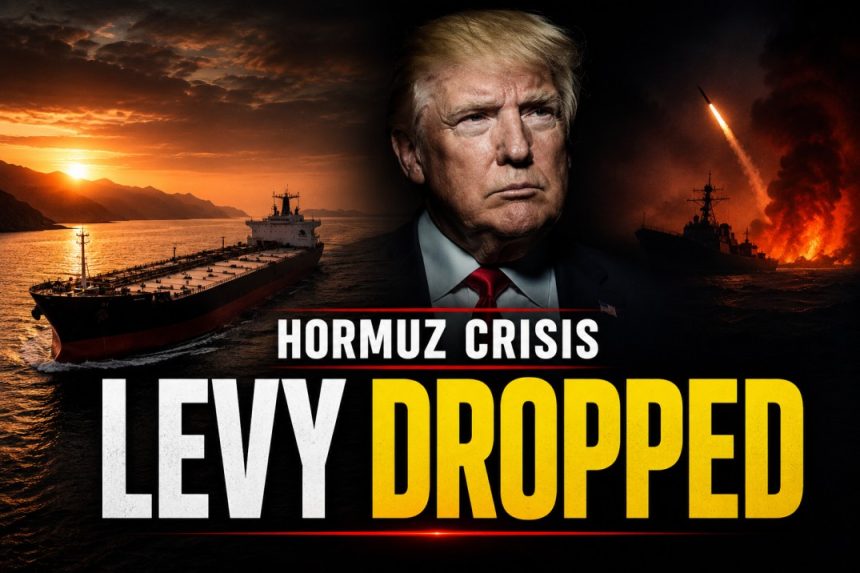
The ongoing crisis in the Strait of Hormuz has taken a dramatic turn, with US President Donald Trump withdrawing his controversial 20% levy plan on ships, even as military tensions in the region continue to escalate. The strategic waterway, located between Iran and Oman, remains one of the most critical global oil transit routes, making every development here a matter of international concern.
🟡 Background: Rising Tensions in a Critical Oil Corridor
Over the past several months, the Strait of Hormuz has become a flashpoint for conflict due to repeated attacks on commercial vessels, alleged Iranian interference, and increased US military presence. The waterway handles a significant portion of the world’s oil supply, and any disruption has immediate global repercussions. Reports of drone strikes, tanker seizures, and naval confrontations have already caused instability in shipping operations and rising insurance costs for vessels operating in the region.
🟡 Trump’s Earlier Plan: The 20% “Security Levy”
Amid rising tensions, Donald Trump had proposed a bold and controversial plan to impose a 20% levy on all ships passing through the Strait of Hormuz. The idea was framed as a “security fee,” with the United States positioning itself as the protector of maritime trade in the region. However, the proposal quickly drew criticism from global powers, shipping companies, and legal experts, who questioned both its legitimacy under international law and its potential to further escalate tensions.
🟡 Sudden Reversal: Levy Plan Withdrawn
In a significant policy shift, Donald Trump has now withdrawn the proposed levy following discussions with Gulf nations. Instead of imposing direct charges on international shipping, the US is now focusing on strengthening economic partnerships and investment agreements with regional allies. This move is being seen as an attempt to reduce diplomatic friction while maintaining influence in the strategically vital region.
🟡 Ground Reality: Military Escalation Continues
Despite the rollback of the levy plan, the situation on the ground has worsened considerably. The United States has reportedly intensified its military operations, including renewed blockades and targeted strikes, while Iran has responded with missile and drone attacks. The cycle of retaliation has heightened fears of a broader regional conflict, with multiple countries closely monitoring the developments.
🟡 Global Impact: Shipping and Oil Markets Under Pressure
The instability in the Strait of Hormuz has already begun affecting global markets. Oil prices have shown volatility, and several international shipping companies are rerouting vessels to avoid the high-risk zone. Increased security costs, delays in shipments, and reduced traffic through the strait are creating ripple effects across global trade networks. Analysts warn that prolonged disruption could lead to significant economic consequences worldwide.
🟡 Strategic Outlook: Shift in Policy, Not in Pressure
The withdrawal of the levy indicates a tactical adjustment in US strategy rather than a de-escalation of the conflict. By replacing direct economic measures with diplomatic and investment-driven approaches, Washington appears to be balancing global criticism with its strategic objectives. However, continued military engagement suggests that tensions with Iran remain unresolved and volatile.
The decision to drop the 20% levy may have eased immediate global concerns over trade restrictions, but the intensifying military actions underline a deeper and more dangerous reality. The Strait of Hormuz remains at the center of a high-stakes geopolitical confrontation, where even small developments carry the risk of triggering a much larger conflict.