


🔴 Arvind Jadhav | PR Political Desk
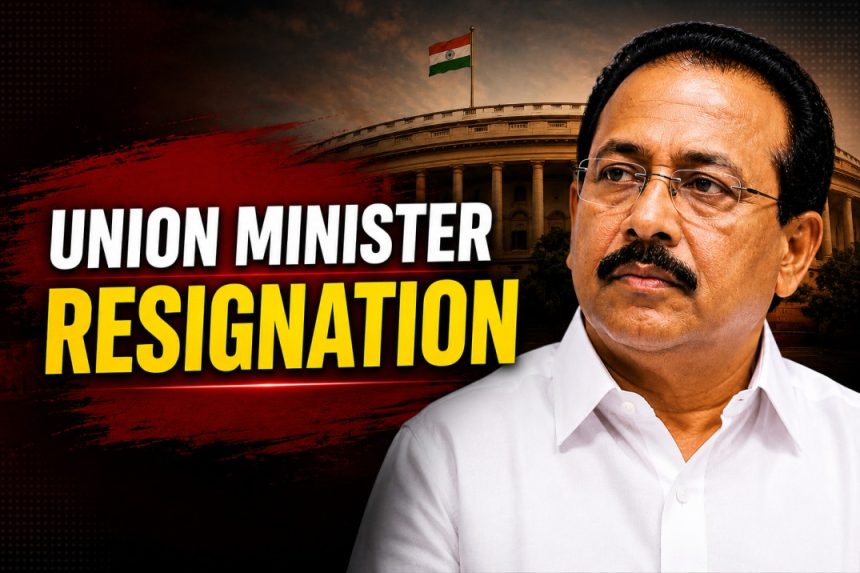
.New Delhi: Union Minister George Kurian has stepped down from their position following the completion of their official tenure. The resignation, which initially triggered speculation in political circles, is now being clearly understood as a routine administrative transition rather than a result of any controversy or internal disagreement.
According to official sources, the minister’s term had reached its scheduled conclusion, after which the resignation was submitted in line with established government norms. Such moves are a part of standard governance processes, particularly within a structured cabinet system where roles are periodically reviewed and reassigned.
Soon after stepping down, the outgoing minister expressed gratitude towards Prime Minister Narendra Modi for the opportunity to serve in the Union government. In an official statement, the leader thanked the Prime Minister for his leadership and guidance, while also acknowledging the trust placed in them during their tenure.
The tone and content of the resignation message suggest a smooth and respectful transition, reinforcing that the decision was pre-planned and procedural. Sources within the government have also clarified that there are no elements of conflict, pressure, or sudden developments associated with this move.
This development comes amid ongoing discussions about governance efficiency and potential cabinet restructuring. Analysts note that such resignations, when aligned with tenure completion, often signal internal administrative planning rather than reactive decision-making.
While there has been no immediate announcement regarding a successor, it is widely expected that the government may consider a reshuffle or portfolio reallocation in the near future. These changes are typically aimed at maintaining policy momentum and aligning leadership roles with evolving priorities.
Senior leaders within the Bharatiya Janata Party (BJP) have acknowledged the minister’s contributions, maintaining a positive and appreciative stance. The absence of any political friction or criticism further supports the view that the resignation is part of a formal transition process.
There is also no indication that the outgoing minister is stepping away from public life. Given the constructive tone of the exit and continued alignment with party leadership, the possibility of future roles—either organizational or administrative—remains open.
Analytical Perspective: From a governance standpoint, this resignation reflects a structured and disciplined administrative approach, where tenure-based transitions are implemented without disruption. Such decisions highlight an emphasis on continuity, planning, and institutional process rather than ad-hoc changes. In this context, the move can be seen as part of a broader governance framework that prioritizes stability while allowing space for periodic leadership adjustments.