

🔴 By | Sonal Sharma
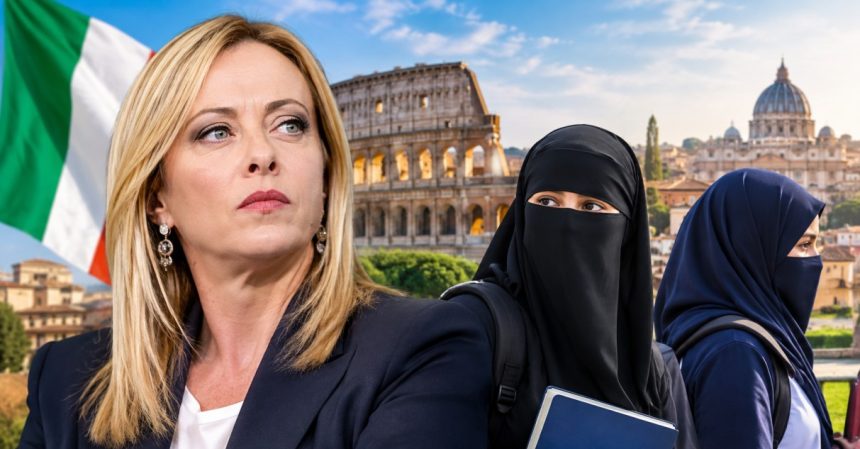
Rome: Italian Prime Minister Giorgia Meloni has announced plans to introduce a ban on wearing burqas and niqabs in schools, as part of a broader package of measures focused on integration, language learning and the composition of classrooms.
Meloni announced the proposed measures on September 20 at the annual gathering of the youth wing of her Brothers of Italy party in Rome. She said a measure would soon be brought before the Council of Ministers to legally prohibit face-covering garments such as burqas and niqabs in Italian schools.
🟡 Face Coverings and School Rules
Meloni argued that students should attend school with their faces uncovered. She said that, in Italy, no one should be able to require a young woman to hide her face in the name of tradition. Her comments placed the proposed school restriction within a wider debate over integration, gender equality and religious expression.
The proposal specifically refers to the burqa and niqab, which cover the face. Reports indicate that Meloni did not propose a ban on the hijab, which covers the hair and neck but leaves the face visible.
🟡 Foreign Students and Italian Language
The planned school package also includes a proposal to establish a legal maximum number of foreign students in each classroom. Meloni did not specify the new limit.
She also said parents of foreign students experiencing serious difficulties integrating into the Italian school system would be required to learn Italian. According to figures cited by Fondazione ISMU, students without Italian citizenship account for about 11.6% of pupils in Italian schools.
Italy already has rules concerning the proportion of foreign students in classrooms, with reports noting an existing 30% limit under current regulations. It remains unclear how the government’s proposed changes would modify the existing system.
🟡 Proposal Still Needs Legal Approval
The announcement does not mean that the ban has already come into force. The government is expected to formally present the measure, after which it would require parliamentary approval to become law. Reports indicate that a government-approved measure of this type would require parliamentary ratification within 60 days.
The announcement comes amid a wider political debate in Italy over migration, integration, religious symbols and the role of Italian language and cultural norms in schools. The issue is also expected to remain an important part of Italy’s political debate ahead of the next general election.