


🔴 By | Arvind Jadhav
The situation in the Middle East has once again entered a highly volatile and dangerous phase after the United States carried out targeted airstrikes on Iranian positions. This development has triggered global concern, as tensions between the two nations escalate to a level that could potentially destabilize the entire region. While signs of rising friction had been visible in recent days, the direct military action has now significantly intensified the situation.
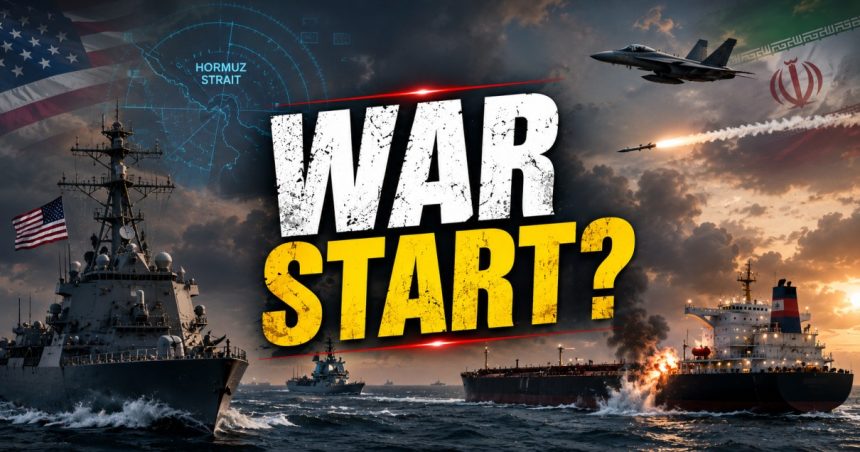
According to initial reports, the US strikes were conducted in response to a drone attack allegedly linked to Iran in the strategically critical Strait of Hormuz. The drone incident reportedly targeted a commercial vessel, raising alarm across international shipping and security networks. Given the importance of this maritime route—through which a significant portion of the world’s oil supply passes—the attack was viewed as a serious threat to global trade and energy stability.
In retaliation, the United States deployed advanced fighter jets and precision-guided missile systems to strike key Iranian military infrastructure. Sources indicate that the targets included drone launch facilities, missile storage sites, and coastal radar installations. The Pentagon has described the operation as a “limited and targeted strike,” emphasizing that the objective was to neutralize immediate threats and send a strong warning rather than initiate a full-scale conflict.
However, despite the US framing the action as controlled and defensive, the strike has significantly heightened tensions. Iran has strongly condemned the attack, accusing the United States of violating international norms and escalating the conflict unnecessarily. Iranian officials have warned that a response will come “at the appropriate time and place,” signaling the possibility of further retaliation and an extended cycle of confrontation.
🟡 Rising Regional Tensions and Economic Impact
The aftermath of the strikes has created an atmosphere of uncertainty across the Middle East. Several countries in the region have issued security advisories, urging caution for their citizens and increasing military preparedness around key installations. Diplomatic missions have also tightened security measures amid fears of potential spillover effects.
The Strait of Hormuz remains at the center of global attention, as nearly 20% of the world’s oil supply passes through this narrow corridor. Any disruption in this region can have immediate and far-reaching consequences for global energy markets. Following the incident, fluctuations in crude oil prices have already been observed, reflecting investor anxiety and market instability.
Experts warn that if tensions continue to rise, the situation could lead to a broader energy crisis. Increased oil prices, supply chain disruptions, and declining investor confidence could impact economies worldwide, including developing nations that are heavily dependent on imported energy resources.
🟡 Background of the US–Iran Conflict
The conflict between the United States and Iran is deeply rooted and has evolved over several decades. Key issues such as Iran’s nuclear program, US-imposed economic sanctions, and geopolitical competition in the Middle East have consistently fueled tensions. Despite periods of diplomatic engagement, mistrust and hostility have remained dominant features of their relationship.
In recent months, the situation has worsened, with multiple incidents involving proxy groups, drone attacks, and military posturing. Both sides have accused each other of provocation, leading to a cycle of retaliation that has brought the region closer to open conflict. The current strike is therefore not an isolated event but part of a broader pattern of escalating hostilities.
Throughout 2026, several flashpoints have emerged, involving not only direct US-Iran tensions but also the involvement of allied and proxy forces across the region. This has increased the complexity of the conflict, making it more difficult to contain and raising concerns about unintended escalation.
🟡 Global Reactions and Future Risks
The international community has responded with concern, calling for restraint and immediate de-escalation. Organizations such as the United Nations, along with several major world powers, have urged both nations to avoid further military action and seek diplomatic solutions. Some countries have offered to mediate, while others have warned of the serious consequences of continued aggression.
Analysts believe that the coming days will be critical in determining whether the situation stabilizes or spirals into a larger conflict. If retaliatory strikes continue, the risk of a full-scale regional war cannot be ruled out. Such a scenario would not only affect the Middle East but also have profound implications for global security, trade, and political stability.
At present, the world is closely watching developments, as even a single miscalculation could trigger a chain reaction with far-reaching consequences. The need for strategic restraint and diplomatic engagement has never been more urgent.